



கம்பராமாயணம் 4311 · கிட்கிந்தா 9.74
பாடல் · The poem
Tap a word to see its gloss in the commentary and where else it occurs.
பாட வேறுபாடு · Project Madurai reads
பொருள் · Meaning in Tamil
தோகையவர் - மயிலை ஒத்தவர்களாகிய மகளிரின்; நிரம்பாச் சொற்கு - (எழுத்து) நிரம்பாத குதலைச் சொற்களுக்கு; இழிய - (நிகராகப்பேச முடியாமல்) தோல்வியுற்றதனால், நல்கிளிகள் - அழகிய கிளிகள்; நெல் கிழிய நெல்பொதி - நெல் மணிகள் உதிருமாறு நெற்கதிர்ப் போரில்; நிரம்பின - பதுங்கி நிறைந்தன; தூ மென் பற்கு இழி - (அம்மகளிரின்) தூயமென்மையான பற்களுக்குத் தோற்ற; மணி - முத்துக்கள்; படர்திரை (நிரம்பின - பரந்த கடல் அலைகளில் (மறைந்து நிறைந்தன); பரதர் முன்றில் - நெய்தல் நில மக்களின் வீட்டு முன்னிடத்தில்; சினை பொதுளு புன்னை - கிளைகளில் மலர் நிறையப் பெற்ற புன்னை மரங்கள்; பொற்கிழி விரித்தன - பொற்கிழியை அவிழ்த்து வைத்தாற் போன்று விளங்கின.
இப்பாடலில் கூதிர் காலத்து மருதம், நெய்தல் நிலங்களின் வருணனை கூறப்பெற்றது. கிளிகள் மழைக்கு ஒதுங்கவும், பசிக்கு இரை தேடவும் ஏற்ற இடமாக நெற்கதிர்ப் போர் அமைந்ததால் ஆங்கே பதுங்கின மழையால் அடித்து வரப்படும் முத்துகள் கடல் அலைகளிடை மறைவதும் இயல்பாகும். கிளிகள் மழைக்கு ஒதுங்கிய இயல்பான நிகழ்ச்சியினையும் முத்துக்கள் அலைகளிடை மறைந்த நிகழ்ச்சியினையும் மகளிர் சொற்களுக்கும், பற்களுக்கும் தோற்று அவை பதுங்கியதாகத் தற்குறிப்பேற்றமாகக் கூறியுள்ளார் மயிலின் சாயலும் தோகையும் முறையே மகளிர் சாயலுக்கும் கூந்தலுக்கும் உவமைகள் அதனால் பெண்கள் 'தோகையவர்' எனப்பட்டனர். 'தோகையவர் என்பதை இடைநிலை விளக்கமாகக் கொண்டு பொருள் கொள்ளப்பட்டது. முன்றில் - இலக்கணப் போலி; நெய்தல் நிலத்துப் புன்னையின் அரும்புகள் மலர்வது பொற்கிழியை விரித்தாற் போன்றது என்றமையின் உவமை அணி ஆகும். மருத நிலத்து நெல் அறுவடையும், நெற்போரில் கிளிகள் பதுங்கினமையும், நெய்தல் நிலத்தில் மழைத்துளி ஏற்ற சிப்பிகளில் முத்துக்கள் தோன்றினமையும், புன்னை மலர்ந்தமையும் கூதிர்கால நிகழ்ச்சிகளாகக் கூறப்பட்டன.
ஆங்கிலம் · English translationAI
Translation
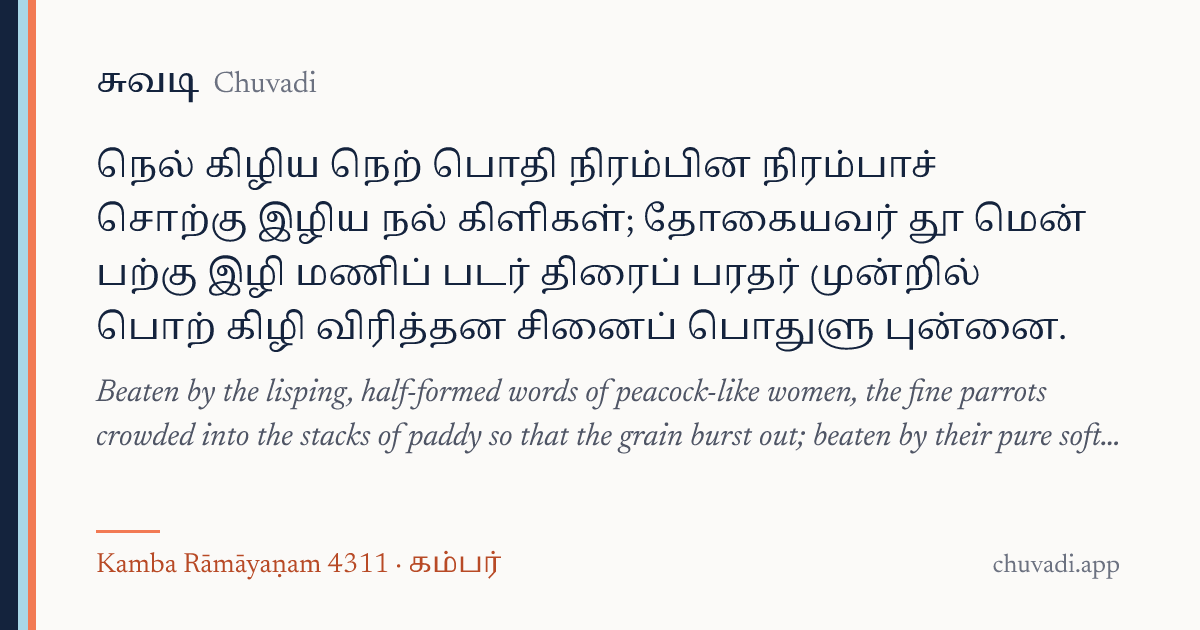
- Beaten by the lisping, half-formed words of peacock-like women, the fine parrots
- crowded into the stacks of paddy so that the grain burst out; beaten by their pure soft teeth,
- the pearls hid in the spreading waves; and before the fishermen's houses
- the punnai trees, laden on every bough, spread out what looked like opened purses of gold.
What the poem says
Scenes from the farmlands and the seashore in the cold season. Parrots take shelter from the rain in the stacks of harvested paddy, and pearls wash out of sight among the waves. The poet pretends the parrots are hiding in shame because their talk cannot match the sweet, childlike speech of the women, graceful as peacocks, and that the pearls have hidden because they lost to the women's teeth.
In front of the fishermen's homes the punnai trees burst into yellow-gold blossom, like purses of gold coins spilled open.