



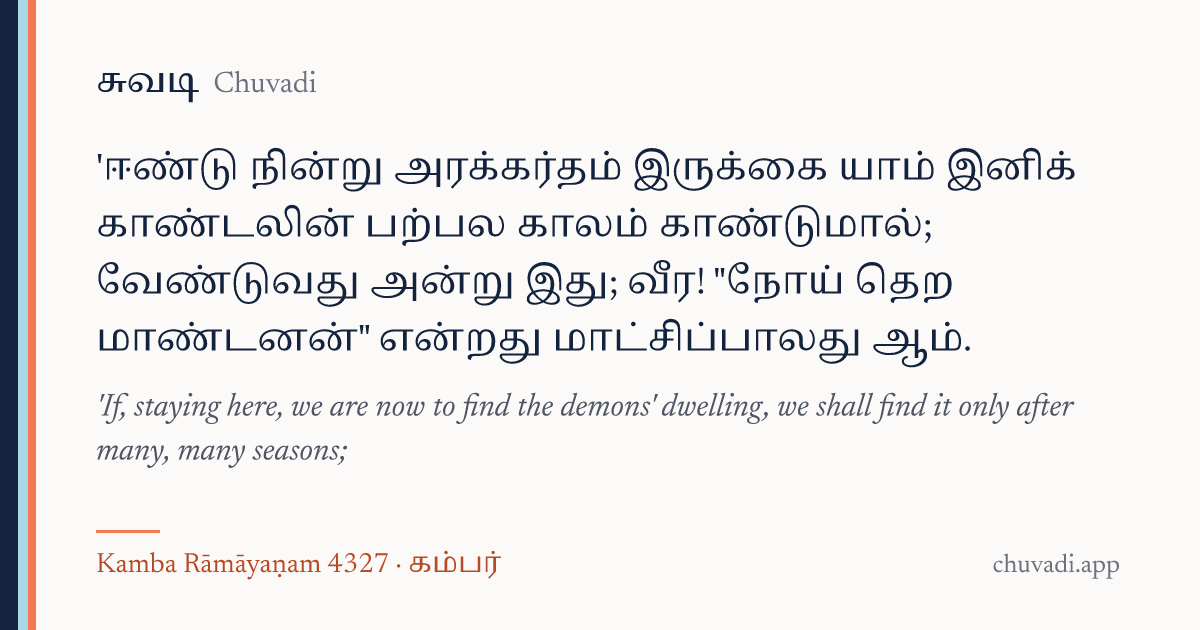
கம்பராமாயணம் 4327 · கிட்கிந்தா 9.90
பாடல் · The poem
Tap a word to see its gloss in the commentary and where else it occurs.
பொருள் · Meaning in Tamil
வீர - வீரனே! யாம் - நாம்; ஈண்டு நின்று - இவ்விடத்தில் இருந்து கொண்டு; இனி - இனிமேல், அரக்கர்தம் இருக்கை காண்டலின் - அரக்கர்கள் உள்ள இடத்தைத் தேடிக் காண்பதென்றால், பற் பல காலம் காண்டும் - பல நாட்கள் கழியக் காண்போம்; இது வேண்டுவது அன்று - (ஆதலால் சீதையைத் தேடும்) இம்முயற்சி வேண்டுவதன்று; நோய்தெற மாண்டனன் - (சீதையைப் பிரிந்ததால் ஏற்பட்ட) நோய் அழிக்க இராமன் இறந்துபட்டான்'; என்றது - எனப்படுவது; மாட்சிப் பாலது ஆம் - பெருமை தருவதாகும்.
சீதையைக் கவர்ந்து சென்ற அரக்கர் இருப்பிடத்தைக் கண்டுபிடிக்கவே நெடுங்காலம் செல்லும். கண்டுபிடித்த பின்னர் அப்பகைவர்களோடு போரிட்டுச் சீதையை மீட்கவும் நெடுங்காலம் ஆகும். எனவே, இம்முயற்சிகளில் ஈடுபடாமல் 'பிரிவுத்துயரால் இராமன் இறந்தான்' எனப் பேசுவதே சிறந்தது, என இராமன் எண்ணினான். துன்பங்களோடு வாழ்வதினும் துன்பம் நீங்க உயிர் போதலே பெருமை தரத்தக்கது என்பதால் 'மாட்சிப் பாலது' என்றான். காலம் என்றது காலத்தின் பெரும் பகுதியைக் குறித்தது.
ஆங்கிலம் · English translationAI
Translation
- 'If, staying here, we are now to find the demons' dwelling,
- we shall find it only after many, many seasons;
- this is not what is wanted. Hero, "He died
- as his sickness consumed him": that would be the nobler thing.'
What the poem says
In despair Irāmaṉ tells Ilakkuvaṉ that finding where the demons live will take a very long time, and fighting them to win Cītai back longer still. It would be more honourable, he says, for people simply to say that Irāmaṉ died of the sickness of separation.
This is the lowest point of his lament: he thinks death, which ends the suffering, carries more dignity than living on in pain. The next verses continue in this mood before Ilakkuvaṉ answers him.