



கம்பராமாயணம் 4331 · கிட்கிந்தா 9.94
பாடல் · The poem
Tap a word to see its gloss in the commentary and where else it occurs.
பாட வேறுபாடு · Project Madurai reads
பொருள் · Meaning in Tamil
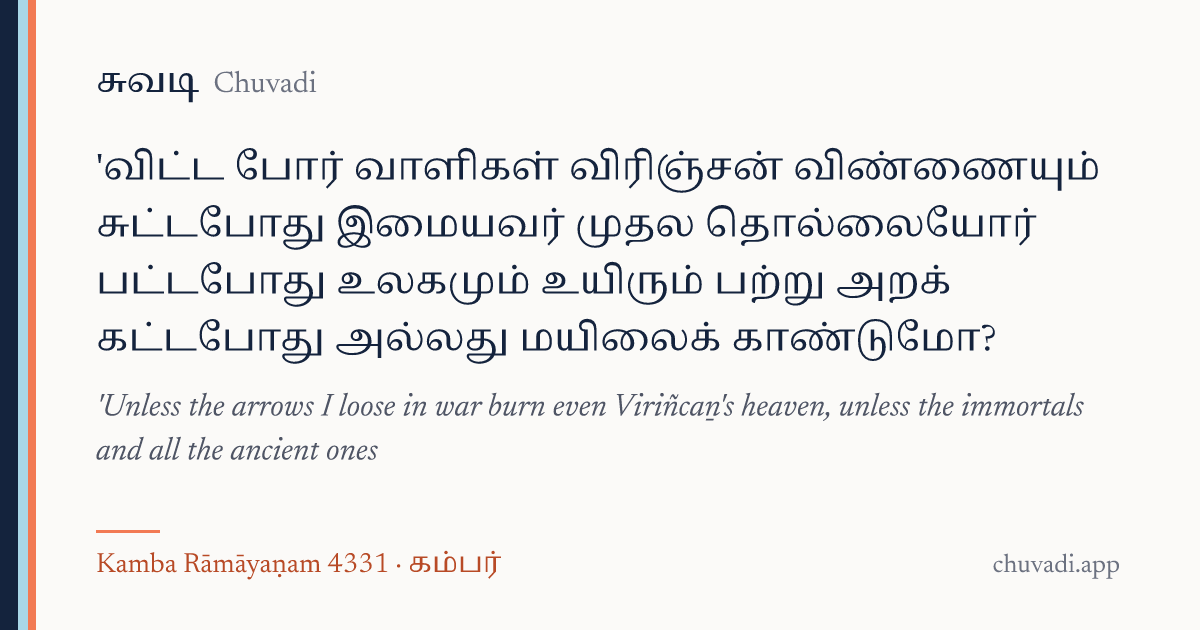
விட்ட போர் வாளிகள் - (யான் இனி) போரில் தொடுக்கின்ற அம்புகள்; விரிஞ்சன் விண்ணையும் - பிரமனது சத்திய லோகத்தையும்; சுட்ட போது (அல்லது) - எரிப்பதோடல்லாமல்; இமையவர் முதல தொல்லையோர் - தேவர்கள் முதலான பழமையானவர்களை; பட்ட போது (அல்லது) - ஒழிப்பதோடல்லாமல்; உலகமும் உயிரும் - உலகங்களையும் உயிர்களையும்; பற்று அறக் கட்டபோது அல்லது - வேரற அழித்துத்தான்; மயிலைக் காண்டுமோ - மயில் போன்ற சீதையைக் காண முடியுமோ?
'விட்ட' என்பது விரைவு பற்றி வந்த காலவழுவமைதி. அல்லது என்பது கடைநிலை விளக்காய்ச் சுட்டபோதல்லது, பட்ட போதல்லது என இயையும் சீதையின் மென்சாயல் பற்றி 'மயில்' எனக் கூறினன். மயில் - உவமை ஆகுபெயர்.
ஆங்கிலம் · English translationAI
Translation
- 'Unless the arrows I loose in war burn even Viriñcaṉ's heaven,
- unless the immortals and all the ancient ones
- perish, unless the worlds and all living things
- are uprooted root and all, shall we ever see my peahen?'
What the poem says
Irāmaṉ's grief turns to rage. He says he will see Cītai, his gentle 'peahen', only when his arrows have burned even the heaven of Viriñcaṉ (Brahmā), destroyed the gods and the ancient beings, and wiped out the worlds and every living thing.
'Peahen' is used for Cītai because of her soft grace. The past-tense verbs for actions still to come show how urgently he feels them. The next verse shows him holding this anger back.