



கம்பராமாயணம் 4332 · கிட்கிந்தா 9.95
பாடல் · The poem
Tap a word to see its gloss in the commentary and where else it occurs.
பாட வேறுபாடு · Project Madurai reads
பொருள் · Meaning in Tamil
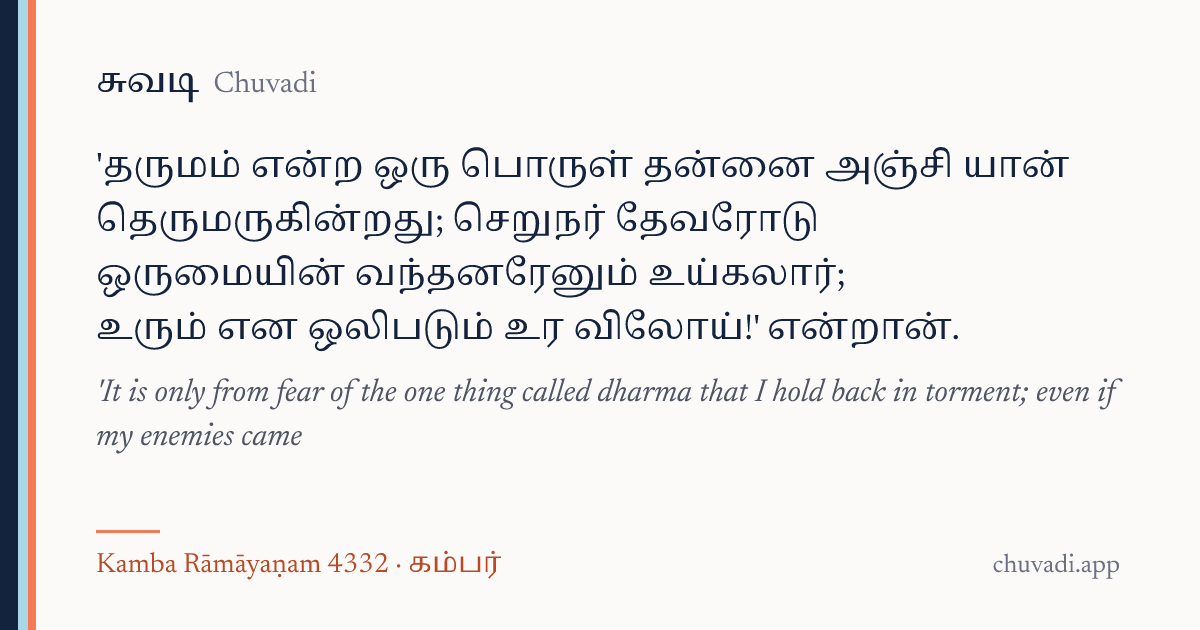
உரும் என ஒலிபடும் - இடிபோல நாண்ஒலி உண்டாகும்; உர விலோய் - வலிமை கொண்ட வில்லை உடையவனே! யான் தெருமருகின்றது - (உலகங்களையும் உயிர்களையும் அழிக்காது) யான் மனம் வருந்திக் கொண்டிருப்பது; தருமம் என்ற ஒரு பொருள் தன்னை - தருமம் என்கின்ற ஒரு சிறந்த பொருளுக்கு; அஞ்சி - அஞ்சுவதாலேயே; செறுநர் - பகைவர்கள்; தேவரோடு ஒருமையின் - தேவர்களோடு ஒன்று சேர்ந்து; வந்தனரேனும் - எனக்கெதிரே வருவராயினும்; உய்கலார் - தப்பிப் பிழைக்க மாட்டார்கள்; என்றான் - என்று (இராமன்) கூறினான்.
இலக்குவனும் தன்னை ஒத்த வீரனாகையால் 'உரும் என ஒலிபடும் உரவிலோய்' என விளித்தான். சீதையைக் கவர்ந்தவர் அரக்கராயிருக்க அதன் பொருட்டுத் தவறு செய்யாத பிற உயிர்களும், அனைத்து உலகங்களும் அழிதல் அறமன்று என்பதை உணர்ந்தே 'தருமம் என்ற ஒரு பொருள் தன்னை அஞ்சியான் தெருமருகின்றது' என்றான். முன் பாடலில் 'உலகமும் உயிரும் பற்று அறக் கட்ட போது அல்லது மயிலைக் காண்டுமோ?' எனக் கூறிய இராமன் இப்பாடலில் சினம் அடக்கி அறத்தின் வழி நிற்கும் நிலையைக் காண்க. 'தாய் ஆவார் யாவரே? தருமத்தின் தனிமூர்த்தி' (2568); 'எல்லை தீர் நல்லறத்தின் சான்றவனோ?' (30682) என்பன காண்க. இராமன் வீரத்தில் சிறிதும் குறைந்தவன் அல்லன் என்பதை, 'செறுநர் தேவரோடு ஒருமையின் வந்தனரேனும் உய்கலார்' என்ற தொடர் உணர்த்தும். தண்டக வனத்து முனிவர்களிடம் 'சூர் அறுத்தவனும், சுடர்நேமியும், ஊர் அறுத்த ஒருவனும் ஓம்பினும், ஆர் அறத்தினொடு அன்றி நின்றார் அவர் வேர் அறுப்பென்' (2652) எனக் கூறியது ஈண்டு ஒப்பிடத்தக்கது.
ஆங்கிலம் · English translationAI
Translation
- 'It is only from fear of the one thing called dharma that I
- hold back in torment; even if my enemies came
- united with the gods themselves, they would not escape,
- O you whose mighty bow sounds like thunder!' he said.
What the poem says
Irāmaṉ checks his own anger. He holds back from destroying the worlds only because he fears to break dharma, the moral order: the demons took Cītai, and innocent beings must not die for their crime. Even so, his enemies would not survive even if all the gods stood with them.
He addresses Ilakkuvaṉ as one whose bowstring sounds like thunder, a hero equal to himself. The verse moves from the rage of the previous one to restraint, showing Irāmaṉ as the embodiment of dharma.