



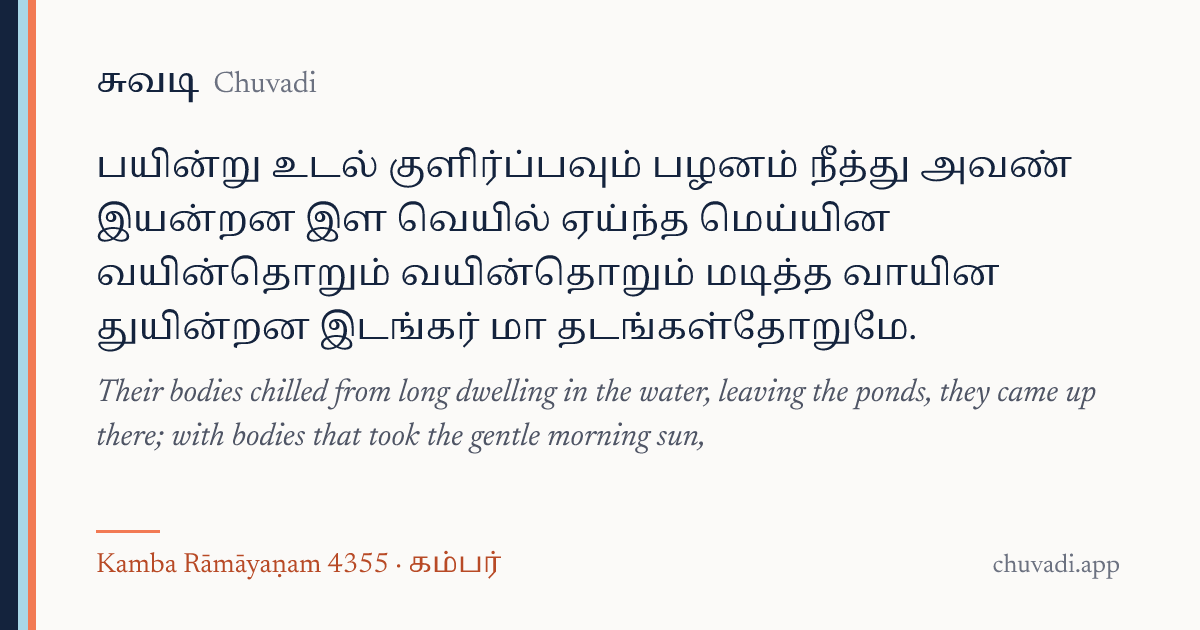
கம்பராமாயணம் 4355 · கிட்கிந்தா 9.118
பாடல் · The poem
Tap a word to see its gloss in the commentary and where else it occurs.
பொருள் · Meaning in Tamil
இடங்கர் மா - முதலையாகிய விலங்குகள்; பயின்று - (தாம் நெடுநாளாக நீரில்) பொருந்தி; உடல் குளிர்ப்பவும் - உடம்பு குளிர்ச்சி அடைந்ததால், பழனம் நீத்து - இது காறும் வாழ்ந்துவந்த நீர்நிலைகளை விடுத்து; அவண் இயன்றன - அவ்விடத்திருந்த கரைகளில் வந்து பொருந்தினவாய்; இளவெயில் ஏய்ந்த மெய்யின - இளவெயில் படியும் உடம்புகளை உடையனவாய், தடங்கள் தோறும் - நீர்நிலைகளின் கரைகளிலெல்லாம்; வயின்தொறும் வயின்தொறும் - இடந்தோறும் இடந்தோறும் (பற்பல இடங்களில்); மடித்த வாயின - மடித்த வாய்களை உடையனவாய், துயின்றன - உறங்கின.
மழைக்காலத்தில் நீரில் மூழ்கிக் கிடந்த முதலைகள், மழை நீங்கியதும் நீர்நிலைகளை விட்டுக் கரையில் வந்து வெயிலில் குளிர் காய்வது இயல்பாகும். முதலைகள் தூங்குகையில் வாய் மடித்துத் தூங்கும் இயல்பு உணர்த்த 'மடித்த வாயின துயின்றன' என்றார். இடங்கர் என்பது முதலை வகைகளில் ஒன்று. 'கொடுந்தாள் முதலையும் இடங்கரும் கராமும்' (குறிஞ்சிப் - 257) என்ற இடத்து நச்சினார்க்கினியர் இவை மூன்றும் சாதிவிசேடம் என்றது காண்க. வயின்தொறும் வயின்தொறும் - அடுக்குத்தொடர் பன்மை உணர்த்திற்று.
ஆங்கிலம் · English translationAI
Translation
- Their bodies chilled from long dwelling in the water, leaving the ponds, they came up there;
- with bodies that took the gentle morning sun,
- in place after place, with jaws shut,
- the crocodiles slept beside every great pool.
What the poem says
Crocodiles had stayed submerged all through the rains. Chilled now, they leave the water and lie on the banks of every pool, basking in the mild early sun with their jaws closed in sleep.
The poet is simply observing nature here. Iṭaṅkar is one of the kinds of crocodile that classical Tamil distinguishes, and the repeated 'place after place' stresses how many there were.