



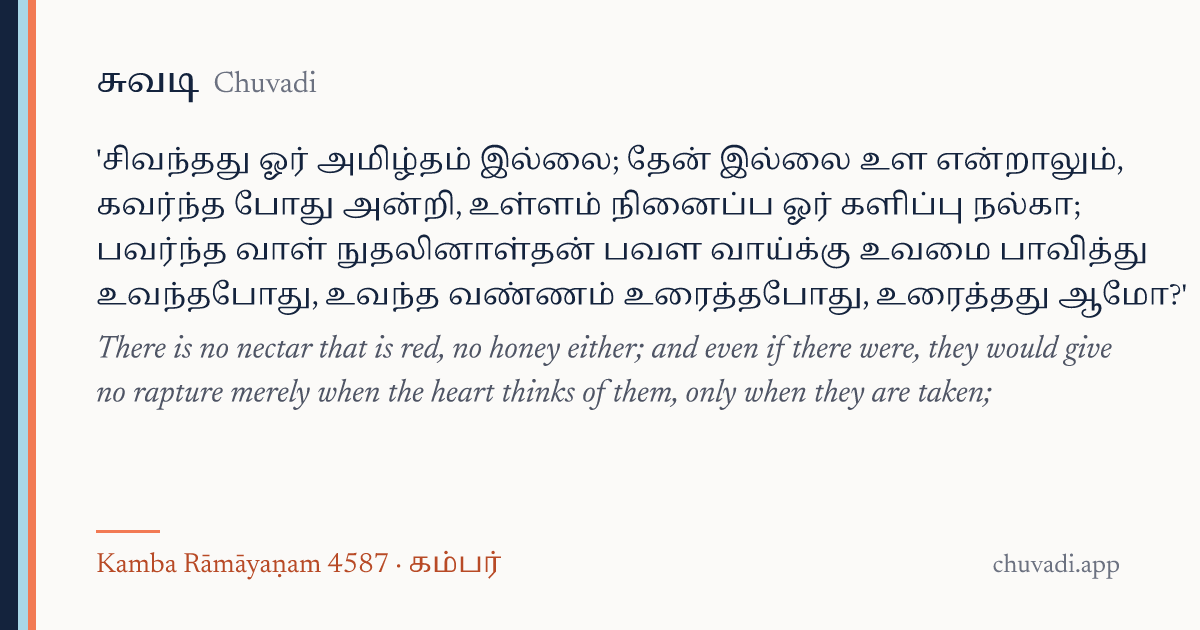
கம்பராமாயணம் 4587 · கிட்கிந்தா 12.50
பாடல் · The poem
Tap a word to see its gloss in the commentary and where else it occurs.
பொருள் · Meaning in Tamil
சிவந்தது - சிவந்த நிறமுடைய; ஓர் அமிழ்தம் இல்லை - அமிழ்தம் என்ற ஒன்று இல்லை; தேன் இல்லை - (செந்நிறமான) தேனும் இல்லை; உள என்றாலும் - (ஒருகால் அவை) உள்ளன என்றாலும்; கவர்ந்தபோது அன்றி - (அவை) எடுத்து உண்ட காலத்திலல்லாமல்; உள்ளம் நினைப்ப - மனத்தால் கருதிய அளவில்; ஓர் களிப்பு நல்கா - ஒப்பற்ற மகிழ்ச்சியைத் தரமாட்டா; பவர்ந்த வாள் நுதலினாள்தன் - செறிந்த ஒளிமிக்க நெற்றியையுடைய சீதையின்; பவள வாய்க்கு - பவளம் போன்று சிவந்த வாய்க்கு; உவமை பாவித்து - (தக்க) உவமைப் பொருளைக் கருதி; உவந்தபோது - தமக்கு மகிழ்ச்சியுண்டான காலத்தில்; உவந்தவண்ணம் உரைத்தபோது - மனத்துக்கு உவந்தவிதமாக எடுத்துச் சொன்னால்; உரைத்தது ஆமோ - அவ்வாறு சொன்னது பொருத்தமானதாக ஆகுமோ? (ஆகாது).
அமிழ்தம் வெண்ணிறமானது; செந்நிறமுடையதன்று; தேன் செந்நிறமுடையதாயினும் சீதையின் வாய்ப்போலச் செந்நிறமுடையதன்று; மேலும், அவை எடுத்து உண்டால் மாத்திரமே இனிமையைத் தருவன; ஆனால், இச்சீதையின்வாயோ நினைத்தமாத்திரத்தில் இனிமையைத் தருவது. ஆதலால், அப் பொருள்கள் சீதையின் வாய்க்கு உவமையாகாவாம். உள்ளக் களித்தலும் காண மகிழ்தலும் கள்ளுக்கு இல், காமத்திற்கு உண்டு (1281) என்ற குறளில் இந்தக் கற்பனைக்கு வித்து அமைத்திருத்தலைக் காணலாம். வேற்றுமையணியை அங்கமாகக் கொண்டுவந்த எதிர்நிலையணி. பவர்தல் - செறிதல். உவந்தபோது உவந்தவண்ணம் உரைத்தல் - தோன்றியபடி உண்மையை ஆராயாமல் வாய்க்க வந்தவாறு உரைத்தல்.
ஆங்கிலம் · English translationAI
Translation
- There is no nectar that is red, no honey either; and even if there were,
- they would give no rapture merely when the heart thinks of them, only when they are taken;
- so if one imagines a likeness for the coral mouth of her with the bright, full brow
- and, pleased, says whatever pleases, is what is said truly said?
What the poem says
Nectar and honey are the usual likenesses for the sweetness of a beloved's lips. Irāmaṉ objects that nectar is white, not red, and that even red honey is not as red as her mouth.
More importantly, nectar and honey delight only when tasted, while her lips delight him the moment he thinks of them. The idea goes back to a couplet of the Tirukkuṟaḷ (1281), which says that joy at the mere thought or sight belongs to love, not to wine. Comparisons tossed off carelessly simply do not hold.