



கம்பராமாயணம் 4590 · கிட்கிந்தா 12.53
பாடல் · The poem
Tap a word to see its gloss in the commentary and where else it occurs.
பாட வேறுபாடு · Project Madurai reads
பொருள் · Meaning in Tamil
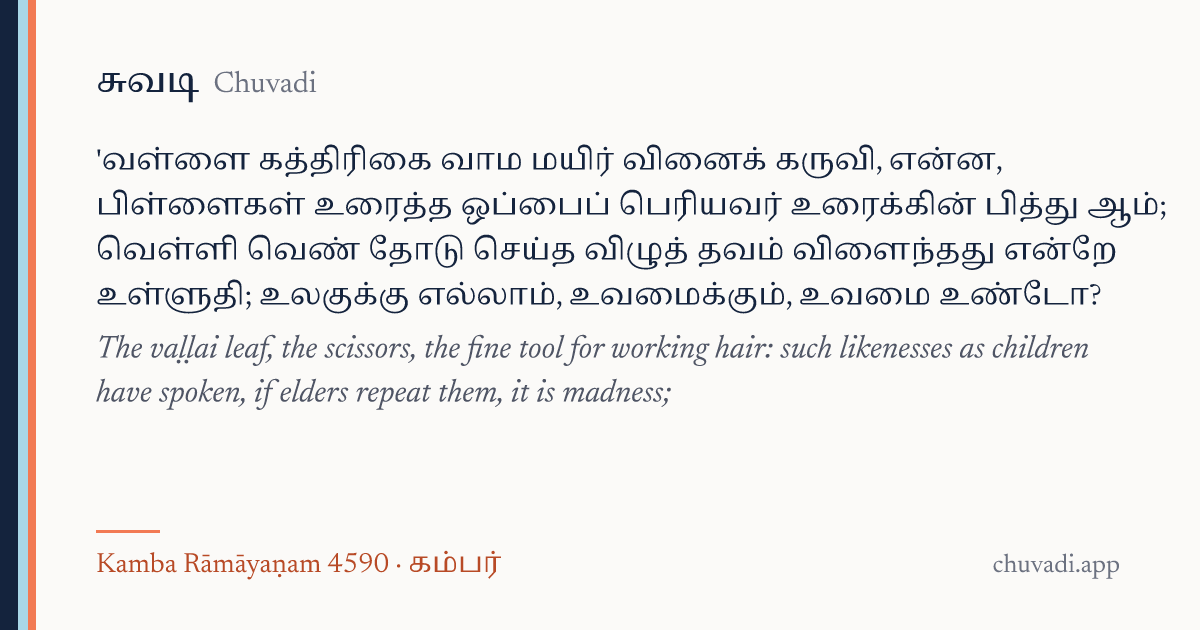
வள்ளை - (பெண்களின் காதுகளுக்கு) வள்ளைக் கொடியின் இலையும்; கத்திரிகை - கத்திரிக் கோலும்; வாம மயிர் வினைக்கருவி - அழகிய மயிர் நீக்கும் கருவியும்; என்ன - என்று; பிள்ளைகள் உரைத்த ஒப்பை - அறிவு நிரம்பாதவர்கள் சொல்லிய உவமைகளை; பெரியவர் - அறிவு முதிர்ந்த சான்றோர்; உரைக்கின் - (சீதையின் காதுகளுக்கு உவமைகளாகக் சொன்னால்; பித்து ஆம் - (அது) பித்தம் பிடித்தவர் சொல்லாகும் (சிறிதும் பொருந்தாது); வெள்ளி வெண்தோடு - (அவள் அணிந்துள்ள) வெள்ளி போன்ற வெண்ணிறமான தோடு என்னும் காதணி; செய்த - முன்பு செய்த; விழுத் தவம் விளைந்தது என்றே - சிறந்த தவமே (சீதையின் செவிகளாக) வந்தது என்றே; உள்ளுதி - நினைவாய்; உலகுக்கெல்லாம் - உலகிலுள்ள பொருள்களுக்கெல்லாம்; உவமைக்கும் - உவமையாகச் சொல்லுதற்குரிய ஒன்றுக்கும்; உவமை உண்டோ - வேறு ஓர் உவமைப் பொருள் கிடைக்குமோ?
சீதையின் காதுகள் உலகிலுள்ள அழகிய பெண்களின் காதுகளுக்கும் தாம் உவமையாகுமாறு அழகு மிகுந்திருப்பதால், அவற்றிற்கு வேறு ஓர் உவமானம் பொருள் இல்லை என்பது. பிள்ளைகள்: இளமைத் தன்மையர்; அறிவு நிரம்பாதவர்கள். வள்ளை - முதலாகு பெயர் வேற்றுப்பொருள் வைப்பணி.
ஆங்கிலம் · English translationAI
Translation
- The vaḷḷai leaf, the scissors, the fine tool for working hair: such
- likenesses as children have spoken, if elders repeat them, it is madness;
- think rather that the great penance done by her bright white earrings has borne fruit;
- for the thing that is the likeness for all the world, can there be a likeness?
What the poem says
For a woman's ears, poets have used the curved leaf of the vaḷḷai creeper, a pair of scissors, or a curved hair-cutting tool. Irāmaṉ calls these the comparisons of children; a mature person would be mad to use them for Cītai.
Instead, Aṉumaṉ should imagine that the white earrings she wears once performed great penance and were rewarded by being allowed to hang from her ears. Her ears are themselves the standard for all beautiful ears, and a standard has no likeness.