



கம்பராமாயணம் 4670 · கிட்கிந்தா 13.59
பாடல் · The poem
Tap a word to see its gloss in the commentary and where else it occurs.
பாட வேறுபாடு · Project Madurai reads
பொருள் · Meaning in Tamil
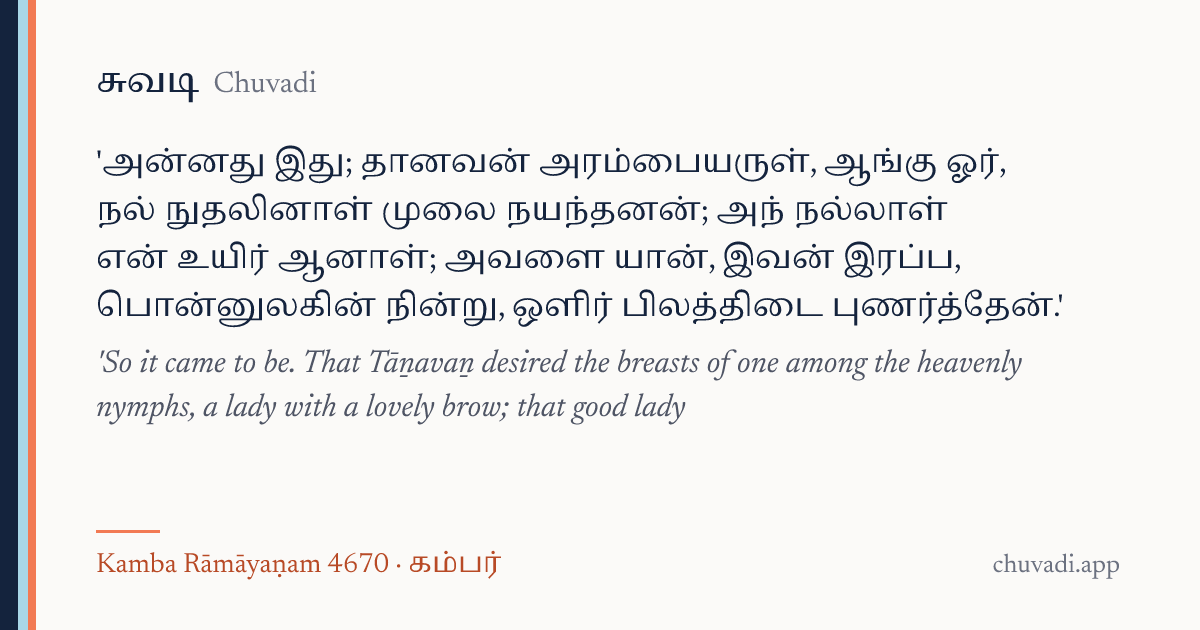
இது அன்னது - இந்த நகரம் அவ்வாறாக அமைக்கப்பட்டது; தானவன் - அந்த மயன் என்ற அசுரத் தச்சன்; அரம்பையருள் ஓர் நல் நுதலினாள் - தேவமாதர்களுள் அழகான நெற்றியையுடைய ஒருத்தியின்; முலை நயந்தனன் - போகத்தை விரும்பினான்; அந்நல்லாள் என் உயிர் ஆனாள் - நல்லஅழகு வாய்ந்த அவள் என் உயிர்போன்ற தோழியாவாள்; அவன் இரப்ப - அந்த அசுரன் (என்னை) மன்றாடிக் கேட்டுக் கொண்டதால்; யான் அவளை - நான் அத் தெய்வப் பெண்ணை; பொன்னுலகின் நின்று - பொன்மயமானதேவலோகத்திலிருந்து; ஒளிர் பிலத்திடை - விளங்குகின்ற இந்தப் பிலத்தில்; புணர்த்தேன் - கொண்டுவந்து சேர்த்தேன்.
தானவன்: காசியப முனிவரின் மனைவியருள் தனு என்பவளின்வழி வந்தவன்; தானவர் ஓர் அரக்க இனத்தவராவர் தானவன் என்றது மயனையும் நன்னுதலினாள் என்றது ஏமை என்பவளையும் குறிக்கும் வான்மீகம். அசுரத் தச்சனான மயன் தான் புரிந்த தவப்பயனாகப் பிரமனிடமிருந்து அசுரகுருவான சுக்கிராச்சாரியின் பொருள் முழுவதையும் பெற்றுப் பொன்மயமான வனத்தை உருவாக்கினான் என்றும், பின்னர் அது அந்த மயனால் காதலிக்கப்பட்ட தேவமாதுக்கு உரியதாயிற்று என்றும் கூறும். இச்செய்யுள் முதல் 63 முடிய அந்தாதித் தொடையாக அமைந்துள்ளமை காண்க.
ஆங்கிலம் · English translationAI
Translation
- 'So it came to be. That Tāṉavaṉ desired the breasts of one
- among the heavenly nymphs, a lady with a lovely brow; that good lady
- was dear to me as my own life; and when he begged me, I brought her
- down from the golden world and united her with him in this shining cavern.'
What the poem says
Cuyampirapai continues. Mayaṉ, a Tāṉavaṉ (Dānava, of the demon race descended from Danu), fell in love with one of the celestial nymphs. In Vālmīki she is named Hēmā. She was Cuyampirapai's dearest friend, and at Mayaṉ's pleading Cuyampirapai brought her down from heaven to join him in this cave city.
The commentary notes that from this verse to the end of her story each verse begins with the last word of the one before, a linking device called antāti.