



கம்பராமாயணம் 472 · பால 9.6
பாடல் · The poem
Tap a word to see where else it occurs.
பாட வேறுபாடு · Project Madurai reads
பொருள் · Meaning in Tamil
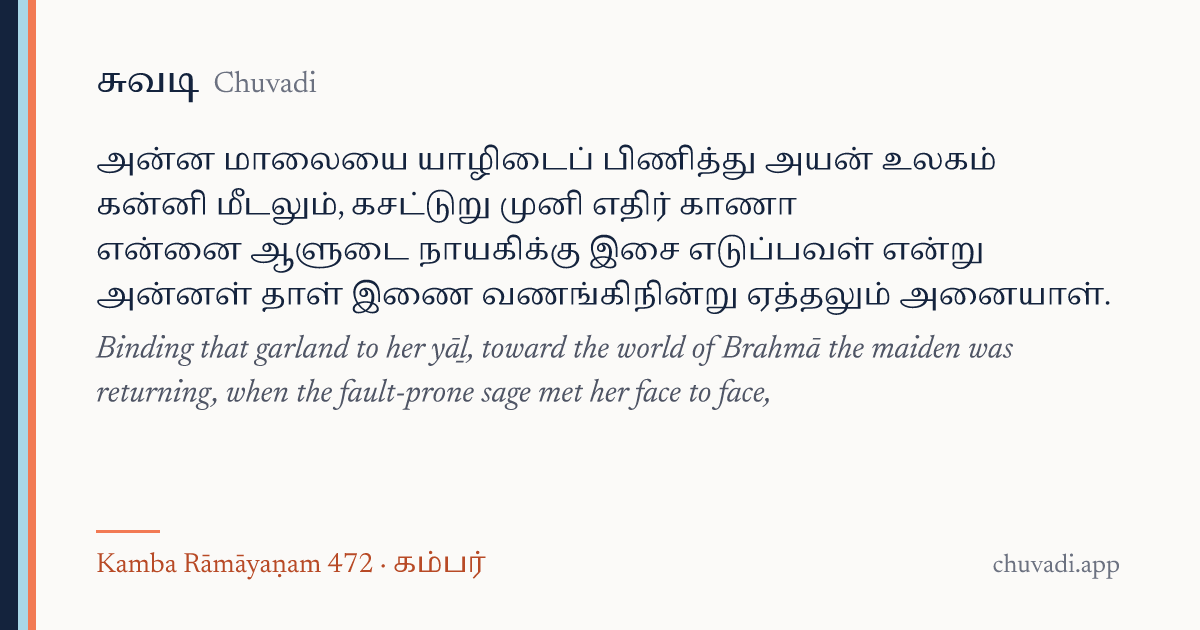
அந்த வித்தியாதரப்பெண் பூமாலையை யாழிலே கட்டிக்கொண்டு பிரம்மலோகம் திரும்பினாள். அப்பொழுது துருவாச முனிவன் அவளை எதிரே கண்டு அவளடிகளில் வீழ்ந்து வணங்கினான் என்பது. இதனால் துருவாசரின் திருமால் பக்தி புலனாகிறது. இவன் பிறரைச் சபிக்கச் சபிக்கத் தவம் வளரும் வரம் பெற்றவன். இவன் அத்திரி முனிவன் மகன்.
ஆங்கிலம் · English translationAI
Translation
- Binding that garland to her yāḻ, toward the world of Brahmā
- the maiden was returning, when the fault-prone sage met her face to face,
- and, saying, 'She sings the praise of the Lady who rules me,'
- he bowed at her two feet and stood extolling her; and she —
What the poem says
The maiden ties the garland to her yāḻ (harp) and sets off home to Brahmā's world. On the way she meets the sage Turuvācar, son of the sage Atri, who falls at her feet because she sings the praises of Lakṣmī, his own revered goddess. The scene shows his devotion to Tirumāl. Turuvācar was said to have a boon by which his ascetic power grew each time he cursed someone, which explains his short temper; the verse calls him a sage "given to fault." The final words run on into the next verse.