



கம்பராமாயணம் 476 · பால 9.10
பாடல் · The poem
Tap a word to see its gloss in the commentary and where else it occurs.
பொருள் · Meaning in Tamil
அரம்பை - நளகூபரனின் போகமடந்தை; திலோத்தமை - பிரமனால் படைக்கப்பட்டவள்; ஊர்வசி - நாராயண முனிவனது தொடையிலிருந்து (ஊரு) தோன்றியவள்.
அரம்பை முதலான தேவதாசிகள் நால்வரும் பாடிக்கொண்டும் ஆடிக்கொண்டும் தெருக்களில் சென்றார்கள் என்பது.
ஆங்கிலம் · English translationAI
Translation
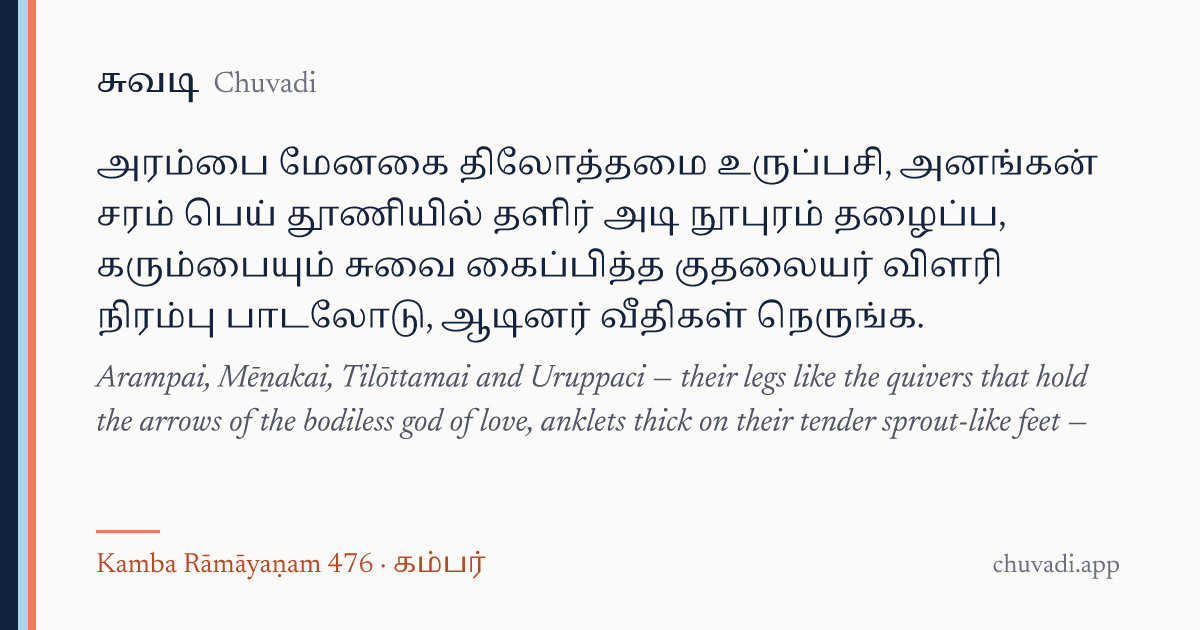
- Arampai, Mēṉakai, Tilōttamai and Uruppaci — their legs like the quivers
- that hold the arrows of the bodiless god of love, anklets thick on their tender sprout-like feet —
- those sweet-lisping ones, who make even sugarcane taste bitter, with songs full of the viḷari mode
- danced as they went, crowding the streets.
What the poem says
Indra's procession continues. The four celestial dancers lead it, singing and dancing through the streets of heaven. Arampai (Rambhā) was the beloved of Naḷakūparaṉ. Tilōttamai was made by Brahmā. Uruppaci (Urvaśī) was born from the thigh (ūru) of the sage Nārāyaṇa. Their shapely calves are compared to the quivers of Kāma, the god of love, and their voices are sweeter than sugarcane. Viḷari is one of the melodic modes of old Tamil music.
ஒலிபெயர்ப்பு · Transliteration (ISO 15919)
1arampai mēṉakai tilōttamai uruppaci, aṉaṅkaṉ
caram pey tūṇiyil taḷir aṭi nūpuram taḻaippa,
karumpaiyum cuvai kaippitta kutalaiyar viḷari
nirampu pāṭalōṭu, āṭiṉar vītikaḷ neruṅka.