



கம்பராமாயணம் 4765 · கிட்கிந்தா 16.6
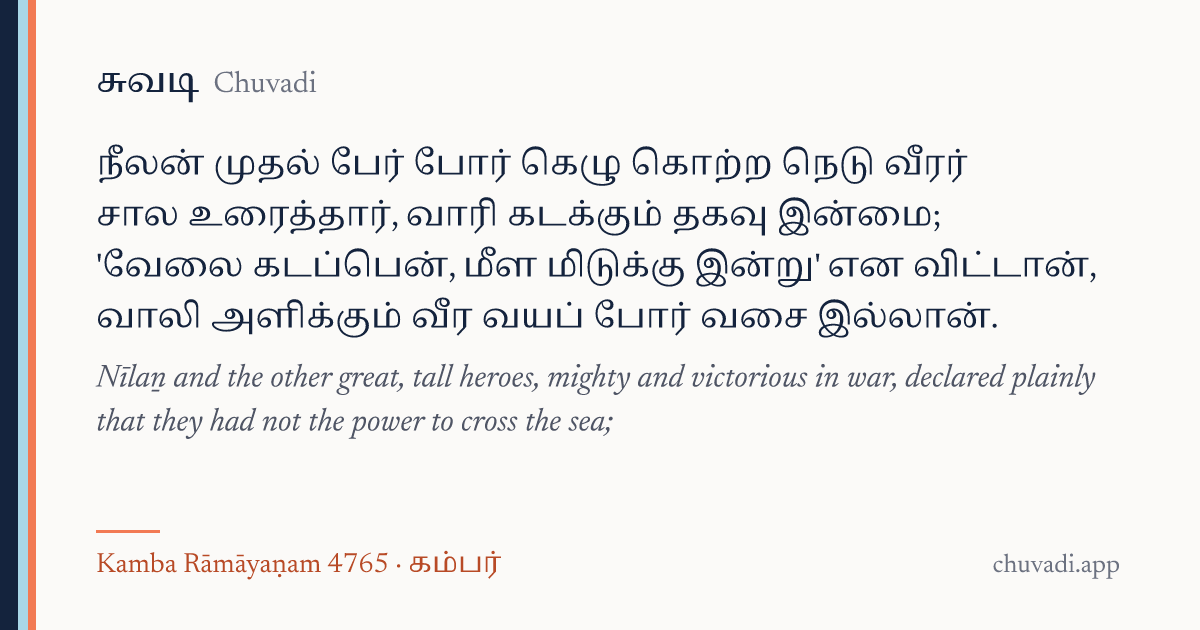
பாடல் · The poem
Tap a word to see its gloss in the commentary and where else it occurs.
பொருள் · Meaning in Tamil
போர் கொற்றம் கெழு - போரில் வெற்றி பெறுவதற்குரிய; நீலன் முதல் பேர் நெடுவீரர் - நீலன் முதலாகிய சிறந்த வானர வீரர்கள்; வாரி கடக்கும் தகவு இன்மை - கடலைக் கடந்து செல்லும் வலிமை தமக்கு இல்லாததை; சால உரைத்தார் - வெளிப்படையாக எடுத்துக் கூறிவிட்டார்கள்; வாலி அளிக்கும் - வாலி பெற்ற, வீர வயப்போர் - வீரத்தையும் வெற்றியையும் காட்டவல்ல போரில்; வசை இல்லான் - பழிப்பில்லாதவனான அங்கதன் (நான்), வேலை கடப்பென் - கடலைக் கடந்து (அக்கரையிலுள்ள இலங்கை) செல்வேன்; மீள மிடுக்கு இன்று - (ஆனால், அங்கிருந்து) மீண்டு வரும் வல்லமை எனக்கில்லை; என விட்டான் - என்று (தன் வலிமையைக்) கூறிமுடித்தான்.
சில வானர வீரர்கள் தம்மாலாகாதென்று கூறியதை இச் செய்யுளால் வெளியிடுகின்றார். நீலன் முதலோர் 'எங்களுக்குக் கடல் கடந்து செல்வது அறவே முடியாது' என்று சொல்ல, அங்கதன், 'கடல் கடந்து சென்று சீதையின் செய்தியை உணரவல்ல வல்லமை எனக்கு இருந்தும், சென்ற அளவில் உண்டாகும் இளைப்பால் வலிமை குன்றி மீண்டு வரும் வல்லமையில்லாமையால் நான் சென்றும் பயனில்லை!' என்று கூறினான் என்பது. நீலன்: பின்னர் வானரப் படைகளுக்கு ஒரு தலைவனாக இருந்து இலங்கையிற் போர் புரிந்தவன்.
ஆங்கிலம் · English translationAI
Translation
- Nīlaṉ and the other great, tall heroes, mighty and victorious in war,
- declared plainly that they had not the power to cross the sea;
- “I can cross the sea, but I lack the strength to come back,” said
- the son born of Vālī, a warrior blameless in valiant, victorious battle.
What the poem says
One by one the monkey champions admit their limits. Nīlaṉ, who will later command monkey troops in the war at Ilaṅkai, and the others say the leap is wholly beyond them. Aṅkataṉ, Vālī's son, says he could reach the far shore, but the effort would leave him too exhausted to make the return leap, so his going would be useless.