



கம்பராமாயணம் 4782 · கிட்கிந்தா 16.23
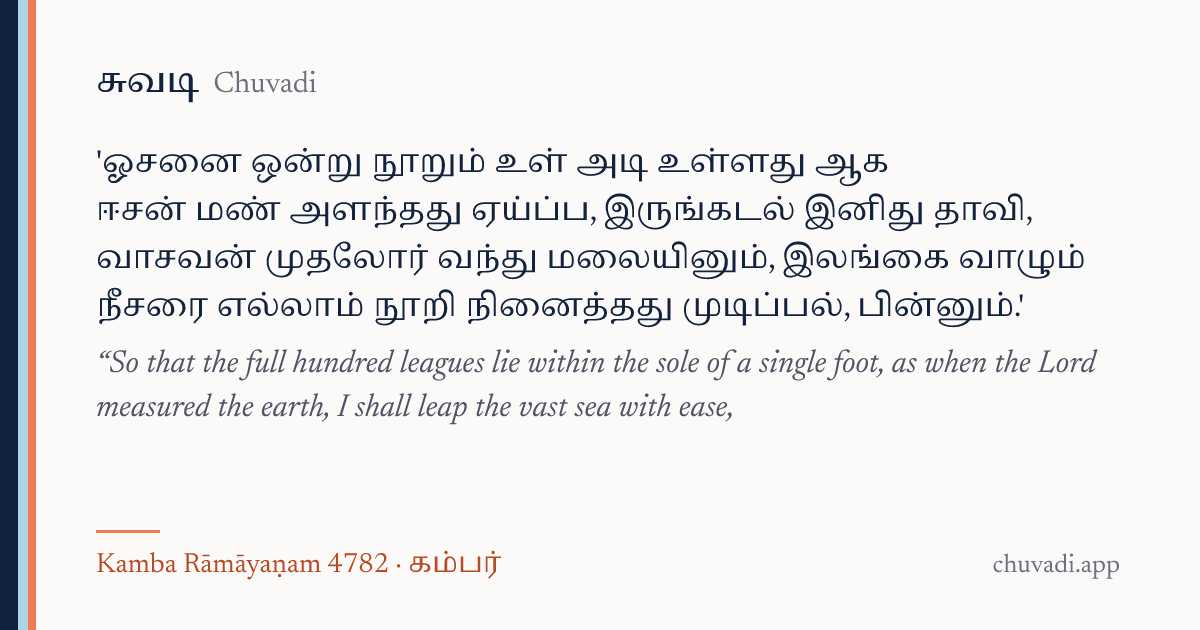
பாடல் · The poem
Tap a word to see its gloss in the commentary and where else it occurs.
பொருள் · Meaning in Tamil
ஈசன் மண் அளந்தது ஏய்ப்ப - உலகத்தையளந்தது போல; ஓசனை ஒன்று நூறும் - (இங்கிருந்து இலங்கைவரை) நூறு யோசனை தூரப் பரப்பையும்; உள் அடி உள்ளது ஆக - உள்ளங் காலின் ஓரடி வைப்புக்குள் அடங்கும்படியாக; இருங்கடல் இனிது தாவி - பெரிய கடலை மிக எளிதாகத் தாண்டி; வாசவன் முதலோர் - இந்திரன் முதலான தேவர்கள்; வந்து மலையினும் - (அரக்கர்க்கு உதவியாக) வந்து என்னையெதிர்த்துப் போர் செய்தாலும்; இலங்கை வாழும் - அந்த இலங்கை நகரில் வாழுகின்ற; நீசரை எல்லாம் நூறி - இழிவான அரக்கர்களையெல்லாம் வேரோடு அழித்து; நினைத்தது முடிப்பல் - மனத்தில் எண்ணிய காரியத்தை முடித்துவிடுவேன்; பின்னும் - மேலும்;
ஒரு தாவலிலேயே நூறுயோசனை தூரமுள்ள கடலைக் கடந்து இலங்கைக்குச் செல்லுமாறு பேருருக் கொள்ளப் போகும் அனுமனுக்கு, உலகம் முழுவதையும் ஓரடியால் அளந்த திரிவிக்கிரமன் உவமையாவான். மலையினும்: வாசவன் முதலோர் வந்து மலையமாட்டார் என்ற பொருளை வற்புறுத்தும். யோசனை: ஓர் எல்லையளவு. ஐயரவர்கள் நூலகப் பதிப்பில் 20, 21, 22 ஆகிய மூன்று பாடல்களும் இடம் பெறவில்லை.
ஆங்கிலம் · English translationAI
Translation
- “So that the full hundred leagues lie within the sole of a single foot,
- as when the Lord measured the earth, I shall leap the vast sea with ease,
- and even if Vācavaṉ and the others come to fight me, I shall crush all the vile ones
- who live in Ilaṅkai and accomplish what I have resolved; and more besides.”
What the poem says
Aṉumaṉ promises to cover the hundred leagues to Ilaṅkai in one stride, as Tirumāl in his Tirivikkiramaṉ form measured the whole earth with a single step. Even if Intiraṉ (Vācavaṉ) and the gods came to help the demons, he would still destroy them and complete his task. The commentary notes that the gods would hardly side with the demons; the phrase only stresses that nothing could stop him. One well-known edition omits this verse and the two before it.