



கம்பராமாயணம் 4787 · கிட்கிந்தா 16.28
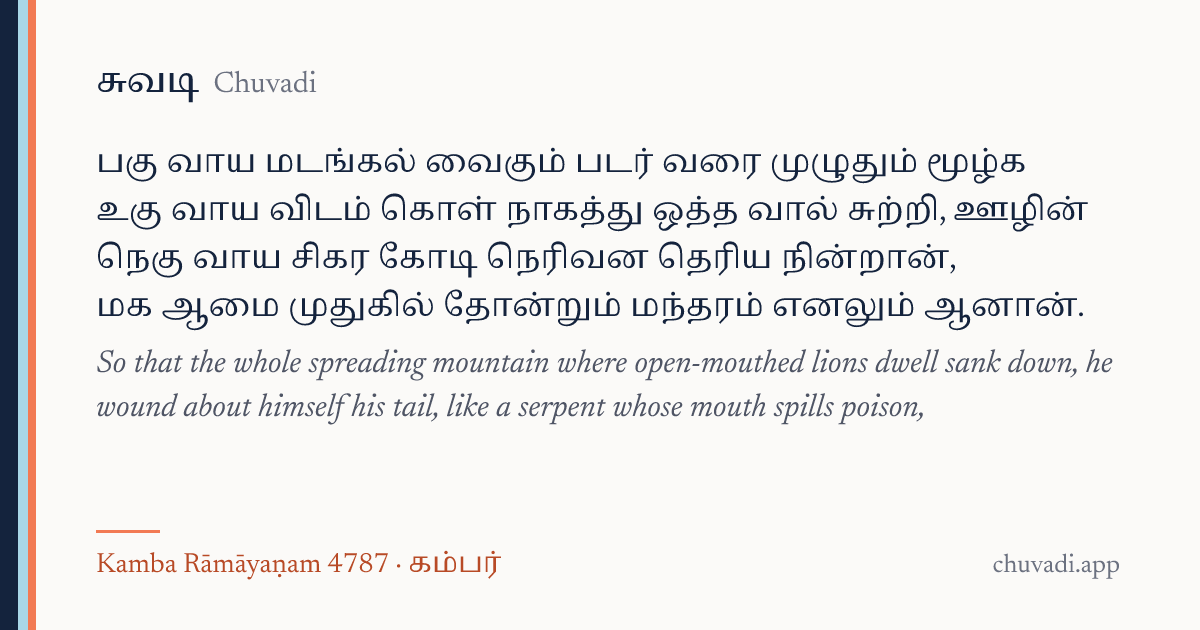
பாடல் · The poem
Tap a word to see its gloss in the commentary and where else it occurs.
பொருள் · Meaning in Tamil
பகு வாய மடங்கல் வைகும் - திறந்த வாயையுடைய ஆண்சிங்கங்கள் வாழ்கின்ற; படர் வரை முழுதும் - பரந்துள்ள அந்த மகேந்திர மலை முழுவதும்; மூழ்க - (அனுமனது பாரம் அழுத்துதலால்) கீழேயழுந்தவும்; ஊழின் நெகு வாய - வரிசையாகத் தோன்றும் சிதைந்த இடங்களையுடைய; சிகர கோடி - அந்த மலையின் சிகரங்கள் பலவும்; நெரிவன தெரிய - நெரிந்து பொடியாக; விடம் உகுவாய கொள் நாகத்து ஒத்த - நஞ்சைக் கக்குகின்ற வாயையுடைய பாம்பினைப் போன்ற; வால் சுற்றி - வாலினால் (தன்னுடம்பைச் சுற்றிக் கொண்டு), நின்றான் - (பேருருவத்தோடு) நின்றவனாகிய அனுமன்; மக ஆமை முதுகில் தோன்றும் - திருமாலாகிய பெரிய ஆமை முதுகின்மேல் விளங்கித் தோன்றிய; மந்தரம் எனலும் ஆனான் - மந்தரமலை என்று சொல்லத்தக்கவனுமானான்.
அனுமன் உடற்சுமையால் தரையில் அழுந்துகின்ற மகேந்திரமலை - கூர்மாவதார ஆமைக்கும் மகேந்திரமலையில் நின்ற அனுமன் - பெரிய கூர்மத்தால் தாங்கப்பெற்ற மந்தரமலைக்கும், அனுமனது உடலைச் சுற்றிய அவனது வால் - மந்தர மலையைச் சுற்றிய வாசுகிக்கும் ஒப்பாயின என்றார்.
ஆங்கிலம் · English translationAI
Translation
- So that the whole spreading mountain where open-mouthed lions dwell sank down,
- he wound about himself his tail, like a serpent whose mouth spills poison,
- and stood while the ranks of cracked summits were seen to be crushed;
- he became like Mantaram rising on the back of the great Tortoise.
What the poem says
Aṉumaṉ's enormous weight presses the mountain down, and its peaks crack and crumble. He coils his tail around his body. The scene recalls the churning of the ocean of milk: the sinking Mayēntiram is like the great Tortoise, Tirumāl's avatar, Aṉumaṉ standing on it is like Mount Mantaram used as the churning stick, and his coiled tail is like the serpent Vācuki wound around that mountain as the churning rope.