



கம்பராமாயணம் 4808 · சுந்தர 2.20
பாடல் · The poem
Tap a word to see its gloss in the commentary and where else it occurs.
பாட வேறுபாடு · Project Madurai reads
பொருள் · Meaning in Tamil
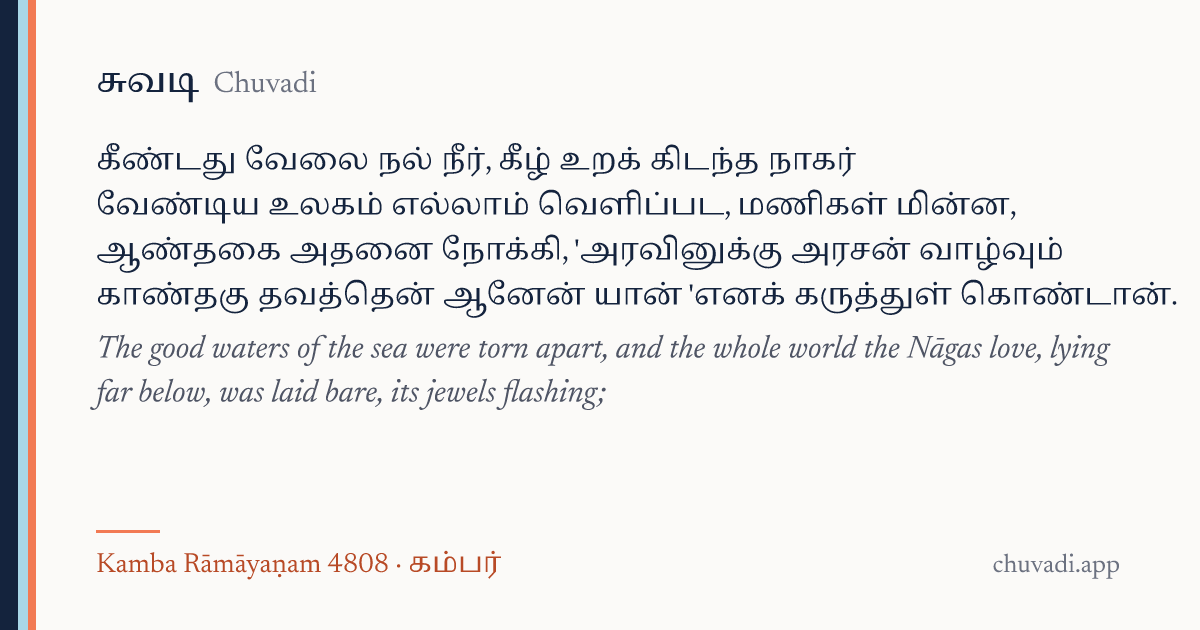
நல்நீர் வேலை கீண்டது - மிக்க நீரையுடைய கடல்பிளவுபட்டு; உறக் கீழ் கிடந்த - மிகவும் கீழான இடத்தே அமைந்துள்ள; நாகர் - நாகலோகத்தவர்கள்; வேண்டிய உலகம் எல்லாம் - விரும்புகின்ற உலகம் முழுவதும்; வெளிப்பட - வெளிப்பட்டுத் தெரிய (அதனால்); மணிகள் மின்ன - மாணிக்கங்கள் ஒளிவீச; ஆண்தகை அதனை நோக்கி - ஆண்மை மிக்க அனுமன் அதைப் பார்த்து; அரவினுக்கு அரசன் வாழ்வும் - பாம்புகளின் வேந்தனான ஆதிசேடனின் செல்வச் செழிப்பையும்; யான் காண்தகுதவத்தென் ஆனேன் - நான் பார்க்கும் தவத்தைச் செய்தவனாய் விட்டேன்; எனக் கருத்துள் கொண்டான் - என்று உள்ளத்தே எண்ணினான். மணிகள், செல்வச் செழிப்பைக் காட்டிற்று. கடல் உப்பு நீர் உடைத்து ஆதலின் நல்நீர் என்னும் சொல் மிகுதிப் பண்பை உணர்த்திற்று. நல்ல பாம்பு, நல்ல வெயில் என்றாற்போல. மகாவித்துவான் வி. கோவிந்தப் பிள்ளை கடலின் நல்ல ஸ்வபாவம் என்று வரைந்தார்.
ஆங்கிலம் · English translationAI
Translation
- The good waters of the sea were torn apart, and the whole world the Nāgas love,
- lying far below, was laid bare, its jewels flashing;
- the manly one, looking at it, thought within himself,
- “I have earned the merit to see even the splendour of the king of serpents.”
What the poem says
The force of Aṉumaṉ's passage parts the sea down to its floor and lays open the underworld of the Nāgas, the serpent people, with its glittering gems. Aṉumaṉ looks down and thinks how lucky he is to see even the wealth of Ādiśēṣaṉ, the serpent king. The commentary notes that "good water" here means "abundant water", since the sea is salt.