



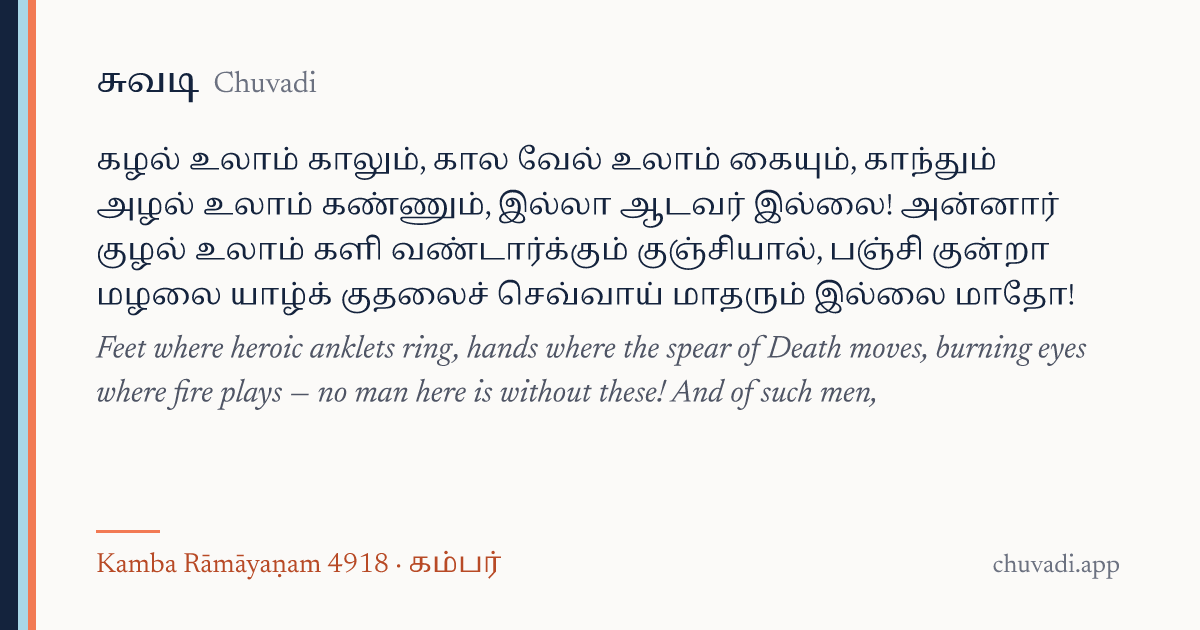
கம்பராமாயணம் 4918 · சுந்தர 3.36
பாடல் · The poem
Tap a word to see its gloss in the commentary and where else it occurs.
பொருள் · Meaning in Tamil
கழல் உலாம் காலும் - வீரக்கழல்கள் அணிந்த கால்களும்; காலவேல் உலாம் கையும் - யமனைப் போன்ற வேலேந்திய கைகளும்; காந்தும் - எரிகின்ற; அழல் உலாம் கண்ணும் - நெருப்பைப் போல் அழல்கின்ற கண்களும்; இல்லா - பெற்றிராத; ஆடவர் இல்லை - ஆண் மக்கள் இல்லை; அன்னார் - அந்த மகளிரின்; குழல் உலாம் - கூந்தலில் சூழ்ந்துள்ள; களிவண்டு - வண்டுகள்; ஆர்க்கும் - ஆரவாரிக்கின்ற; குஞ்சியால் - (ஆடவர்களின் தலைமயிரினாலே; பஞ்சி குன்றா - (பாதத்தில்) செம்பஞ்சிக்குழம்பு சிதையாத; மழலையாழ் - இனிய ஓசையுடைய யாழைப் போல; குதலைச்செவ்வாய் - இளஞ்சொற்களைப் பேசுகின்ற வாயையுடைய, மாதரும் இல்லை - பெண்களும் இல்லை. மகளிரின் கூந்தலின் வண்டு மொய்க்கும் குஞ்சி என்பது வேட்கைக் குறிப்பு. கொம்பர் மடப்பெடை வண்டும் கருங்குழல் களிக்கும் வண்டும் கடிமணம் புணரக் கண்டார் என்னும் வரைக் காட்சிப் படலப் பாடல் காண்க (கம்ப. 859) காதல் பரிமாற்றத்தை வண்டைக் கொண்டு காட்டுவது கவிச்சக்கரவர்த்தியின் இயல்பு. (கம்ப.9/0) மாது, ஓ - அசைகள்.
ஆங்கிலம் · English translationAI
Translation
- Feet where heroic anklets ring, hands where the spear of Death moves, burning
- eyes where fire plays — no man here is without these! And of such men,
- by the hair loud with drunken bees from women's tresses the red lac on her feet left undimmed —
- no such woman is there, with lisping red lips sweet as the harp!
What the poem says
Every demon man in the city is a warrior, with heroic anklets, a spear as deadly as Death, and blazing eyes.
Every woman has a lover who has bowed his head at her feet. The bees that swarm in women's fragrant hair have moved onto the men's hair, and that hair has rubbed off the red lac on every woman's feet. The commentary notes that Kampaṉ often uses bees to suggest the exchange of love.