



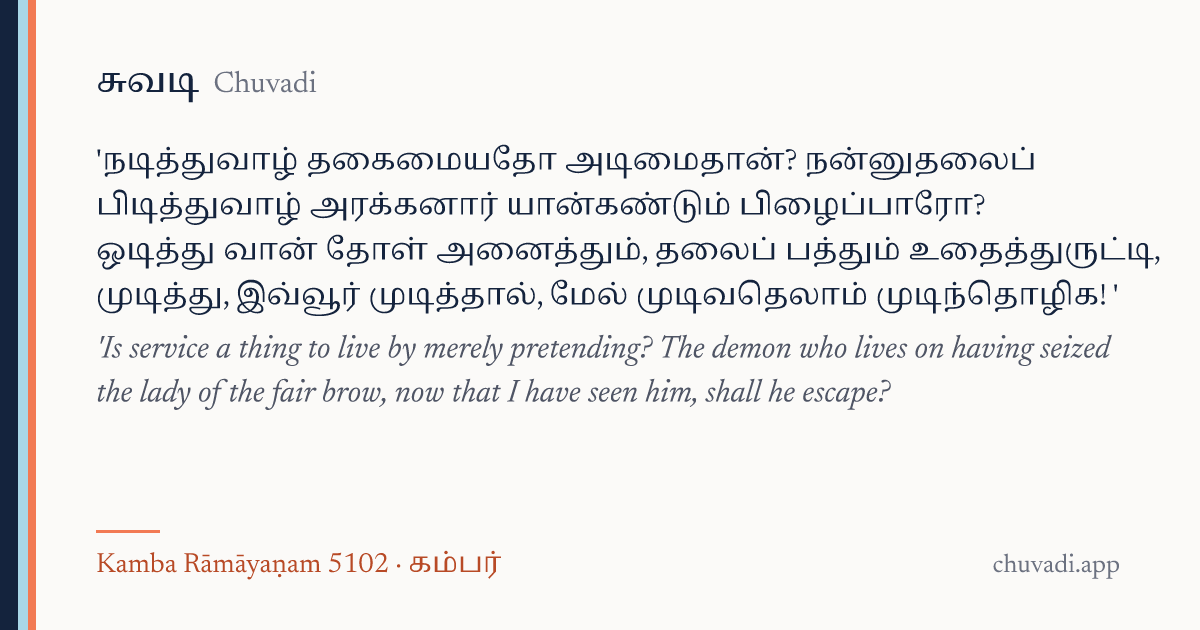
கம்பராமாயணம் 5102 · சுந்தர 3.220
பாடல் · The poem
Tap a word to see its gloss in the commentary and where else it occurs.
பொருள் · Meaning in Tamil
அடிமை - தொண்டின் இயல்; நடித்து - பாவனை செய்து (அதனால்); வாழ் - உயிர் வாழ்கின்ற; தகைமையதோ - தன்மையுடையதா?; நன்னுதலை - அழகிய நெற்றியுடைய பிராட்டியை; பிடித்து - சிறையிலடைத்துவிட்டு; வாழ் அரக்கனார் - வாழ்கின்ற இராவணனை; யான் கண்டும் - யான் பார்த்த பிறகும்; பிழைப்பாரோ - (அழியாமல்) தப்புவரோ?; வான்தோள் அனைத்தும் - (இராவணனின்) பெரிய தோள்கள் யாவற்றையும்; ஒடித்து - முறித்து; தலை பத்தும் - பத்துத் தலைகளையும்; உதைத்து - காலாலே தாக்கி; உருட்டி - (பூமியிலே) உருளச் செய்து; முடித்து - (இராவணனைக்) கொன்று; இவ் ஊர் - இந்த இலங்கையை; முடித்தால் - அழித்தால்; மேல் - பிறகு; முடிவது எல்லாம் - நடக்க வேண்டியவை யாவும்; முடிந்தொழிக - நடக்கட்டும்.
நடித்தல் - பாவனை செய்தல். பாசாங்கு செய்தல். நாடகத்தால் உன் அடியார்போல் நடித்து (திருவாசகம்).
முடிவது - நடப்பது. ஒழிக - வெறுப்பைக் காட்டும் சொல். “கெடுத்து ஒழிந்தனை உன்னையும் என்னையும்” (கம்ப. 6212)
ஆங்கிலம் · English translationAI
Translation
- 'Is service a thing to live by merely pretending? The demon who lives on
- having seized the lady of the fair brow, now that I have seen him, shall he escape?
- Breaking all his mighty arms, kicking his ten heads and sending them rolling,
- finishing him and finishing this city: after that, let whatever is to happen, happen!'
What the poem says
Aṉumaṉ's rage keeps building. True service, he says, cannot just be play-acting. Now that he has found the demon who holds Cītai captive, how can he let him live?
He imagines snapping all twenty arms, kicking the ten heads so they roll on the ground, killing Irāvaṇaṉ and destroying Ilaṅkai. Whatever happens after that, let it happen.