



கம்பராமாயணம் 5119 · சுந்தர 4.3
பாடல் · The poem
Tap a word to see its gloss in the commentary and where else it occurs.
பாட வேறுபாடு · Project Madurai reads
பொருள் · Meaning in Tamil
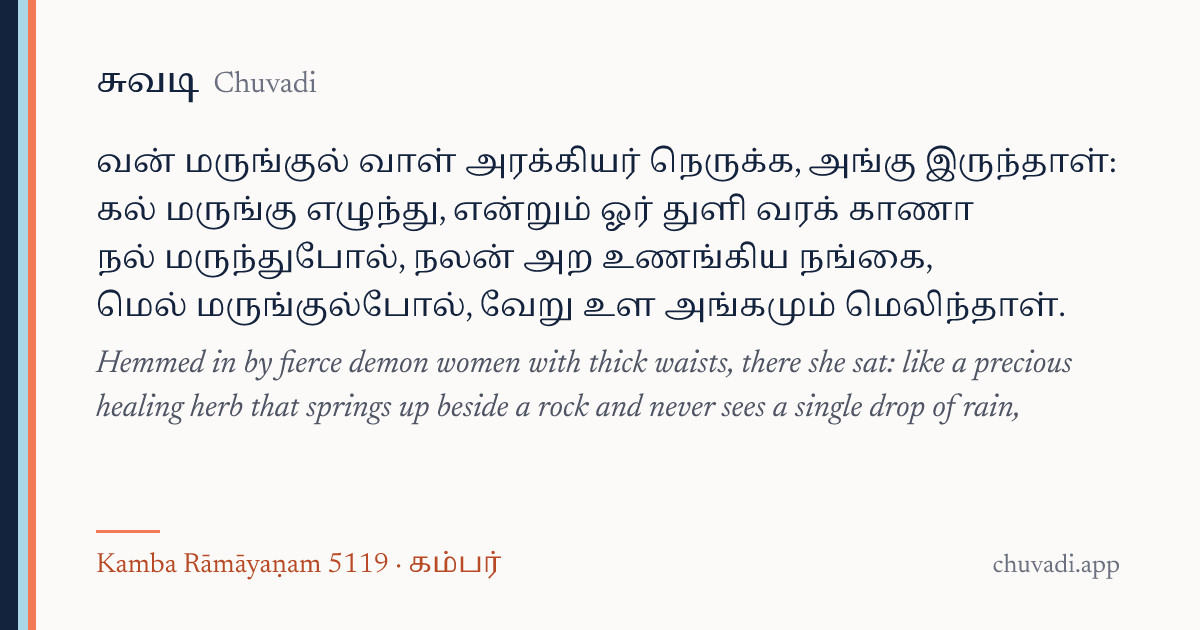
கல் மருங்கு எழுந்து - கல்லின் பக்கத்திலே தோன்றி வளர்ந்து; என்றும் - எக்காலத்திலும்; ஓர் துளி வரக் காணா - ஒரு நீர்த்துளி வருதலை யறியாத; நல் மருந்து போல் - உயர்ந்த மூலிகையைப் போல; வன்மருங்குல் - பருத்த இடையை உடைய; வாள் அரக்கியர் - கொடிய அரக்கியர்கள்; நெருக்க - துன்புறுத்த (அதனால்); நலன் அற உணங்கிய நங்கை - உடல் நலமும் உள நலமும் அற்றுப்போக வாடிய பிராட்டி; மெல் மருங்குல் போல் - மெல்லிய இடையைப் போல; வேறு உள அங்கமும் - மற்றைய அங்கங்களும்; மெலிந்தாள் - இளைத்து; அங்கு இருந்தாள் - அசோக வனத்தில் இருந்தாள்.
மென்மருங்குல் சிற்றிடையைக் குறிக்கும். அதுபோல் வன்மருங்குல் பேரிடையைக் குறிக்கும். மருந்து - மூலிகை. மருந்து கொள் மரத்தின் வாள் வடு மயங்கி (புறம் 180) “வாள் அரக்கியர் பல முகத்தார் எழு நூறு பேர்; நல் மருந்து மிருதசஞ்சீவினி” என்பன பழையவுரை (அடை - பதி)
ஆங்கிலம் · English translationAI
Translation
- Hemmed in by fierce demon women with thick waists, there she sat:
- like a precious healing herb that springs up beside a rock and never sees a single drop of rain,
- the lady had withered until all her well-being was gone,
- and like her slender waist, every other limb of hers had grown thin.
What the poem says
This is the first picture of Cītai in captivity. She sits surrounded by heavy-waisted, cruel demon women who torment her.
She has withered like a rare medicinal herb growing beside a rock that never gets a drop of rain. Her waist was always slender, and now every other part of her body has wasted away to match it. An older commentary identifies the herb as the one that brings the dead back to life.