



கம்பராமாயணம் 5132 · சுந்தர 4.16
பாடல் · The poem
Tap a word to see its gloss in the commentary and where else it occurs.
பாட வேறுபாடு · Project Madurai reads
பொருள் · Meaning in Tamil
இராப் பகல் இல்லாள் - இரவையும் பகலையும் அறியாத பிராட்டி; அங்கு - அவ் அசோகவனத்தின்கண்; வன்கண் வஞ்சனை அரக்கர் - கொடுமையும் வஞ்சகமும் உடைய அரக்கர்கள்; இத்துணைப் பகல் வையார் - இவ்வளவு நாள்கள் (பிராட்டியை) உயிருடன் வைத்திருக்கமாட்டார்கள்; தின்பர் - தின்றிருப்பார்கள்; இனி - இப்போது; செயத்தக்கது என் என்று - செய்யக்கூடியது யாது என்று கருதி; தீர்ந்தானோ - (இராமபிரான்) என்னைத் தேடுவதை விட்டுவிட்டானோ?; தன் குலப்பொறை - (அல்லது) தன்குலத்தவர்கள் மேற் கொண்ட பொறுமை; தன் பொறை என - தன்னுடைய பாரம் என்று கருதி; தணிந்தானோ - சாந்தம் அடைந்தானோ; என் எண்ணுவேன் கொல் என்னும் - எதை நினைப்பேன் என்று கூறுவாள். பொறை - பொறுமை. பொறை என்பதற்கு அரசபாரம் எனக் கொண்டு தனக்குரிய அரச பாரத்தை மேற்கொண்டு திரும்பி விட்டானோ என்றும் பொருள் கூறலாம். இப் பொறைக்கு... தன் பொறை எனத் தவிர்ந்தானோ என்னும் பாடம் ஆதரவு தரும். இக் கருத்து அடுத்த பாடலில் வருதலின் இவ்வுரை ஏற்க இயலவில்லை. விரும்பின் கொள்க? இராப் பகல் இல்லாள் என்னும் எழுவாய் 28 பாடல் வரை தொடரும். 29ஆம் பாடலில் இருந்தனள் என்னும் பயனிலைக்கு இது எழுவாய். “ஆங்கு இராப் பகல்” என்பதில் உள்ள ஆங்கு அசை. “அவ்விடத்தில்” என்றும் பொருள் கூறலாம். அது சிறப்பன்று (கலி...)
ஆங்கிலம் · English translationAI
Translation
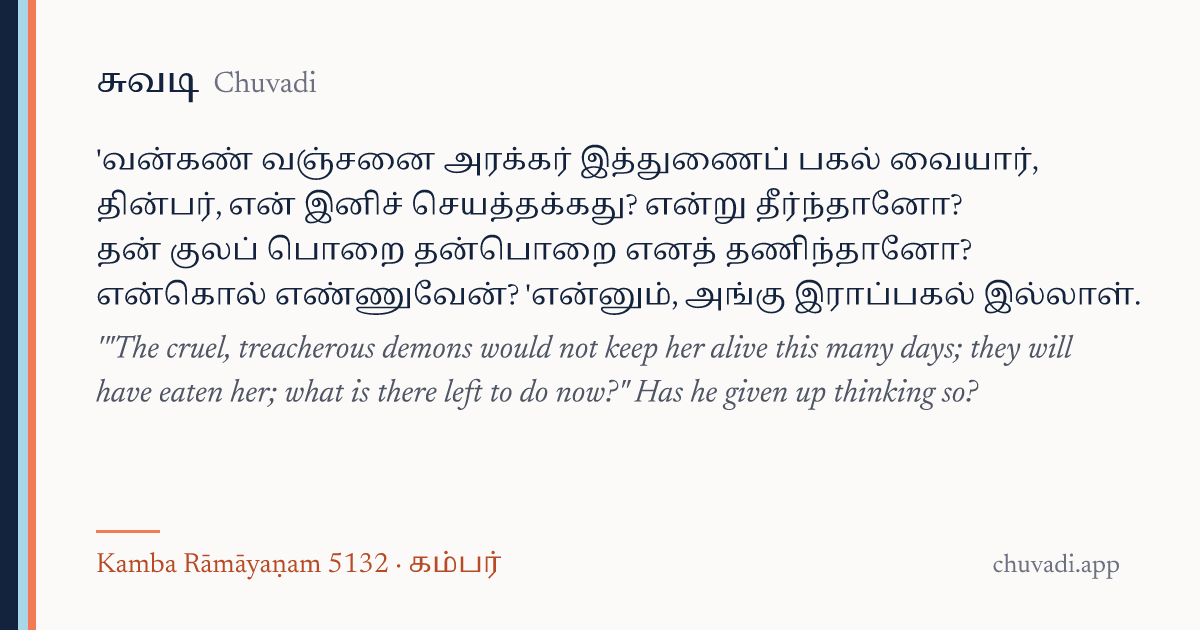
- '"The cruel, treacherous demons would not keep her alive this many days;
- they will have eaten her; what is there left to do now?" Has he given up thinking so?
- Or has he grown calm, taking the patience of his race as his own burden?
- What am I to think?' she says, there, she who knew neither night nor day.
What the poem says
Cītai, who no longer knows night from day, imagines what Irāmaṉ might be thinking. Perhaps he believes the cruel demons could never have kept her alive so long and must have eaten her, so he has given up the search.
Or perhaps he has taken on the famous forbearance of his royal line and quietly accepted his loss. She does not know what to believe. A long series of verses describing her state begins here and leads up to the main statement several verses later.