



கம்பராமாயணம் 5139 · சுந்தர 4.23
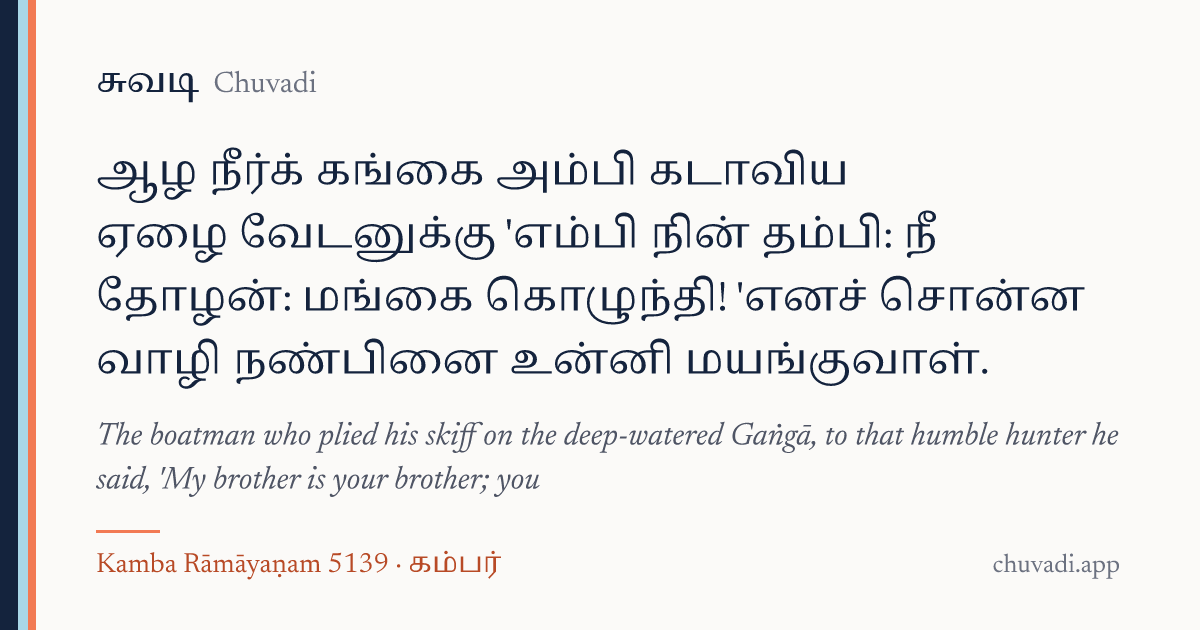
பாடல் · The poem
Tap a word to see its gloss in the commentary and where else it occurs.
பொருள் · Meaning in Tamil
ஆழ நீர்க்கங்கை - ஆழமான நீரையுடைய கங்கையிலே; அம்பி கடாவிய - ஓடத்தை இயக்கிய; ஏழை வேடனுக்கு - எளிய வேடனாகிய குகனிடத்தில்; எம்பி நின் தம்பி - என்னுடைய தம்பியாகிய இலக்குவன் உன்னுடைய தம்பி; நீ தோழன் - நீ எனக்குச் சகோதரன்; மங்கை கொழுந்தி - சீதை உன்னுடைய மைத்துனி; எனச் சொன்ன - என்று (பாசத்துடன்) கூறிய; நண்பினை - சகோதரப் பரிவினை; உன்னி - எண்ணி; மயங்குவாள் - கலக்கம் அடைவாள்.
வாழி - அசை. 'வாழிநண்பு' என்பதற்குக் குறைவுபடாத சினேகம் என்று வி. கோவிந்தப்பிள்ளை அவர்கள் உரை வகுத்தார். இப் பாடல் 'ஏழை, ஏதலன்' என்று தொடங்கும் பெரிய திருமொழிப் பாசுரத்தைப் பின்பற்றி எழுந்தது. ஏழை வேடன் பால் அன்புடையவன், என்பால் வாராமையால் அவன் என்பால் சீற்றங் கொண்டானோ என்று பிராட்டி மனம்கலங்கினாள். வேடனுக்கு - வேடன்பால். நான்கன் உருபை ஏழன் உருபாக்குக. நாணற்கிழங்கு மணற்கு ஈன்ற முளை என்றாற் போல (மணலின் கண் ஈன்ற முளை என்பது பொருள்).
ஆங்கிலம் · English translationAI
Translation
- The boatman who plied his skiff on the deep-watered Gaṅgā,
- to that humble hunter he said, 'My brother is your brother; you
- are my friend; this lady is your sister-in-law' — so he spoke,
- and thinking of that blessed friendship, she grows faint.
What the poem says
In the Aśoka grove Cītai, a captive of Irāvaṇaṉ, turns over memories of Irāmaṉ. She recalls how he embraced Kukaṉ, the humble hunter-chief who ferried them across the Gaṅgā, and declared him family: Ilakkuvaṉ his brother, Cītai his sister-in-law.
The memory hurts: one who loved even a lowly hunter so warmly has not come for her, and she wonders whether he is angry with her. The verse echoes a well-known Vaiṣṇava hymn praising the Lord's love for the hunter.