



கம்பராமாயணம் 5252 · சுந்தர 4.136
பாடல் · The poem
Tap a word to see its gloss in the commentary and where else it occurs.
பொருள் · Meaning in Tamil
கடிக்கும் - (காரணமின்றி) கடிக்கும் இயல்பைப் பெற்ற; வல் அரவும் - கொடும் பாம்பு கூட; மந்திரம் கேட்கும் - மந்திரத்துக்கு அடங்கும்; களிக்கின்றோயை - செருக்குக் கொண்ட உன்னை; ஈது அடுக்கும் - இது செய்யத் தக்கது; (ஈது) அடாது - இது செய்யத்தகாதது; என்று - என்று கூறி (அதை மெய்ப்பிக்க); ஆன்ற - பழமையான; ஏதுவொடு - காரணத்துடன் கூடிய; அறிவு காட்டி - அறிவைக் காண்பித்து; இடிக்குநர் - நெருக்கி வற்புறுத்துபவர்கள்; இல்லை - இங்கே இல்லை; உள்ளார் - (உன் அவையில்) இருப்பவர்கள்; எண்ணியது எண்ணி - நீ கருதியதையே மதித்து; உன்னை முடிக்குநர் - உன்னை அழிப்பவர்களே; என்ற போது - என்று அமைந்த காலத்தில்; முடிவு அன்றி - அழிவு அல்லாமல்; முடிவது உண்டோ - (வேறுவிதமாக) நிறைவேறுவது உள்ளதா?
'இடிப்பாரை இல்லாத ஏமரா மன்னன் கெடுப்பார் இலானும் கெடும்' என்னும் குறள் (448) இப்பாடலுக்கு மூலம். இடிப்பார் - கழறுதற் குரியார் (அழகர்) அடிச்சுப் புத்தி சொல்கிற பெரியோர் (பரிதி) 'இராவணன் பாம்பினும் கொடியவன்' என்பது குறிப்பெச்சம். தலைவன் கருதியதையே மதிப்பவர் அமைச்சராய் இருந்து பயனில்லை. வெம்மையைத் தாங்கி நீதி விடாது நின்று உரைத்தல் வேண்டும்.
ஆங்கிலம் · English translationAI
Translation
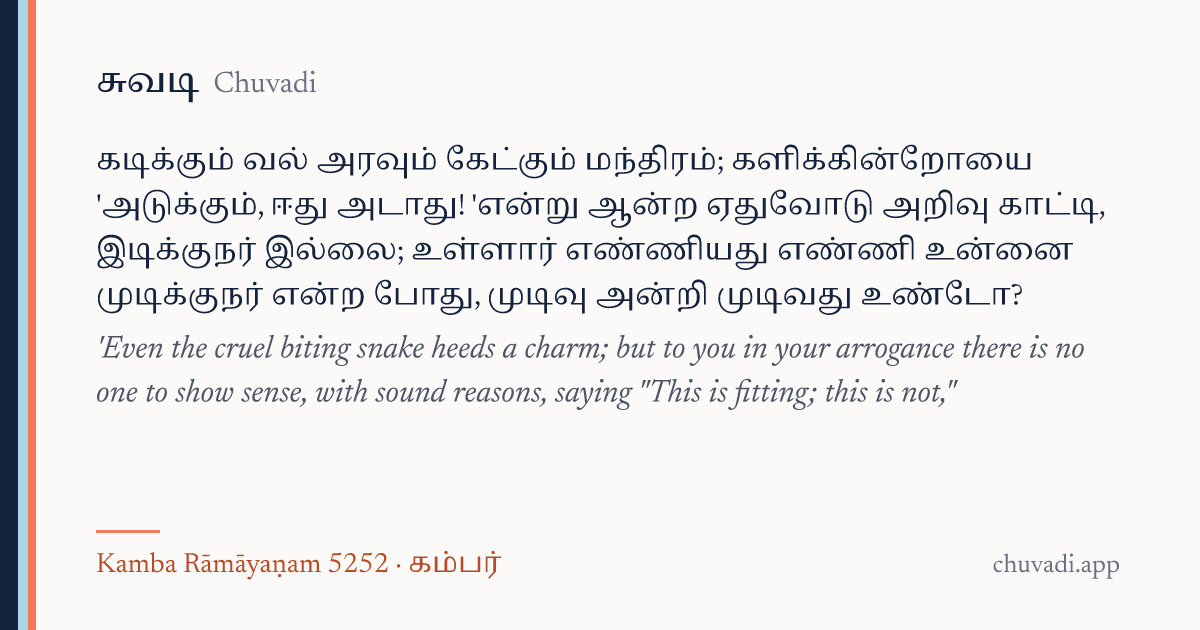
- 'Even the cruel biting snake heeds a charm; but to you in your arrogance
- there is no one to show sense, with sound reasons, saying "This is fitting; this is not,"
- and to rebuke you; those around you only think what you think,
- and are the ones who will finish you. When that is so, can it end in anything but your end?'
What the poem says
Cītai says that even a venomous snake will obey a snake-charmer's spell, but Irāvaṇaṉ is worse: in his pride he has no one who will reason with him and tell him plainly what is right and what is wrong.
His counsellors merely echo his own wishes, and that is what will destroy him. The verse rests on a Kuṟaḷ couplet: a king with no one to rebuke him will perish even if he has no enemies.