



கம்பராமாயணம் 5292 · சுந்தர 5.17
பாடல் · The poem
Tap a word to see its gloss in the commentary and where else it occurs.
பொருள் · Meaning in Tamil
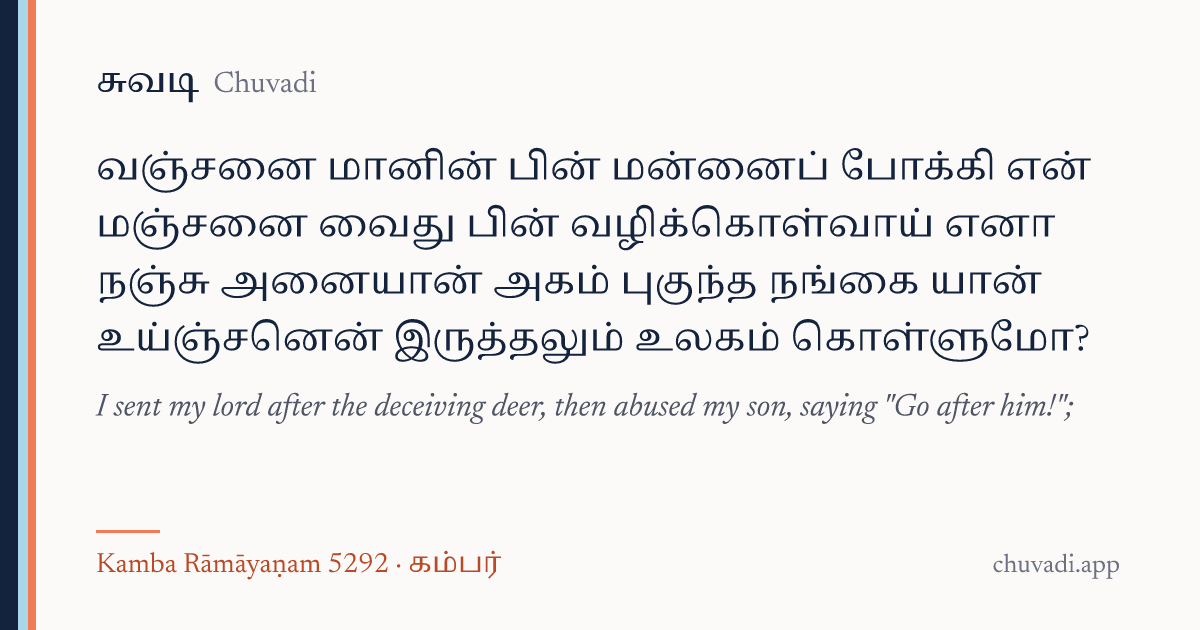
வஞ்சனைமானின் பின் - பொய் மானுக்குப் பின்னே; மன்னைப் போக்கி - தலைவனான இராமபிரானை அனுப்பிவிட்டு; என் மஞ்சனை - என் மகனான இலக்குவனை; வழிக்கொள்வாய் என - இராமனைத் தேடிச் செல்க என்று; பின்வைது - பிறகு இழித்துப்பேசி; நஞ்சு அனையான் - விடம் போன்ற இராவணனின்; அகம் புகுந்த - வீட்டை அடைந்த; நங்கை யான் - பெண்ணாகிய யான்; உய்ஞ்சனென் - உயிர் பிழைத்து; இருத்தலும் - (இறவாமல்) இருப்பதை; உலகம் கொள்ளுமோ - உலகம் ஏற்றுக் கொள்ளுமா.
இயல்பாகநிகழ்ந்த நிகழ்ச்சியை உள்நோக்கம் உடையதாகப் பேசுவது உலக மரபு. மானின்பின் இராமனைப் போக்கியது, இலக்குவனை அனுப்பியது யாவும் சந்தர்ப்பத்தால் நேர்ந்தது. தான் செய்யாத குற்றத்தைச் செய்ததாகப் பிராட்டி கருதுகிறாள். இலக்குவன் பால் கொண்ட பாசம் மஞ்சன் என்பதால் புலனாகிறது மஞ்சன் - மகன். சுமித்திரை, சீதையைத் தாயாகக் கருதச் சொன்னது பிராட்டியின் நினைவில் உள்ளது. உயிர்த் தாயர்... பூங்குழற் சீதை என்று அவள் பேசினாள் இங்கு உலகம் என்றது சான்றோரை. வஞ்சனைமான் - பொய்மான். மாயையும் பெண்ணும் பொய்யும் வஞ்சனை (பிங்கலம் 40/4) வஞ்சகமுடைய மான் என்றும் கூறலாம்.
ஆங்கிலம் · English translationAI
Translation
- I sent my lord after the deceiving deer, then abused
- my son, saying "Go after him!";
- I, the woman who entered the house of one who is like poison,
- if I go on living, will the world accept it?
What the poem says
Cītai blames herself for everything that led to her capture: she sent Irāmaṉ chasing the magic deer, then spoke harshly to Ilakkuvaṉ to drive him after his brother, and so came into the house of the venomous Irāvaṇaṉ.
How can the world, meaning the wise, accept that she still lives? She calls Ilakkuvaṉ her son, remembering that his mother Cumittirai told him to treat Cītai as his mother. The commentary notes that these events happened by circumstance, yet she takes the guilt on herself.