



கம்பராமாயணம் 5293 · சுந்தர 5.18
பாடல் · The poem
Tap a word to see its gloss in the commentary and where else it occurs.
பாட வேறுபாடு · Project Madurai reads
பொருள் · Meaning in Tamil
வல்இயல் மறவர் - வலியஇயல்பை உடைய இராமலக்குவர்கள்; தம்- தம்முடைய; வடுவின் தீர்பவர் - பழிக்குற்றத்திலிருந்து நீங்குபவராய்ப்; போர்வெல்லினும் வெல்லுக - போரில் வென்றாலும் வெற்றியடையட்டும்; (அல்லது) விளிந்து வீடுக - இறந்து அழியட்டும், (மகிழ்ச்சியோ துன்பமோ அடையேன்) யான் - நான்; இல் இயல் அறத்தை - இல்லறத்திற்கு அமைந்த தர்மத்தை; இறந்து வாழ்ந்தபின் - கடந்து வாழ்ந்த பிறகு; சொல்லிய என்பழி- உலகம் தூற்றிய எனக்குரிய நிந்தைகள்; அவரைச் சுற்றுமோ - இராமலக்குவர்களைச் சூழுமோ ?.
யான் அறங்கடவாதுஇருப்பின் என்னை மீட்காத பழி அவரைச் சாரும் யான் அறங் கடந்ததால் என்பழி அவரைச் சாரா, என்றாள் பிராட்டி அறம் கடவாது இருந்தும் மனம் நொந்து இங்ஙனம் பேசினாள். யான் இறப்பதால்அவர்க்குப் பழிவரின் இறப்பது தீது. பழிவராமையால் இறப்பது நன்று என்று கருதுகிறாள். என் பழி - எனக்குரிய பழி.
ஆங்கிலம் · English translationAI
Translation
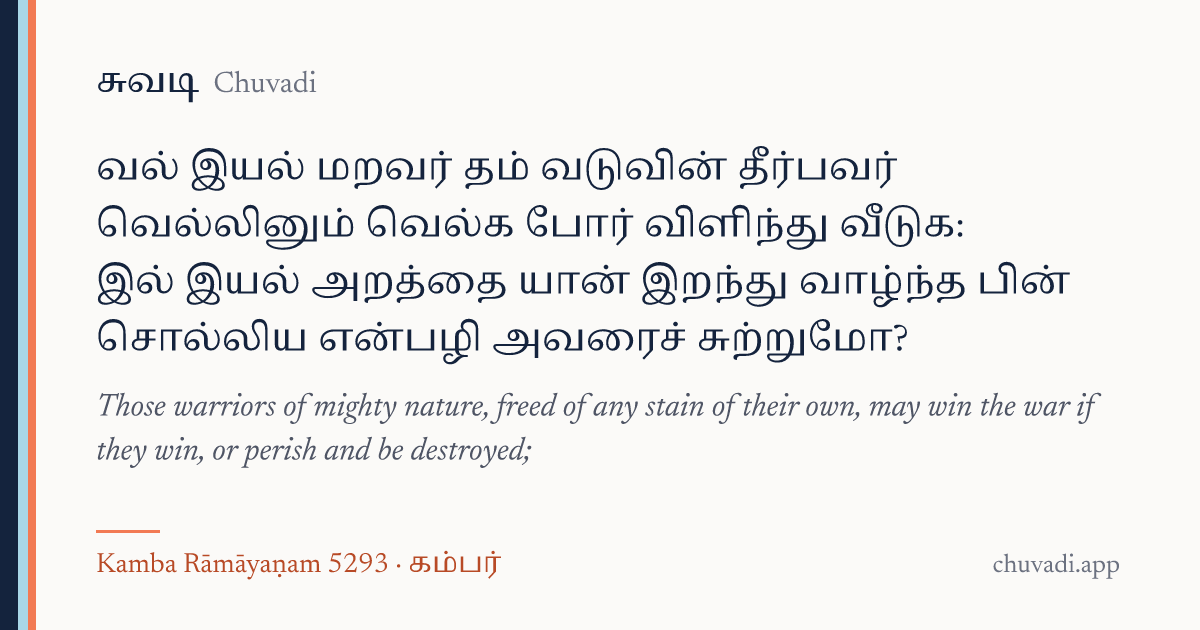
- Those warriors of mighty nature, freed of any stain of their own,
- may win the war if they win, or perish and be destroyed;
- once I have lived on beyond the dharma of the household,
- will the blame spoken of me cling to them?
What the poem says
Cītai reasons coldly about Irāmaṉ and Ilakkuvaṉ. Whether they win their war or die in it, they stand free of blame. Had she kept the wife's dharma, the shame of failing to rescue her would have fallen on them; but since, as she feels, she has already gone beyond that dharma by living on, the blame is hers alone.
So her death will bring them no disgrace, and dying is the right course. The commentary stresses that she has in fact never broken dharma; she speaks this way out of anguish.