



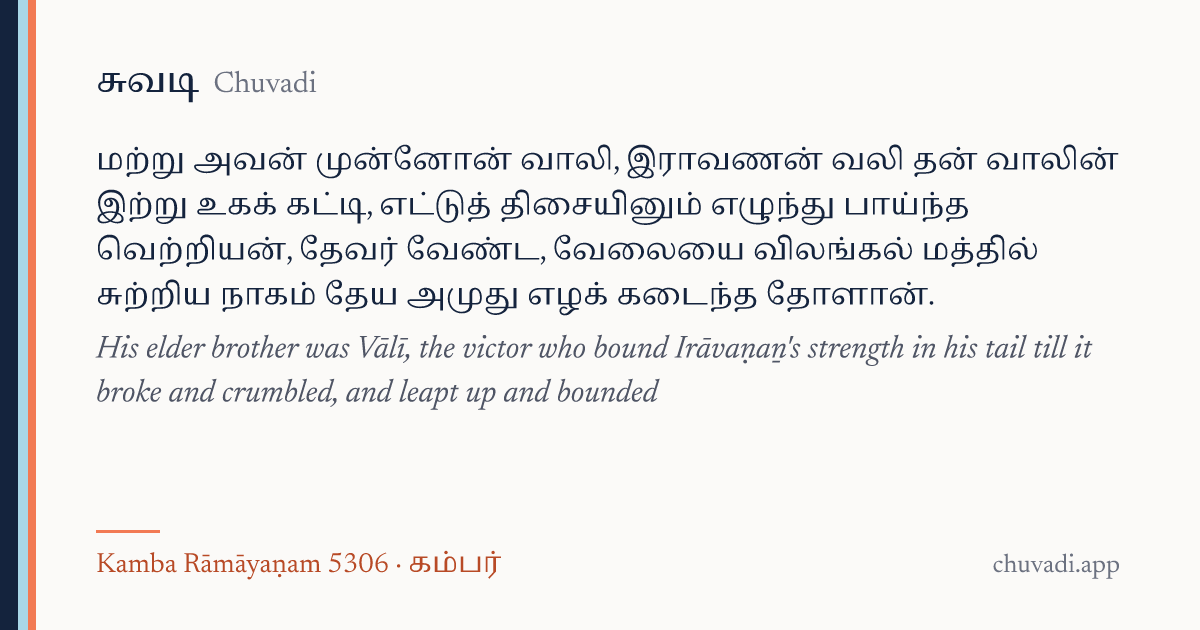
கம்பராமாயணம் 5306 · சுந்தர 5.31
பாடல் · The poem
Tap a word to see its gloss in the commentary and where else it occurs.
பொருள் · Meaning in Tamil
அவன்முன்னோன் - அந்தச்சுக்கிரீவனின் தமையன்; வாலி - வாலியாவான் (அவ்வாலி); தன் வாலில் - தன்னுடைய வாலிலே; இராவணன் வலி - இராவணன் ஆற்றல்; இற்று உக கட்டி - அழிந்து சிதைய வாலிலே கட்டி; எட்டுத் திசையினும் - எட்டுத்திசைகளிலும்; எழுந்து பாய்ந்த வெற்றியன் - நிமிர்ந்து பாய்ந்த வெற்றியுடையவன்; தேவர் வேண்ட - தேவர்கள் வேண்டிக் கொள்ள; வேலையை - பாற்கடலை; விலங்கல் மத்தில் - மந்தரகிரி என்னும் மத்தினாலே; சுற்றிய நாகம் தேய - சுற்றியிருக்கும் வாசுகி தேயும்படி; அமுது எழ - அமிர்தம் தோன்றும்படி; கடைந்த தோளான் - கடைந்த தோளையுடையவன்.
இப்பாடல்முற்றும் வாலியின் சிறப்பே பேசப்படுகிறது. வாலி இராவணனை வாலால் கட்டியது பல பகுதியில் பேசப்படும். வாலி கடல் கடைந்த செய்தியைச் சிவஞான முனிவர் 'கருங்கழல் வாலி..... வாலமும் பணமும் இருங்கையில் பற்றி கடைந்தனன் புணரி' என்பர். (காஞ்சிப்புராணம் - மணிகண்டேச 14) தோள்- கை. தோள் ஒரு நான்கும் சுடர்முகம் ஐந்தும் என்பர் பட்டினத்தார். (திருவிடை மருதூர் மும்மணிக் கோவை) மற்று - அசை.
ஆங்கிலம் · English translationAI
Translation
- His elder brother was Vālī, the victor who bound Irāvaṇaṉ's strength
- in his tail till it broke and crumbled, and leapt up and bounded
- through all eight directions; he whose arms, when the gods asked,
- churned the ocean with the mountain for a churn, wearing thin the coiled serpent, till nectar rose.
What the poem says
Aṉumaṉ goes on to describe Vālī, Cukkirīvaṉ's elder brother, to show how mighty he was. Vālī once caught Irāvaṇaṉ in his tail and leapt across all eight directions with him bound there, crushing his power.
He also helped the gods churn the Ocean of Milk, using Mount Mantara as the churning rod and the serpent Vācuki as the rope, until the nectar of immortality rose. The whole verse builds up Vālī's might for what comes next.