



கம்பராமாயணம் 5312 · சுந்தர 5.37
பாடல் · The poem
Tap a word to see its gloss in the commentary and where else it occurs.
பாட வேறுபாடு · Project Madurai reads
பொருள் · Meaning in Tamil
ஆயவன் தன்மைநிற்க - அந்த இராமனின் தன்மை இப்படியிருக்க, தென்பால் - தெற்குத் திசையில்; ஏயவன் - (சுக்கிரீவனால்) ஏவப் பெற்றவனும்; வாலி மைந்தன் - வாலியின் புதல்வனும் (ஆகிய); அங்கதன் - அங்கதன் என்பவன்; இரண்டு வெள்ளம் சேனையோடு - இரண்டு வெள்ளஞ்சேனையுடன்; எழுந்து படர்ந்து - எழுச்சி பெற்றுப் பரவி; மேயின தீர - வந்தவைகள் முடிவு போகச் செல்ல; அனையவன் - அந்த அங்கதன்; பாய்திரை - பரவிய அலைகளால் சூழப்பெற்ற; இலங்கை மூதூர்க்கு - இலங்கைக்கு, என்னை விடுத்தான் - என்னை அனுப்பினான்; என்றனன் - என்று கூறினான் (கூறியவன்); பழியை வென்றான் - பழிக்கப்படும் புலன்களை வென்ற அனுமன்.
ஆங்கிலம் · English translationAI
Translation
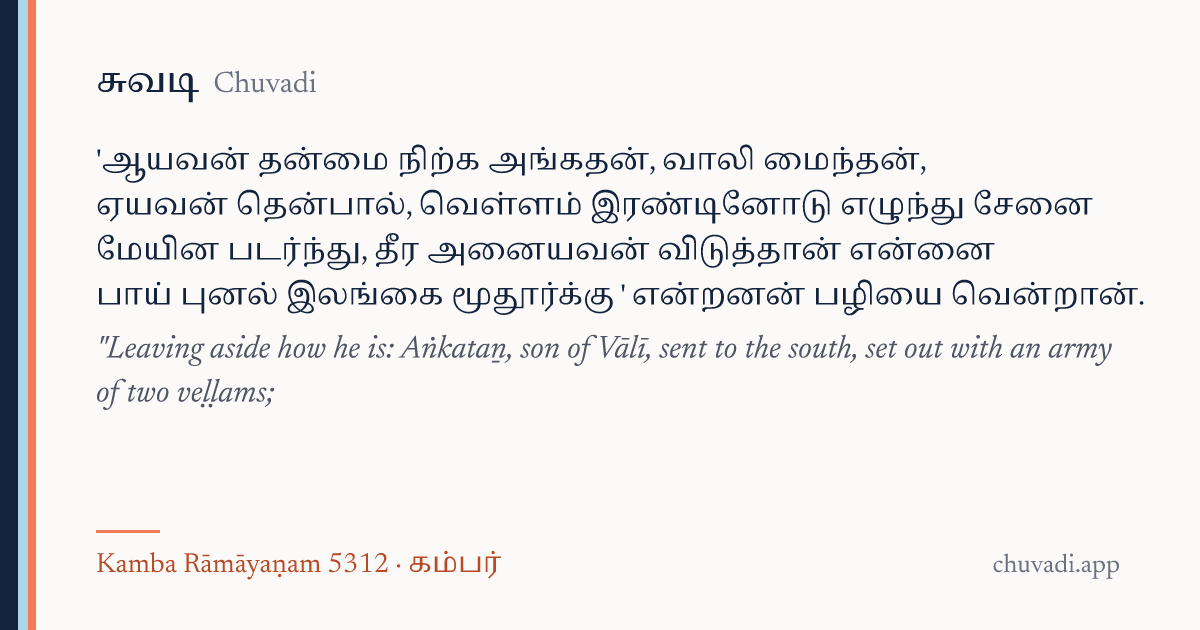
- "Leaving aside how he is: Aṅkataṉ, son of Vālī,
- sent to the south, set out with an army of two veḷḷams;
- when the host had spread out and come to the end of its way, he
- sent me to the ancient city of Ilaṅkai with its rushing waters," said he who had conquered all blame.
What the poem says
Aṉumaṉ moves from Irāmaṉ's grief to the search itself. Aṅkataṉ, Vālī's son, was sent south at the head of an army of two veḷḷams. When they reached the end of the land, at the seashore, Aṅkataṉ sent Aṉumaṉ across to Ilaṅkai.
The poet calls Aṉumaṉ 'he who conquered blame', meaning one who has mastered the senses that lead people into blameworthy acts.