



கம்பராமாயணம் 5348 · சுந்தர 5.73
பாடல் · The poem
Tap a word to see its gloss in the commentary and where else it occurs.
பொருள் · Meaning in Tamil
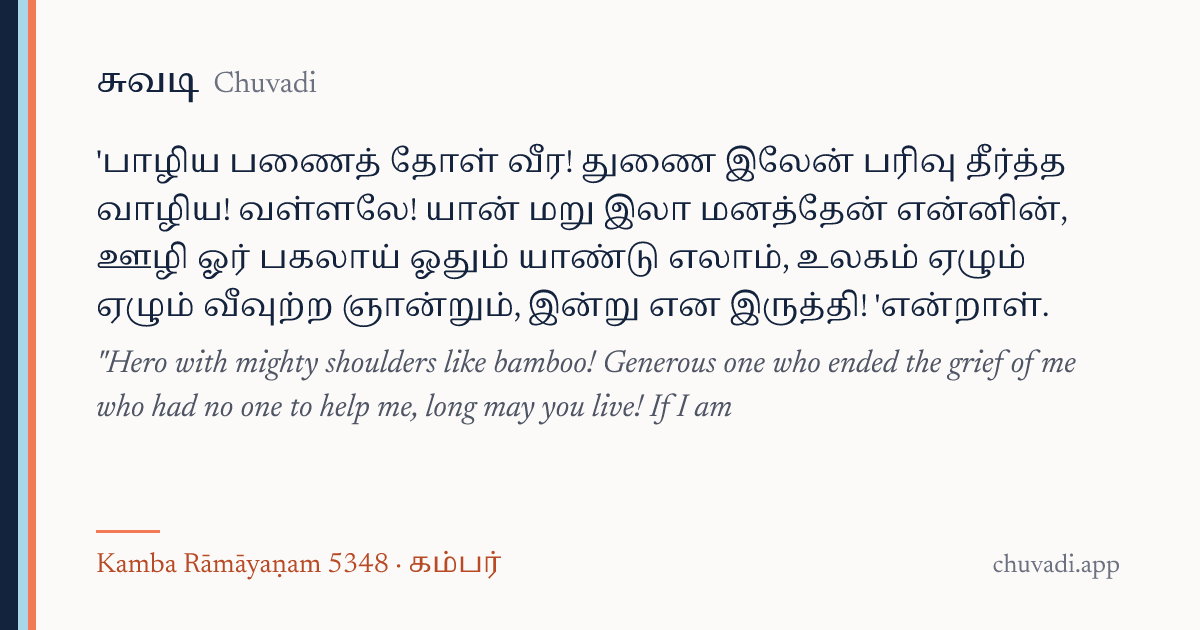
பாழிய பணைத்தோள் வீர - பருத்த மூங்கிலைப்போன்ற தோளையுடைய வீரனே ! துணையிலேன் - ஒரு துணையும் இல்லாத என்னுடைய; பரிவு தீர்த்த - துன்பத்தைப் போக்கிய; வள்ளலே - கொடையாளனே; வாழிய - நீ வாழ்க; யான் - நான்; மறுஇலா மனத்தேன் என்னின் - களங்கம் இல்லாத மனத்தை உடையேன் என்பது உண்மையானால்; ஊழி - ஒரு யுகத்தை; ஓர் பகலாய் ஓதும் - ஒரு பகலாகப் பேசப்படுகின்ற; யாண்டு எலாம் - பதினான்கு உலகங்களும்; வீவுற்ற ஞான்றும் - அழியும் பெரும் பிரளய காலத்தும்; இன்று என இருத்தி - இன்று போல் இருப்பாயாக; என்றாள் - என்று சொன்னாள்.
அனுமன், புலன்அடக்கம் கருதி வீர என்னும், உதவியை நோக்கி வள்ளல் என்றும் பேசப் பெற்றான். பிரம்மசாரிகட்கு உரித்து. ஊழி பகலாயிருப்பது பிரம்ம தேவனுக்கே. ஆதலின் அனுமன் பிரம்ம தேவனாவான் என்பது குறிப்பு. அவனும் பெரும்பிரளயத்தில் பரம் பொருளுடன் லயம் ஆவான். அப்படி லயமாகாது அனுமன் சிரஞ்சீவியாக இருக்க வேண்டும் என்று கருதி “உலகம் வீவுற்ற ஞான்றும் இன்றென இருத்தி” என்று பிராட்டி பேசினாள். இவ்விரு பாசுரங்களும் பிராட்டி தெய்வ ஆவேசத்துடன் பேசியவை. உணர்ச்சி வயப்பட்ட போது பிராட்டி மானுட வேடம் கலைந்து தெய்வ ஆவேசம் பெற்றாள். வாலி செய்தி கேட்ட போது இராமன் பவளவாய் துடித்ததைக் கவிச்சக்கரவர்த்தி, “வையம் நுங்கிய வாய் இதழ் துடித்தது” (கம்ப. 3853.) என்பான்.
ஆங்கிலம் · English translationAI
Translation
- "Hero with mighty shoulders like bamboo! Generous one who ended the grief
- of me who had no one to help me, long may you live! If I am
- of a spotless mind, then through all the years in which an age is counted as a single day, and even when
- all the seven worlds and seven more perish, may you remain as you are today!" she said.
What the poem says
Cītai blesses Aṉumaṉ. She calls him a hero, which the commentary takes to mean master of his senses, and generous for the help he has given. Staking it on the purity of her heart, she grants him life through all the ages of Brahmā, for whom an aeon is a single day, and even beyond the great dissolution of all fourteen worlds.
This is the boon by which Aṉumaṉ becomes one of the immortals. The commentary observes that in this moment of high emotion Cītai speaks as a goddess, her human guise slipping.