



கம்பராமாயணம் 5353 · சுந்தர 5.78
பாடல் · The poem
Tap a word to see its gloss in the commentary and where else it occurs.
பொருள் · Meaning in Tamil
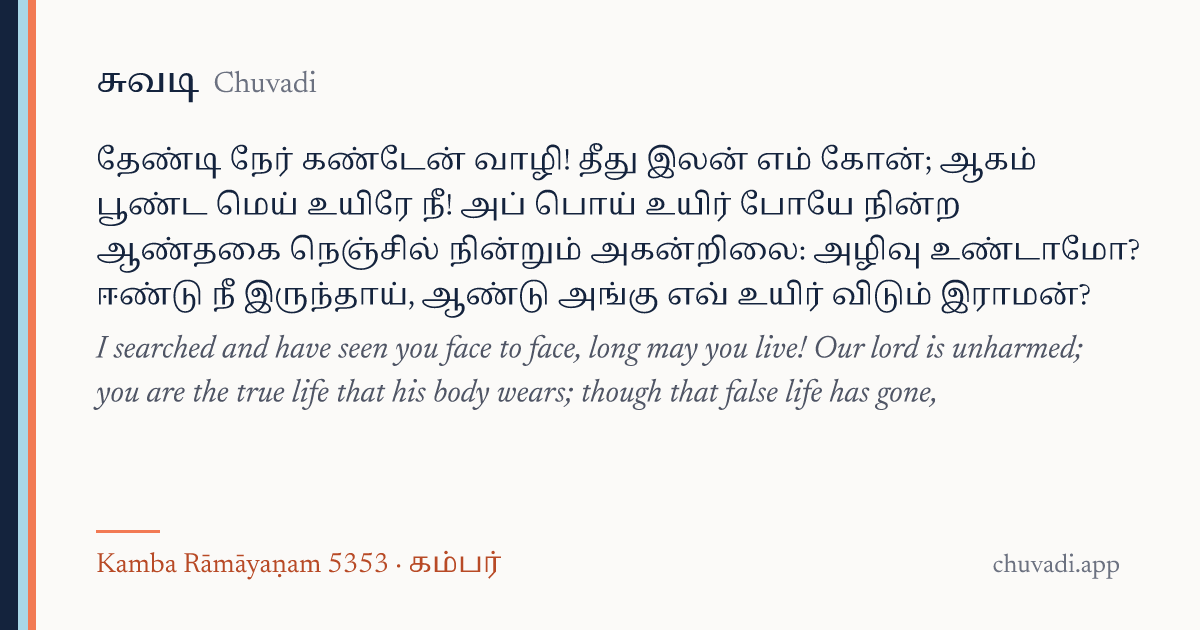
அம்மையே ! தேண்டி நேர்கண்டேன் - தேடி வந்து உன்னைஎதிரே காணப் பெற்றேன்; வாழி - வாழ்வாயாக, எம்கோன் - எம் தலைவனான இராமபிரான்; தீது இலன் - தீமை இலன்; நீ ஆகம் பூண்ட - நீ இராமபிரான் மேனியில் அணிந்துள்ள; மெய் உயிரே - உண்மையான உயிரே ஆவாய்; அப் பொய் உயிர் - அந்தப் பொய்யான உயிர்; போயே நின்ற - போன பிறகும் நிலைத்துள்ள; ஆண்டகை - ஆடவருள் தலைசிறந்த இராமபிரானின்; நெஞ்சில் நின்றும் - இதயத்தில் இருந்தும்; அகன்றிலை - நீங்கினாய் இல்லை; அழிவு உண்டாமோ - அவனுக்கு அழிவு உண்டாகுமா; ஈண்டு நீ இருந்தாய் - (உயிரான நீ) இங்கே இருந்துள்ளாய்; இராமன் - இராமபிரான்; ஆண்டு - அங்கே; எவ் உயிர் விடும் - எந்த உயிரை விடுவான்.
பிராட்டியேஇறைவனுக்கு உண்மையான உயிர் என்பது குறிப்பு. தலைவியைத் தலைவனின் உயிர் என்று இலக்கியம் பேசும். ‘காணா மரபிற்று உயிர் என மொழிவோர்.. பொய் மொழிந்தனரே. யாம் காண்கும் எம் அரும்பெறல் உயிரே... மழைக்கண் மாதர் பணைப் பெருந்தோட்டே' (தொல் - களவியல் 10 - மேற்கோள்)
ஆங்கிலம் · English translationAI
Translation
- I searched and have seen you face to face, long may you live! Our lord is unharmed;
- you are the true life that his body wears; though that false life has gone,
- you have not left the heart of the noble one who still stands: can he perish?
- With you here, what life is there that Irāmaṉ, there, could give up?
What the poem says
Aṉumaṉ assures Cītai that Irāmaṉ is safe. She herself is his true life. His bodily life, the 'false' one, may seem to have gone out of him in his grief, but she has never left his heart, so he cannot die.
As long as she, his life, lives on here, what life could Irāmaṉ lose over there? The commentary notes that calling the beloved one's life is an old convention of Tamil love poetry.