



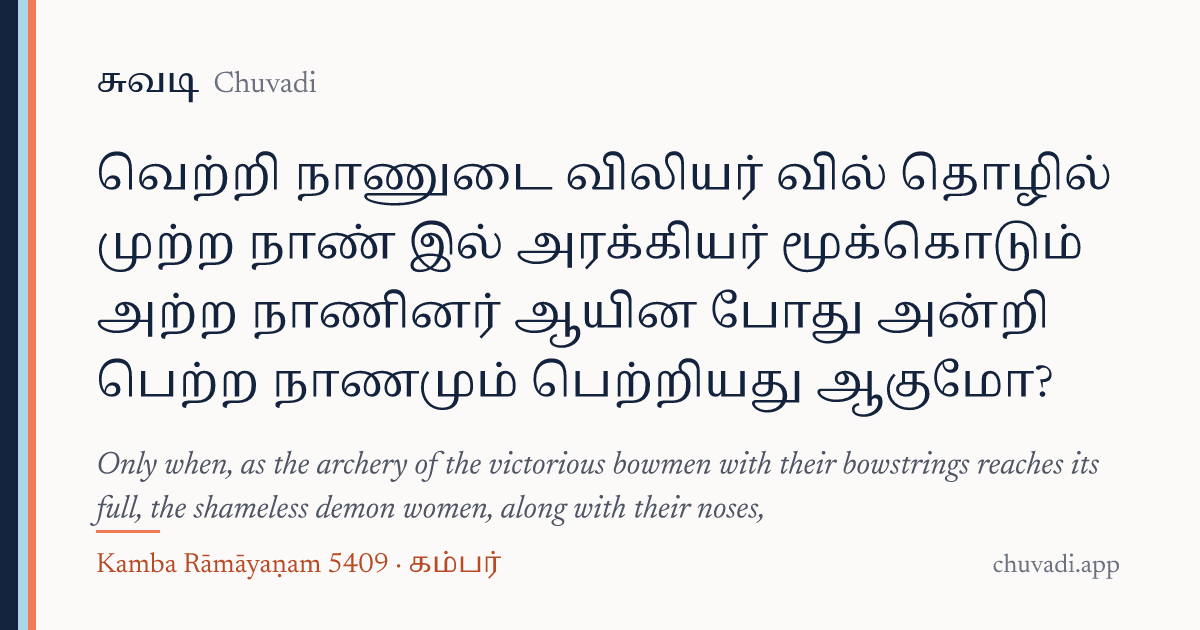
கம்பராமாயணம் 5409 · சுந்தர 6.16
பாடல் · The poem
Tap a word to see its gloss in the commentary and where else it occurs.
பொருள் · Meaning in Tamil
வெற்றி நாணுடைவில்லியர் - வெற்றியையும் நாணையும் பெற்ற வில்லேந்திய இராமலக்குவர்களின்; வில்தொழில் முற்ற - வில்லாற்புரியும் போர்த்தொழில் முதிர்ச்சியடைய (அதனால்); நாண் இல் அரக்கியர் - நாணமற்ற அரக்கிகள்; மூக்கொடும் - மூக்குடனே; அற்ற - அறுபட்ட; நாணினர் ஆயின போதன்றி - மங்கல நாணை உடையவரான போதே அல்லாமல்; பெற்ற நாணமும் - யான் பெற்ற நாணமும்; பெற்றியது ஆகுமோ - சிறப்புடையதாகுமோ;
பகைவர்களின் மனைவிமார்களின் மூக்கை அறுத்தல் சிறப்புப் போலும்! 'விளங்கு முடி கவித்த வீரசலாமேகன், போர்க்களத்து அஞ்சித் தன் கார்க்களிறிழிந்து, கவ்வையுற்றோடக் காதலியொடும் தன் தவ்வையைப் பிடித்துத் தாயை மூக்கரிய' என்று இராசகேசரி வர்மனின் மெய்க்கீர்த்தியும் 'நாகலை என்னும் தோகையஞ்சாயலை முகத்தொடு மூக்கு வேறாக்கி' என்று வீரராசேந்திர தேவனின் மெய்க்கீர்த்தியும் பேசும். பிராட்டி, சிறையில் பட்ட அவமானங்கள் இங்ஙனம் பேசச் செய்தன.
ஆங்கிலம் · English translationAI
Translation
- Only when, as the archery of the victorious bowmen with their bowstrings
- reaches its full, the shameless demon women, along with their noses,
- have had their wedding threads cut away,
- will the honour I have kept be worth anything?
What the poem says
The verse is built on puns on nāṇ, which means a bowstring, the sacred marriage thread, and modesty or shame. Cītai wants the bowstrings of Irāmaṉ and Ilakkuvaṉ to bring it about that the shameless demon women lose their noses and their marriage threads, that is, are widowed.
Only then will her own modesty be vindicated. The commentary notes that cutting off the noses of enemy wives was boasted of in medieval royal inscriptions, and it recalls Cūrppaṇakai's mutilation earlier in the epic.