



கம்பராமாயணம் 5408 · சுந்தர 6.15
பாடல் · The poem
Tap a word to see its gloss in the commentary and where else it occurs.
பொருள் · Meaning in Tamil
எம் கொற்றவன் - எம்முடைய தலைவனாகிய இராமபிரான்; வில் தொழில் கொண்ட போரின் - வில்லின் தொழிலை மேற்கொண்ட போர்க்களத்தில்; அண்டர் ஏவரும் நோக்க - எல்லாத் தேவர்களும் பார்க்கும்படியாக; என் ஆக்கையைக் கண்ட - என் உடலை முறையற்றுப் பார்த்த; வாள் அரக்கன் விழி - கொடிய அரக்கனின் கண்களை; காகங்கள் உண்டபோது அன்றி - காகங்கள் உண்டபோதே அல்லாமல், யான் உளென் ஆவெனோ - யான் உயிருடன் உள்ளவள் ஆவேனா.
போர்க்களத்தில் வீழ்ந்த இராவணனின் விழியைக் காகம் உண்ண வேண்டும். அப்போதுதான் யான் உயிருடையவள் ஆவேன் என்று பேசிய பிராட்டியின் சீற்றம் அநீதிக்கும் முறைகேட்டுக்கும் வழங்கும் எச்சரிக்கை. வில்தொழில் கொண்ட போர் என்று மாற்றுக. 'விற்பணி கொண்டு அருஞ்சிறையில் மீட்ட நாள்' (கம்ப. 5247). என்று முன்பே பேசினாள். போர் என்றது போர்க்களத்தை. இராவணனின் விழிகளைக் காகம் உண்பதைத் தேவர்கள் காணவேண்டும் என்று பேசினாள். தோற்ற தேவர்கள் கொடுங்கோலால் பட்ட துன்பம் நீங்கி மகிழவேண்டும் என்பது குறிப்பு. இராமபிரானின் வில்தொழிலைத் தேவர்கள் காண என்று உரை கூறப் பெற்றது. என்னைப் பார்த்த உன்கண்கள் இன்னும் ஏன் தெறித்து விழாமல் இருக்கிறது. என்று சீதை பேசுவதை வான்மீகி குறிப்பார் 'அரக்கர் கண்மணி காகமும் கவர்ந்தது' என்றும் 'பழிப்பில் மேனியை நோக்கிய கண்களை.... காக்கைகள் கவர்ந்து கொண்டு உண்ண' என்றும் (கம்ப. 2962, 5404) பேசப்படும்.
ஆங்கிலம் · English translationAI
Translation
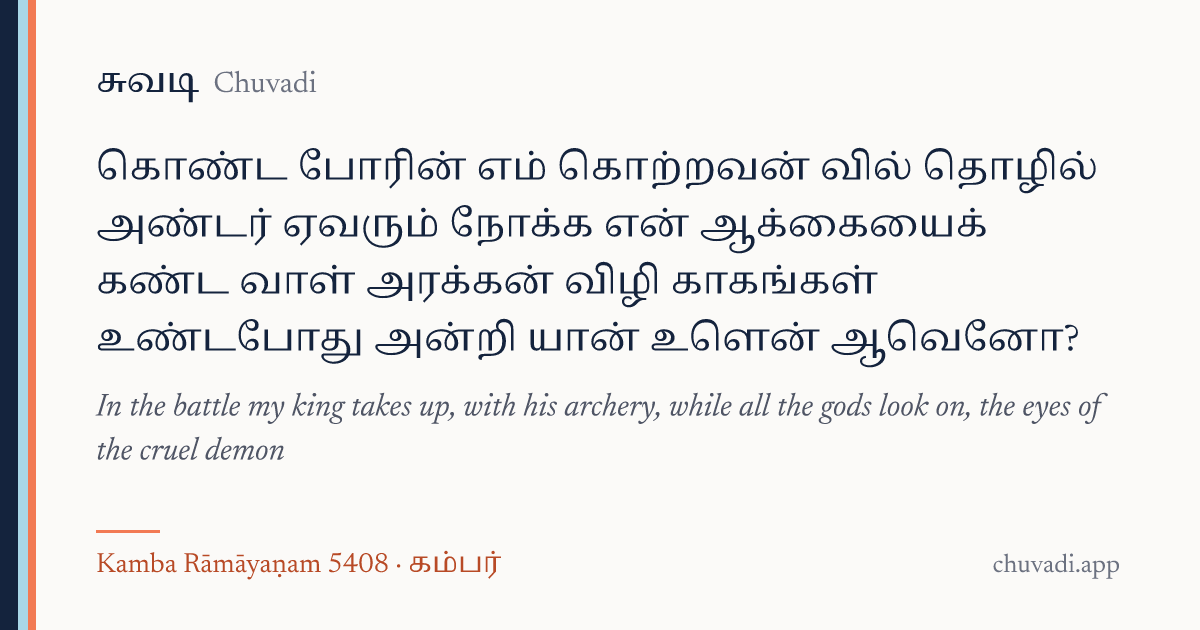
- In the battle my king takes up, with his archery,
- while all the gods look on, the eyes of the cruel demon
- that gazed at my body: only when crows
- have eaten them, can I count myself as alive?
What the poem says
Cītai's anger flares. Irāvaṇaṉ looked at her body with lust. She will feel truly alive only when he lies dead on the battlefield after Irāmaṉ's archery, and crows peck out those eyes while the gods look on.
The commentary notes that the gods, long oppressed by Irāvaṇaṉ, must see this so that they can rejoice.