



கம்பராமாயணம் 5414 · சுந்தர 6.21
பாடல் · The poem
Tap a word to see its gloss in the commentary and where else it occurs.
பாட வேறுபாடு · Project Madurai reads
பொருள் · Meaning in Tamil
மேவு சிந்தை இல் - உன்பால் பொருந்தும் மனம் இல்லாத; மாதரை - பெண்களை; மெய்தொடின் - உடலைத் தொட்டால்; தேவு வன்தலை - தெய்வத்தன்மை பெற்ற வலிய தலைகள்; சிந்துக - சிதறப்படுவனவாகுக, தீது என - (அது) பாவம் என்று; பூவின் வந்த - தாமரைப் பூவிலே தோன்றிய; புராதனனே புகல் - பழையோனான பிரமனால் கூறப்பட்ட; சாவம் உண்டு - சாபம் இராவணனுக்கு உள்ளது; (அச்சாபம்) எனது ஆருயிர் - எனது அரிய உயிரை; தந்தது - பாதுகாத்தது.
மாதரை - என்பதில் உள்ள 'ஐ'யை அசையாக்கி 'மாதர்மெய்' என்று சேர்த்துப் பொருள் கொள்ளலாம். அப்போது மாதருடைய என்று பொருள் தரும். சிந்தாமணியில் 2605 ஆம் பாடலில் புகழானை நாண மொழிகள் பல கூறி உள்ள தொடரில் உள்ள 'ஐ'யை அசையாக்கினார் இனியர் (புகழான் நாண மொழிகள் கூறி என்பது பொருள்) தீது - பாவம். உள்ளத்தால் உள்ளலும் தீதே (திருக்குறள் 282) தேவுதலை - என்பதற்கு இ. கோ. பிள்ளை தெய்வத் தன்மையால் மீண்டும் முளைப்பதான தலை என்று உரை கூறினார். தெய்வத்தைப் பணியும் தலை என்றும் பொருள் கூறலாம். தெய்வத்தைப் பணியினும் சாபம் பலிக்கும் என்பதாம்.
ஆங்கிலம் · English translationAI
Translation
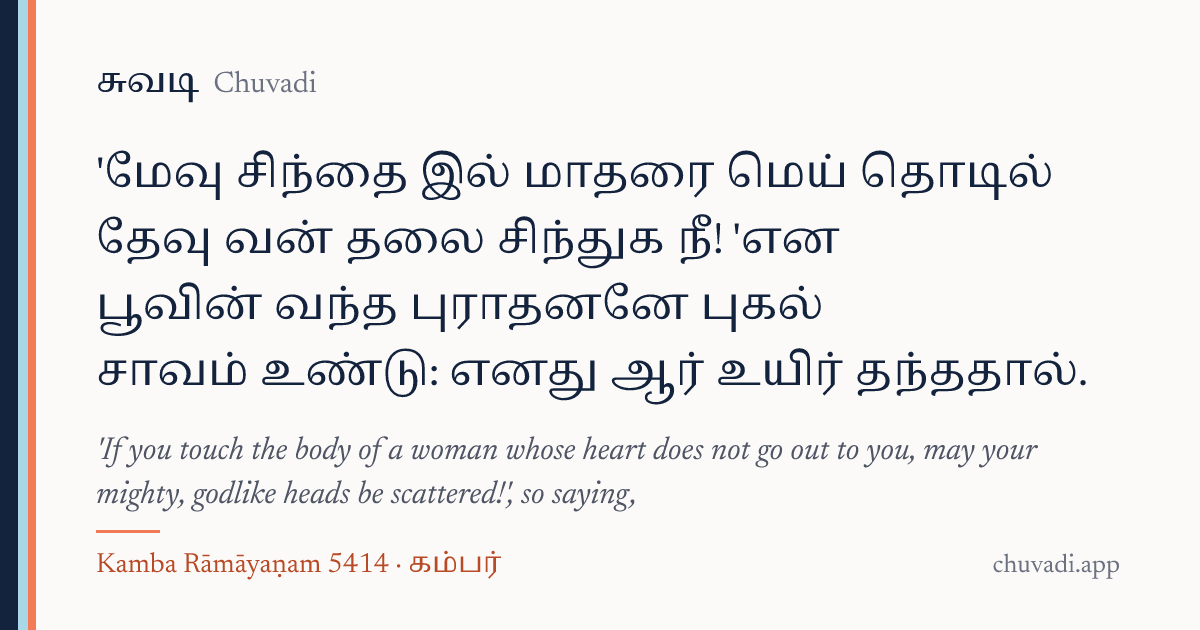
- 'If you touch the body of a woman whose heart does not go out to you,
- may your mighty, godlike heads be scattered!', so saying,
- the Ancient One, born of the flower, laid down
- a curse; that is what has preserved my precious life.
What the poem says
Cītai reveals the curse. Brahmā, the ancient god born from the lotus, once decreed that if Irāvaṇaṉ touched any woman against her will, his heads would shatter.
This curse is what has kept her safe, and so kept her alive. The commentary notes one reading that calls his heads godlike because they grow back when cut off.