



கம்பராமாயணம் 5426 · சுந்தர 6.33
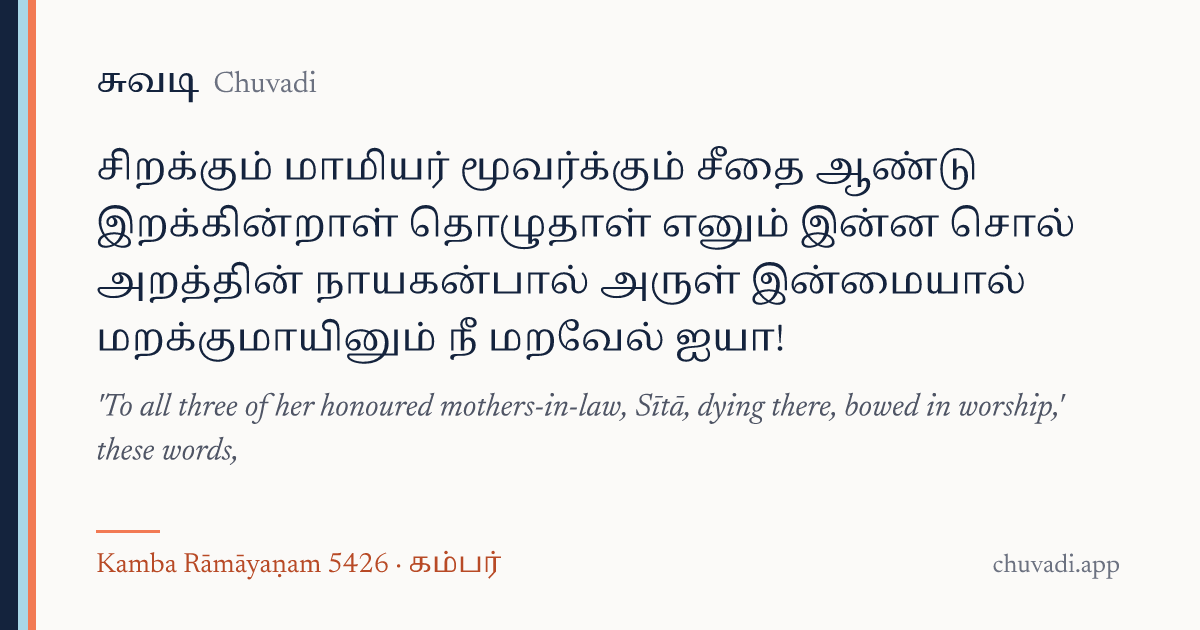
பாடல் · The poem
Tap a word to see its gloss in the commentary and where else it occurs.
பொருள் · Meaning in Tamil
ஐயா - தந்தையே; சிறக்கும் - உயர்வடைகின்ற; மாமியர் மூவர்க்கும் - மூன்று மாமிகட்கும்; ஆண்டு - அந்த இலங்கையில்; இறக்கின்றாள் சீதை - இறக்கப் போகும் சீதை; தொழுதாள் - கைகூப்பி வணங்கினாள்; எனும் - என்கின்ற; இன்ன சொல் - இந்த வார்த்தை; அறத்தின் நாயகன்பால் - அறத்தின் தலைவனான இராமபிரான்பால்; அருள் இன்மையால் - கருணையில்லாத காரணத்தால்; மறக்கும் ஆயினும் - (அவர்கள் பால் கூற) மறந்து போயினும், நீ மறவேல் - நீ மறந்து விடாதே.
அறத்தின் நாயகன் எதிர்மறைத் தொனி. அறம் இல்லாதவன் என்பது பொருள். இறக்கும் ஒருத்தி கூறிய மொழியை மறப்பவன் அறம் இல்லாதவன் என்று கூறவேண்டுமோ. அவர்பால் அறம் உண்டு. அருள் இல்லை என்று இராமனை விமர்சனம் செய்கின்றாள். இராமபிரான் தண்டகவனத்து முனிவர்கள்பால் கூறிய மொழியை இங்கே எண்ணும் பிராட்டி இங்ஙனம் பேச நேர்ந்தது.
ஆங்கிலம் · English translationAI
Translation
- 'To all three of her honoured mothers-in-law, Sītā, dying there,
- bowed in worship,' these words,
- even if the Lord of Dharma, lacking grace,
- should forget, do not you forget them, sir!
What the poem says
Cītai asks Aṉumaṉ to give her respects to Irāmaṉ's three mothers, Kōcalai, Kaikēyi and Cumittirai, as the farewell of a woman dying far away.
Irāmaṉ might forget to pass it on, but Aṉumaṉ must not. The commentary reads 'Lord of Dharma' as irony. She grants that he has dharma but says he lacks compassion, perhaps remembering the promise he made to protect the sages of the Daṇḍaka forest.