



கம்பராமாயணம் 5436 · சுந்தர 6.43
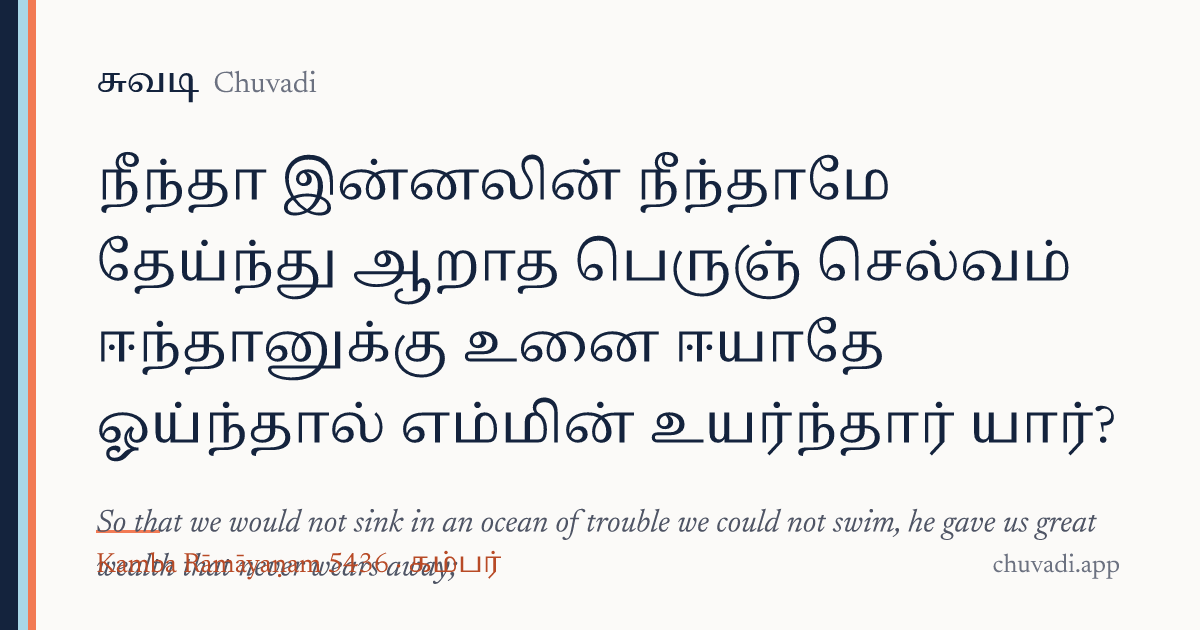
பாடல் · The poem
Tap a word to see its gloss in the commentary and where else it occurs.
பொருள் · Meaning in Tamil
நீந்தா - நீந்திக்கடக்க மாட்டாத; இன்னலில் - (வாலியால் உண்டான) துன்பத்திலே; நீந்தாமே - வருந்தாதபடி; தேய்ந்து ஆறாத - குறைந்து இல்லாமற் போகாத; பெரும் செல்வம் ஈந்தானுக்கு - பெரிய செல்வத்தை எங்கட்கு வழங்கிய இராமபிரானுக்கு; உனை ஈயாதே - உன்னைச் சிறைமீட்டு வழங்காமல்; ஓய்ந்தால் - செயலற்றுக் கிடந்தால்; எம்மின் - எம்மைவிட; உயர்ந்தார் யார் - சிறந்தவர் யாவரோ.
நீந்துதல், துன்பத்தில் கிடத்தல். நீந்தல் கடத்தல் என்னும் பொருளைத் தந்தது. வசைவெள்ளம் நீந்தாய் நீந்தாய் நின் மகனோடும் என்று தசரதன் கைகேயிடம் பேசுவான். அறாத என்பது ஆறாத என்று வந்தது. உயர்ந்தார் யார் என்பது இழிந்தவர் என்னும் பொருள் தந்தது. பிறர்க்கு அடிமையின்றி வாழ்வதைப் பெருஞ்செல்வம் என்று அனுமன் குறித்தான். வாலியால் அடிமைப்பட்டவர்கள் இராமபிரானால் சுதந்திரம் பெற்றனர். சுக்கிரீவன் அஞ்சிக் குகையில் ஒளிந்து வாழ்ந்ததே அடிமை வாழ்வைக் குறிக்கிறது.
ஆங்கிலம் · English translationAI
Translation
- So that we would not sink in an ocean of trouble we could not swim,
- he gave us great wealth that never wears away;
- if we do not give you to him
- and sit idle, who would be higher than us?
What the poem says
Aṉumaṉ explains why the monkeys owe Irāmaṉ everything. He freed them from the misery of living under Vālī and gave them the lasting wealth of their freedom. Before that, Cukkirīvaṉ had lived like a hunted slave hiding in a cave.
If they now failed to win back Cītai for him, they would be the lowest of beings. 'Who would be higher?' is ironic and means the opposite.