



கம்பராமாயணம் 5485 · சுந்தர 7.8
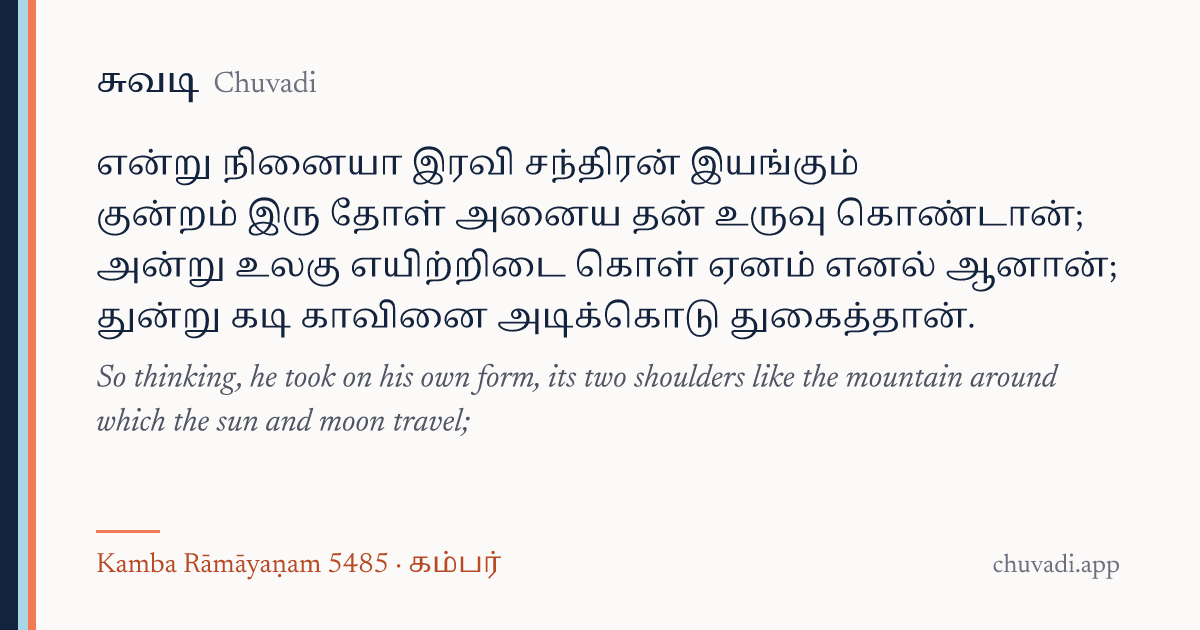
பாடல் · The poem
Tap a word to see its gloss in the commentary and where else it occurs.
பொருள் · Meaning in Tamil
என்று நினையா - என்று மனத்தில் எண்ணி; இரவி சந்திரன் இயங்கும் - சூரியனும் சந்திரனும் சுற்றி வலம் வருகின்ற, குன்றம் அனைய இரு தோள் - மேருமலையை ஒத்த இரண்டு தோள்களை உடைய, தன் உருவு கொண்டான் - தனது பெரிய வடிவை எடுத்துக் கொண்டு; அன்று உலகு எயிற்றிடை கொள் ஏனம் எனல் ஆனான் - முற்காலத்தில் பூமியைத் தன் பற்களின் இடையே கொண்ட வராக மூர்த்திக்கு ஒப்பவனாக விளங்க; துன்றுகடி காவினை - மரங்கள் அடர்ந்த காவல்மிகுந்த அசோகவனத்தை; அடிக்கொடு துகைத்தான் - தனது கால்களால் தாக்கி மிதித்து அழித்தான்.
பிரளயத்திலிருந்து பூமிப் பிராட்டியை மீட்பதற்கு எழுந்த மகாவராக மூர்த்தி, அவள் அம்சமான பிராட்டியைத் துயரக் கடலினின்றும் மீட்க எடுத்த அனுமனது பேருருவுக்கு உவமையாதல் பொருத்தம். இரண்டு மேரு மலைகள் இல்லை. இரு மேருவை ஒத்த தோள்கள் என்றது இல்பொருளுவமை.
ஆங்கிலம் · English translationAI
Translation
- So thinking, he took on his own form, its two shoulders like the mountain
- around which the sun and moon travel;
- he became like the boar who once held the world between its tusks;
- and he trampled with his feet the dense, guarded grove.
What the poem says
Aṉumaṉ grows to his giant form, with shoulders like twin Mount Mērus, around which the sun and moon revolve. He begins to trample the aśōka grove.
He is compared to Varāha, the boar incarnation of Viṣṇu, who lifted the earth goddess out of the cosmic flood on his tusks. The commentary finds this apt, since Aṉumaṉ too is rescuing a goddess, Cītai, from a sea of sorrow.