



கம்பராமாயணம் 5753f · சுந்தர 12.12f
பாடல் · The poem
Tap a word to see its gloss in the commentary and where else it occurs.
பொருள் · Meaning in Tamil
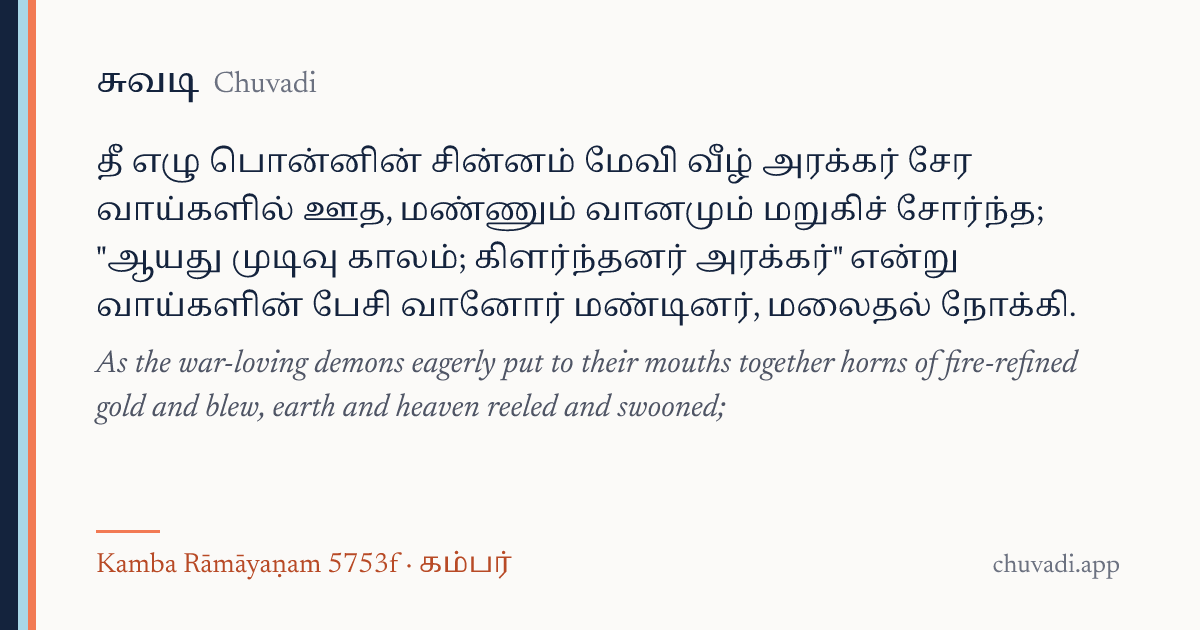
வீழ் அரக்கர் - போரை விரும்பிய அரக்கர்கள்; தீ எழு பொன்னின் சின்னம் - நெருப்பிலிருந்து காய்ச்சி எழுப்பிய பொன்னால் ஆகிய ஊது கொம்புகளை; மேவி - விரும்பி; சேர வாய்களில் ஊத - ஒன்றாகப் பலரும் வாய்களில் வைத்து ஊத (அவ் ஒலி கேட்டு); மண்ணும் வானமும் மறுகிச் சோர்ந்த - மண்ணுலக மக்களும், விண்ணுலகத்தவரும் கலக்கமுற்றுச் சோர்ந்தனர்; வானோர் - தேவர்கள்; அரக்கர் கிளர்ந்தனர் - அரக்கர் கிளர்ச்சி பெற்றுவிட்டார்கள்; முடிவுகாலம் ஆயது - உலக அழிவுக்காலம் நெருங்கியது; என்று வாய்களின் பேசி - என்று தம் வாய்களினால் பேசிக்கொண்டு; மலைதல் நோக்கி மண்டினர் - போரிடுதலைப் பார்க்க விரும்பி நெருங்கினார்கள்.
தீ எழு பொன் - சுடச் சுடரும் பொன்” என்பதை (குறள் 267) நினைப்பூட்டும். பேசி என்றாலே அமையவும் 'வாய்களின்' என்றது அரக்கரால் துன்புறும் தேவர் அரக்கர்களைப் பற்றியே எப்போதும் பேசும் வாயை உடையவர் என்று அவ்வாயின் இழிவினைச் சிறப்பித்ததாம்.
ஆங்கிலம் · English translationAI
Translation
- As the war-loving demons eagerly put to their mouths together
- horns of fire-refined gold and blew, earth and heaven reeled and swooned;
- 'The end of time has come; the demons have risen,'
- said the gods with their mouths, and crowded in to watch the fight.
What the poem says
The demons blow golden trumpets all together, and both earth and heaven are shaken. The gods tell each other that the end of the world has come and the demons are on the rampage, and they jostle to watch the fight.
The commentary suggests 'with their mouths' hints that the gods, tormented by the demons, never talk about anything else.