



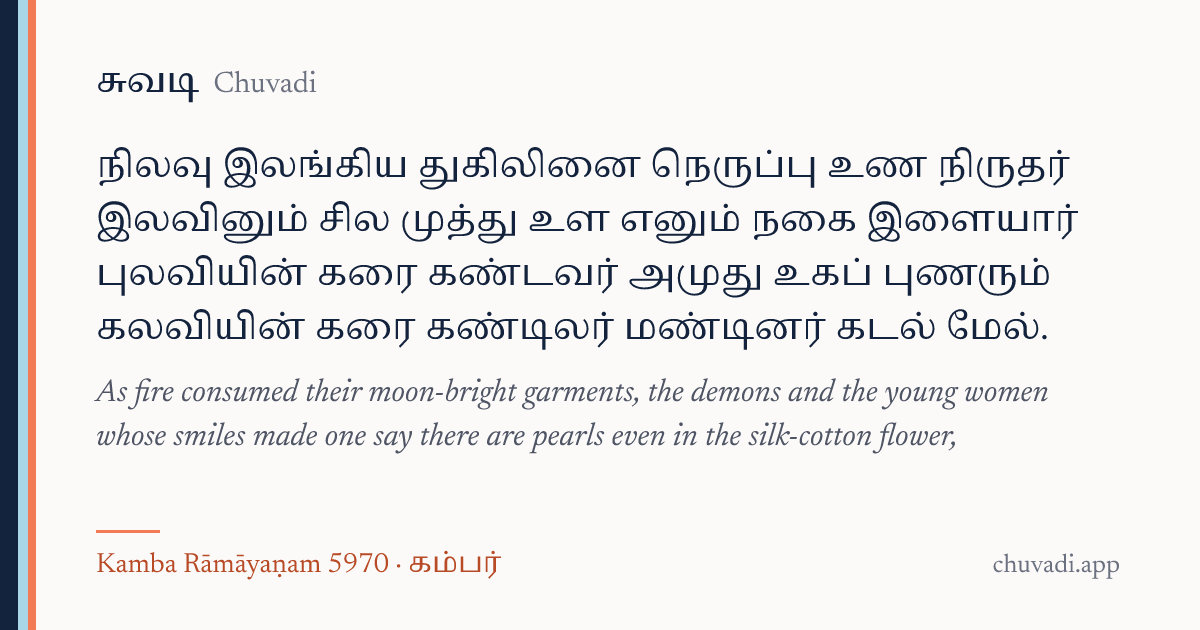
கம்பராமாயணம் 5970 · சுந்தர 14.26
பாடல் · The poem
Tap a word to see its gloss in the commentary and where else it occurs.
பாட வேறுபாடு · Project Madurai reads
பொருள் · Meaning in Tamil
புலவியின் கரைகண்டவர் நிருதர் - ஊடலின் முடிவெல்லையைக் கண்டவர்களாகிய அரக்கர்களும்; இலவினும் சில முத்து உள எனும் நகை இளையார் - இலவம்பூவின் இதழிலும்,சில முத்துகள் பிறப்பதுஉண்டு என்று சொல்லத்தக்க வெண்மையான பற்களை உடைய அரக்கமகளிரும்; நிலவு இலங்கிய துகிலினை நெருப்பு உண - நிலவைப் போன்று வெண்ணிறமாய் விளங்குகின்ற தங்களது ஆடைகளை நெருப்பு எரிக்க; அமுது உக புணரும் கலவியின் கரை கண்டிலர் - இன்பம் சுரக்கத் தம்மில் கூடும் கலவியின்பமாகிய கடலின் கரை காணாதவர்களாய்; கடல் மேல் மண்டினர் - (நெருப்பைத் தணித்துக் கொள்ளும் பொருட்டு) கடலில் போய் விழுந்தார்கள்.
ஊடிய மைந்தரும்மகளிரும் ஊடல் தீர்ந்து கூடிய நிலையில், தமது ஆடையை நெருப்பு எரிக்க இன்பம் முடியாத நிலையில் கடலில் போய் விழுந்தார்கள் என்க. 'புலவியின் கரைகண்டவர் கலவியின் கரை காணாதவராயினார்' நயம் உணரத்தக்கது. இலவு - இலவம்பூ; முத்து பிறக்கும் இடம் இருபது அதற்கும் மேலாக இலவம்பூவினின் இதழகத்தும் முத்துப் பிறந்துள்ளது என்பது கற்பனை. முத்து, பற்களுக்கும், இலவம்பூ செவ்வாய்க்கும் உவமைகள்.
ஆங்கிலம் · English translationAI
Translation
- As fire consumed their moon-bright garments, the demons
- and the young women whose smiles made one say there are pearls even in the silk-cotton flower,
- who had reached the far shore of lovers' quarrels but had not reached the shore
- of love's union pouring nectar, rushed into the sea.
What the poem says
Demon couples, just reconciled after a lovers' quarrel and in the midst of lovemaking, find their garments in flames and plunge into the sea to put out the fire. The poet plays on 'shore': they had reached the end of their quarrel but never the end of their joy.
The women's teeth are pearls and their lips the red silk-cotton flower, as if pearls grew in its petals.