



கம்பராமாயணம் 6212 · யுத்த 2.100
பாடல் · The poem
Tap a word to see its gloss in the commentary and where else it occurs.
பாட வேறுபாடு · Project Madurai reads
பொருள் · Meaning in Tamil
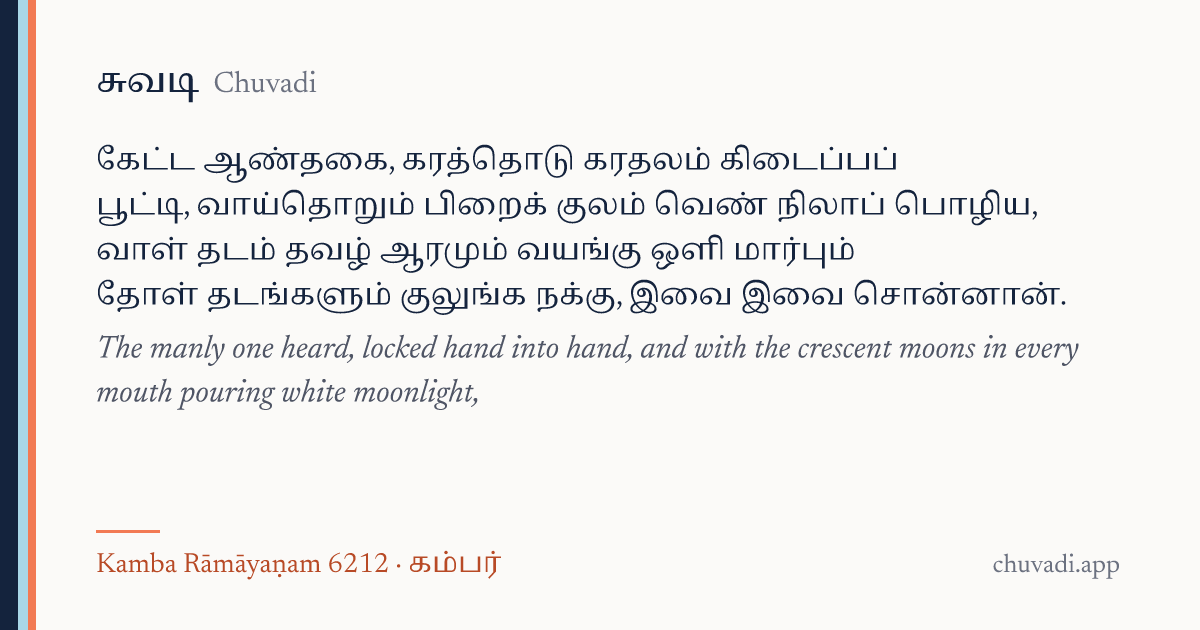
கேட்ட ஆண்தகை - வீடணன் கூறிய மொழிகளைக் கேட்ட ஆண்மை மிக்கவனாகிய இராவணன்; கரத்தொடு கரதலம் கிடைப்பப்பூட்டி- கையோடு கை பொருந்த விரல்களைக் கோத்துக்கொண்டு; வாய்தொறும் - பத்து வாய்களிலும் உள்ள; பிறைக்குலம் - பிறைச்சந்திரனைப் போன்ற பற்கள்; வெண் நிலாப் பொழிய - வெள்ளிய நிலவொளியைப் பொழிய; வாள் தடம் தவழ் ஆரமும் - வாளால் உளவாகிய விழுப்புண் தழும்பின் மீது தவழும் மார்பும்; வயங்கு ஒளி மார்பும் - விளங்கும் ஒளியுடைய மார்பும்; தோள் தடங்களும் குலுங்க நக்கு - தோள்களாகிய மலைகளும் குலுங்கும் படி சிரித்து; இவை இவை சொன்னான் - பின்வருமாறு கூறலானான்.
கரதலம் - கை. இருபெயரொட்டுப் பண்புத்தொகை. பிறைக்குலம் - பிறைச்சந்திரனைப் போன்ற கோரைப் பற்கள். ஆண்டகை -ஆண்மை மிக்கவன். நக்கான் - (கோபச் சிரிப்பு) சிரித்தான். வாள்தடம் - போரிலே வாள்கள் பட்டு, விழுப்புண்ணான இடம். விழுப்புண் விளைத்த தழும்புகள் ஆரம் மறைத்தது. குலுங்கி சிரித்தபோது தழும்புகள் தெரிந்தன. பிறை உவமையாகுபெயராய்க் கோரைப்பற்களைக் குறித்தது.
ஆங்கிலம் · English translationAI
Translation
- The manly one heard, locked hand into hand,
- and with the crescent moons in every mouth pouring white moonlight,
- making the garlands that lie over his sword scars, his shining chest
- and his mountainous shoulders shake with laughter, said these things.
What the poem says
Irāvaṇaṉ's response is a scornful laugh. His tusk-like teeth, compared to crescent moons, flash in all ten mouths, and as he shakes, the garlands slip to reveal the battle scars on his chest. The laughter is angry, and the speech that follows rejects Vīṭaṇaṉ's advice.