



கம்பராமாயணம் 627 · பால 10.75
பாடல் · The poem
Tap a word to see its gloss in the commentary and where else it occurs.
பாட வேறுபாடு · Project Madurai reads
பொருள் · Meaning in Tamil
(இவ்வாறு சந்திரன் உதித்தபொழுது) விரைசெய் - மணங்கமழும்; கமலப்பெரும்போது - பெரிய தாமரை மலர்; விரும்பிப் புகுந்த - விருப்பத்தோடு தன்னிடம் புகுந்த; திருவினொடும் - திருமகளுடன்; குரை செய் - ஒலிக்கும்; வண்டின் குழாம் இரிய - வண்டுகளின் கூட்டமும் (தன்னை விட்டு) நீங்கி போகும்படி, கூம்பி - இதழ் குவிந்து; சாம்பி - வாடி; குவிந்துளது - மூடிக்கொண்டுள்ளது; அரக்கு ஆம்பல் - செவ்வாம்பல் பூவானது; உரைசெய் திகிரிதனை - புகழப்படும் (ஆணைச்) சக்கரத்தை (எங்கும் தடையில்லாதபடி), உருட்டி - சுழலச் செய்து; ஒரு கோல் ஓச்சி - ஒப்பற்ற செங்கோலைச் செலுத்தி; உலகு ஆண்ட - உலகமுழுதும் ஆட்சி செய்து வந்த; அரசன் ஒதுங்க - அரசன் ஒழிந்த அளவில்; தலையெடுத்த - (வீறுடன்) தலையெடுத்த; குறும்பு - குறுநில மன்னனை; போன்றது - போல மலர்ந்தது.
கதிரவன் மறைந்த அளவில் தாமரை குவிதலும், ஆம்பல் மலர்தலுமாகிய இயல்பு வருணிக்கப்பட்டது. ஒற்றைத் தேராழியை உருட்டி ஒப்பற்ற கதிரை வீசி உலகம் முழுவதும் ஆண்ட சூரியன் மறைந்தது. அதனால் ஆம்பல் பூக்கள் மலர்ந்தன. 'சீர் அரசாண்டு தன் செங்கோல் சிலநாள் செலீஇக் கழிந்த பார் அரசு ஒத்து மறைந்தது ஞாயிறு' - நாலா. திருவிருத். 80
ஆங்கிலம் · English translationAI
Translation
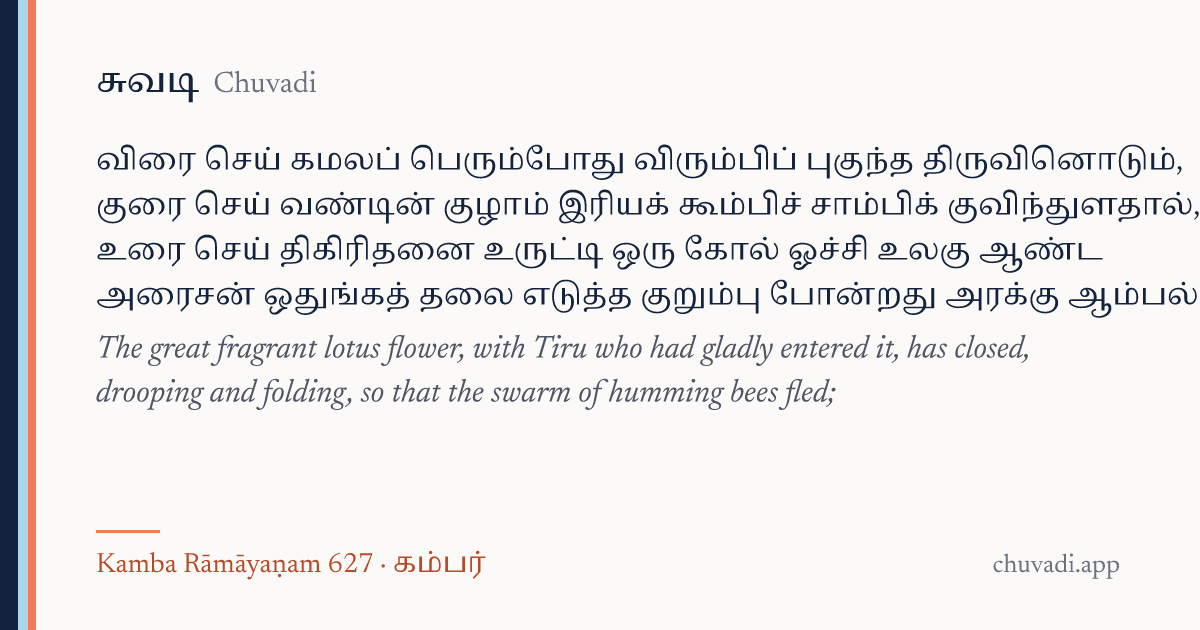
- The great fragrant lotus flower, with Tiru who had gladly entered it,
- has closed, drooping and folding, so that the swarm of humming bees fled;
- and the red water lily was like a petty chieftain who lifts his head
- when the king who ruled the world, rolling his famed wheel and wielding a single sceptre, has stepped aside.
What the poem says
With the moon up, the lotuses, which open to the sun, fold their petals and wither, shutting in the goddess Lakṣmī who dwells in them and driving off the bees. At the same time the red water lilies, which bloom at night, open boldly.
The sun is likened to an emperor who rolled the wheel of his authority — his one-wheeled chariot — across the world and ruled by a single sceptre — his rays. Once he withdraws, the lilies rise like a petty chieftain who rebels the moment the overlord is gone. The commentary cites a similar image in Nammāḻvār's Tiruviruttam.