



கம்பராமாயணம் 6517 · யுத்த 4.111
பாடல் · The poem
Tap a word to see its gloss in the commentary and where else it occurs.
பொருள் · Meaning in Tamil
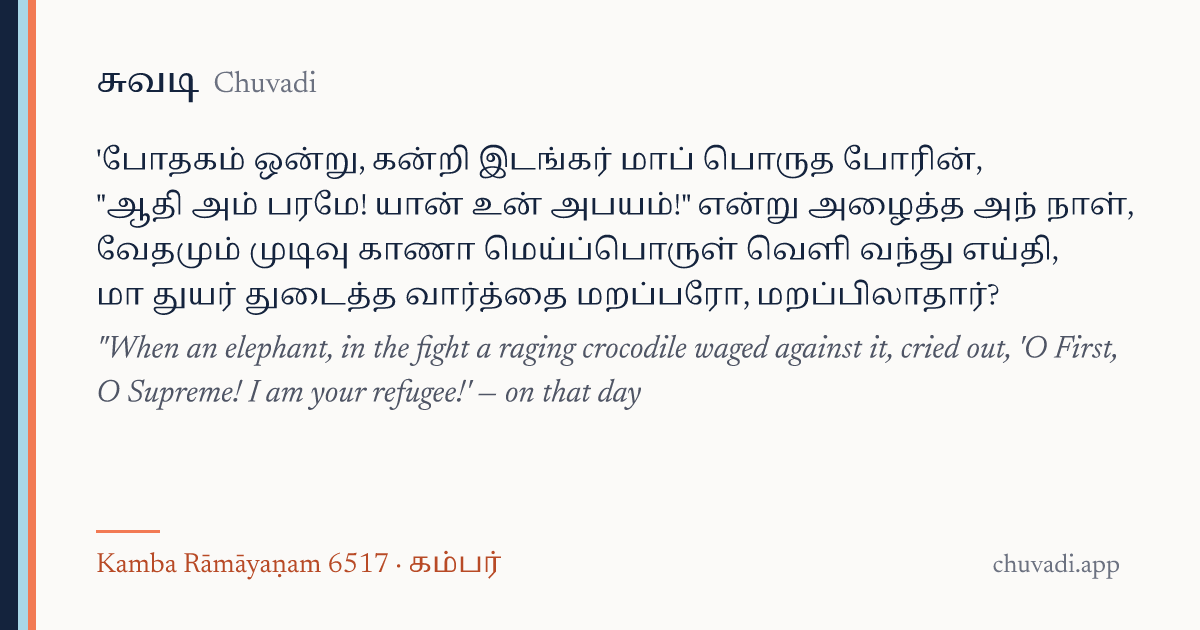
போதகம் ஒன்று - (கஜேந்திரன் என்ற பெயர் கொண்ட) யானை ஒன்று; கன்றி இடங்கர்மாப் பொருத போரின் - தாமரைப்பொய்கையில் சினம் கொண்ட முதலை ஒன்று தனது காலைப் பற்றி இழுத்துச்செய்த போரிலே தளர்ந்துபோய்; ஆதியம் பரமே யான் உன் அபயம் - ஆதிமூலமாயுள்ள பரம்பொருளே நான் உனது அடைக்கலம்; என்று அழைத்த அந்நாள் - என்று அழைத்த அந்த நாளிலே; வேதமும் முடிவு காணா மெய்ப்பொருள் - வேதங்களும் தேடி முடிவுகாண முடியாத மெய்ப்பொருளாகிய பரமன்; வெளிவந்தெய்தி - அந்த யானைக்காக வடிவெடுத்து வெளிப்பட்டு அந்த யானையை அடைந்து; மாதுயர் துடைத்த வார்த்தை - முதலையைக் கொன்று யானைக்குற்ற துன்பத்தை மாற்றியருளினார் என்ற வார்த்தையை; மறப்பிலாதார் மறப்பரோ - மறதியில்லாத அடியார்கள் என்றும் மறப்பார்களோ? (மறக்கமாட்டார்கள்)
போதகம் - யானை. இடங்கர்மா - முதலை. மெய்ப்பொருளே யானைக்கு அடைக்கலம் தந்து காத்தார் என்னும் போது நம்மை அடைந்த வீடணனை ஏற்றுக்கொள்ளுதல் நமது கடமை அல்லவா என்பது கருத்து.
ஆங்கிலம் · English translationAI
Translation
- "When an elephant, in the fight a raging crocodile waged against it,
- cried out, 'O First, O Supreme! I am your refugee!' — on that day
- the True Being, whose end even the Vedas never found, came forth in person
- and wiped away its great distress: will those who never forget ever forget that story?"
What the poem says
Irāmaṉ recalls the story of Gajendra, the king of elephants. Seized by a crocodile in a lotus pool and losing strength, the elephant called on the Supreme Lord for refuge.
Viṣṇu, whom even the Vedas cannot fully know, appeared at once, killed the crocodile and freed him. Devotees never forget this. If God himself rushes to save one who calls for refuge, Irāmaṉ must surely receive Vīṭaṇaṉ.