



கம்பராமாயணம் 6704 · யுத்த 6.72
பாடல் · The poem
Tap a word to see its gloss in the commentary and where else it occurs.
பொருள் · Meaning in Tamil
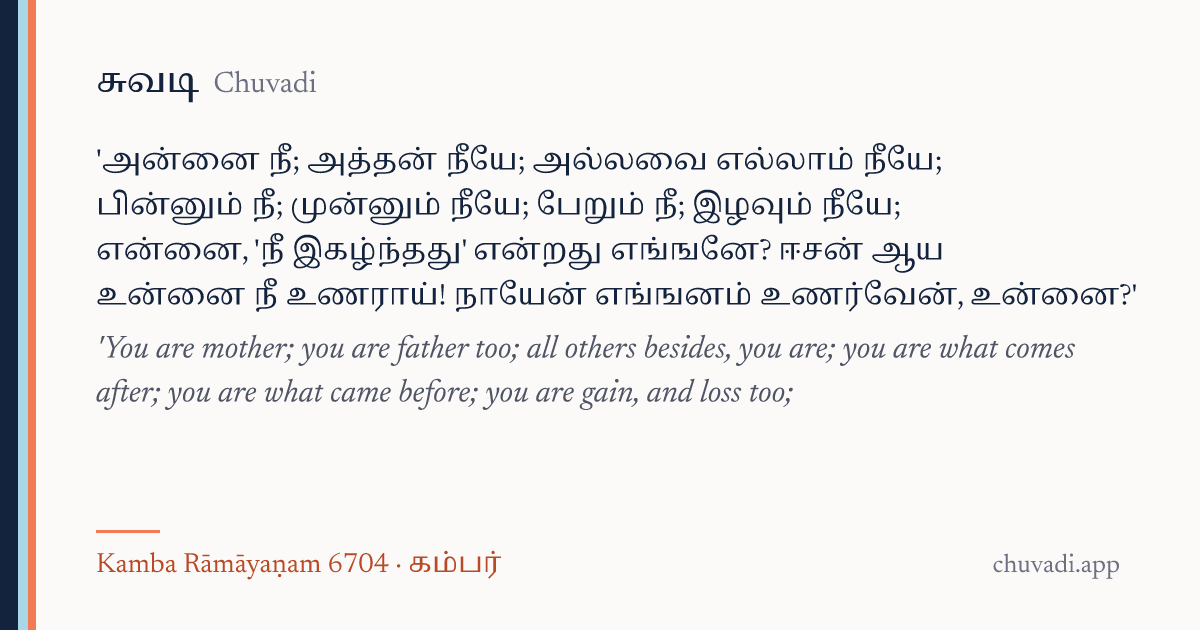
அன்னை நீ அத்தன் நீயே - எனக்குத் தாயும் நீ தந்தையும் நீயே; அல்லவை எல்லாம் நீயே - தாயும் தந்தையுமல்லாத மற்ற எல்லா உறவும் நீயே; பின்னும் நீ முன்னும் நீயே - எல்லாவற்றுக்கும் அந்தமும் நீ ஆதியும் நீயே; பேறும் நீ இழவும் நீயே - எனக்குரிய நற்பேறுகளும் நீ இழப்பும் நீயே; என்னை - (இவ்வாறு எல்லா நிலையிலும் உன்னையே சார்ந்திருக்கும் என்னைநோக்கி, 'நீ இகழ்ந்தது' என்றது எங்ஙனே - 'நீ என்னை இகழ்ந்தாய்' என்று கூறுவது எப்படிப் பொருந்துவதாகும், ஈசன் ஆய உன்னை நீ உணராய் - எல்லாம்வல்ல இறைவனாகிய நீயே உன்னை உணராதவனாய் இருக்கிறாய், உன்னை நாயேன் எங்ஙனம் உணர்வேன் - எனவே, அடியவனாகிய நான் உனது வல்லபத்தை எவ்வாறு உணர்வேன்?
அத்தன் - தந்தை. அல்லவை - பிற உறவுகள் 'பின்' என்றது பின் நிகழும் காரியத்தையும் 'முன்' என்றது காரியத்துக்கு முன் உள்ள காரணத்தையும் உணர்த்தும் என்பதும் ஒரு பொருள்; அதுவும் பொருந்தும். 'அத்தனாகி அன்னையாகி ஆளும் எம்பிரானுமாய். ஒத்தொல்லாத பல் பிறப்பொழித்து நம்மை ஆட் கொள்வான்' என்ற திருச்சந்த விருத்தம் (115) ஒப்பு நோக்கத் தக்கது 'பேறும் நீ இழவும் நீயே' என்பது 'நல்குரவும் செல்வும் நரகும் சுவர்க்கமுமாய் வெல் பகையும் நட்பும் விடமும் அமுதமுமாய், பல்வகையும் பரந்த பெருமான்' என்ற திருவாய் மொழி (265) உடன் ஒப்பிட்டு உணரத்தக்கது 'உன்னை நீதானும் உணராதாய் உன் வடிவம் தன்னை நீகாட்டத் தளைந்திடுவன் நான்' என்ற வில்லி பாரதம் (வில்லி. கிருட்டினன் தூது 362) ஒப்புநோக்கத்தக்கது. தன்னை உணராத தகைமை பெருமானுக்கு உண்டு எனக் கம்பர் பின்னும் குறித்துளார் (8784, 10063)
ஆங்கிலம் · English translationAI
Translation
- 'You are mother; you are father too; all others besides, you are;
- you are what comes after; you are what came before; you are gain, and loss too;
- how can you say of me, "You scorned me"? You yourself do not know
- who you are, the Lord; how could I, a cur, know you?'
What the poem says
Varuṇaṉ ends his plea with a gentle protest. Rāmaṉ is his mother, father and every other kin; the beginning and the end; his gain and his loss. How can Rāmaṉ accuse him of contempt? Rāmaṉ, the Lord, does not even recognise his own divinity while living as a man; how could a lowly servant be expected to recognise him?
The commentary sets this beside verses of the Āḻvārs and Villiputtūrār's Bhāratam on God not knowing himself.