



கம்பராமாயணம் 69 · பால 2.49
பாடல் · The poem
Tap a word to see its gloss in the commentary and where else it occurs.
பொருள் · Meaning in Tamil
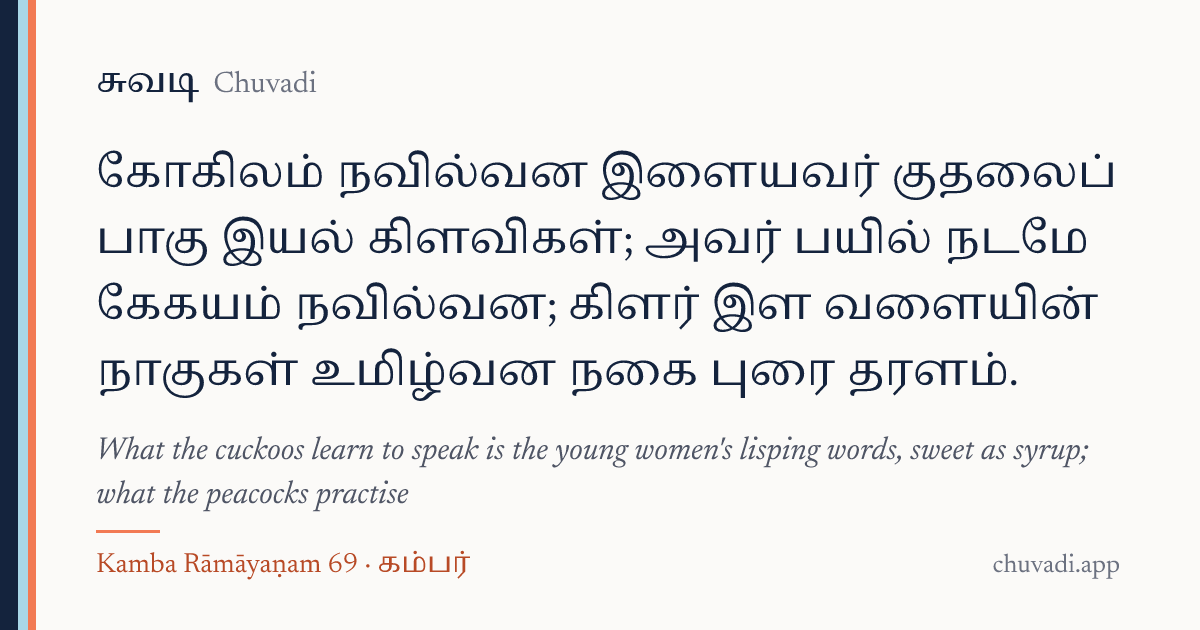
கோகிலம் நவில்வன - குயில்கள் கற்றுப் பேசுவன; இளையவர் குதலைப் பாகு இயல் கிளவிகள் - அந்நாட்டுப் பெண்களின் பாகு போன்ற இனியனவாகிய மழலைச் சொற்களையாம்; கேகயம் நவில்வன அவர் பயில் நடமே - மயில்கள் நடந்து பழகுவன அப்பெண்களின் நடையையாம்; கிளர் இள வளையின் நாகுகள் - விளங்கும் இளம்பெண் சங்குகள்; உமிழ்வன நகை புரைதரளம் - உமிழ்வது அப்பெண்களின் பற்களை ஒத்த முத்துக்களையேயாம்.
இள மகளிரைப் போலக் குயில்கள் பேசும்; அவர்களது நடையைப் போல மயில்கள் நடக்கும்; குயிலும் மயிலும் உவமானங்கள் அவற்றை உவமேயங்களாக்கி கூறியதால் இது 'எதிர்நிலையுவமையணி'; எதிர்மறை அணி என்றும் கூறுவர். பாகு இயல் கிளவி: பாகு போன்ற இனிய மொழி. கேகயம்: மயில். நகை: பல். கிளவி: சொல். தரளம்: முத்து
ஆங்கிலம் · English translationAI
Translation
- What the cuckoos learn to speak is the young women's lisping
- words, sweet as syrup; what the peacocks practise
- is the dance of their steps; and the young, bright female conches
- spit out pearls like their smiling teeth.
What the poem says
Again the usual comparisons are reversed. Cuckoos are normally the model for a woman's sweet voice, peacocks for her graceful step, and pearls for her teeth. In Kōcalam the cuckoos learn to speak by imitating the young women's sweet, lisping words. The peacocks practise their gait by copying the women's walk. And the pearls the conches produce merely resemble the women's teeth.