



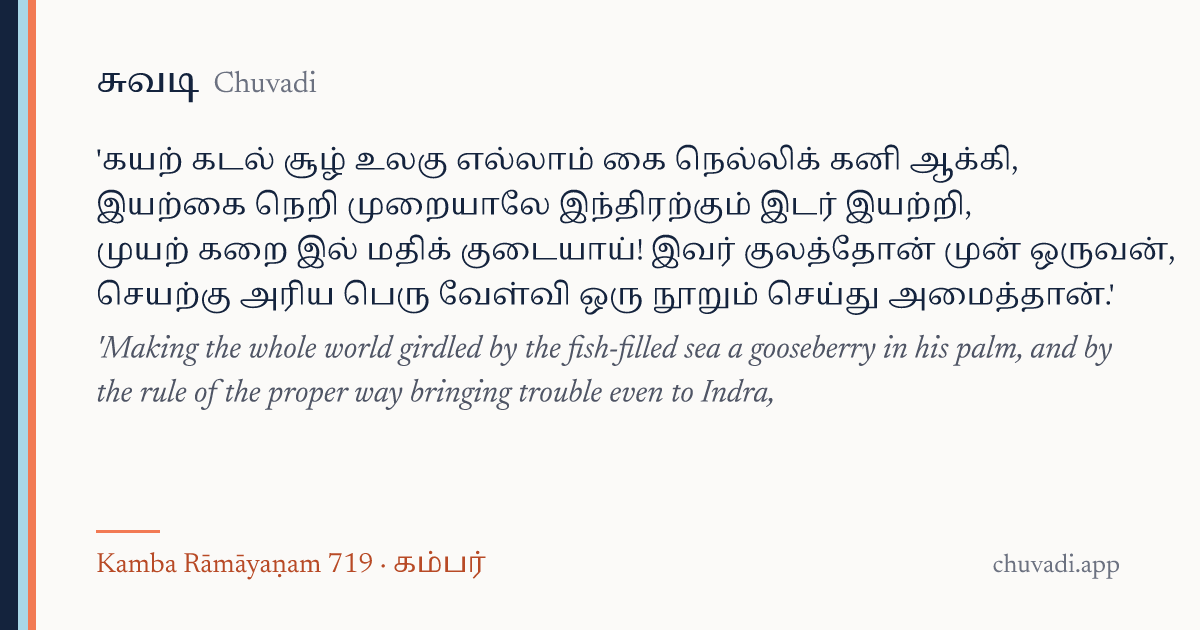
கம்பராமாயணம் 719 · பால 11.10
பாடல் · The poem
Tap a word to see its gloss in the commentary and where else it occurs.
பொருள் · Meaning in Tamil
முயல் கறை இல் - முயலாகிய களங்கம் இல்லாத; மதிக்குடையாய் - சந்திரனைப் போல விளங்கும் வெண்கொற்றக் குடையுடையவனே!; இவர் குலத்தோன் - இம் மைந்தர்களது குலத்திலே; முன்னொருவன் - முன்புதோன்றினான் ஓர் அரசன்; கயல் கடல் சூழ் உலகு எல்லாம் - மீன்கள் வாழும் கடலால் சூழப்பட்டுள்ள நிலவுலகம் முழுவதையும்; கைந் நெல்லிக் கனி - உள்ளங்கையிலுள்ள நெல்லிக் கனிபோல; ஆக்கி - எளிதாகத் தன் ஆட்சிக்குக் கொண்டு வந்து; இந்திரற்கும் - தேவேந்திரனுக்கும்; இடர் இயற்றி - (பதவி இழத்தலாகிய) துன்பத்தை யுண்டாக்கி; செயற்கு அரிய - (பிறரால்) செய்வதற்கு அருமையான; பெருவேள்வி ஒருநூறும் - ஒப்பற்ற பெரிய நூறு அசுவமேதயாகங்களையும்; இயற்கை நெறிமுறையால் - வேதங்களின் விதி முறைமை வழுவாமல்; செய்து அமைத்தான் - செய்து முடித்தான்.
இப் பாடலில் குறிக்கப் பெற்றவன் சுதாசன் என்பவர். நகுடன் என்று குறிப்பாரும் உண்டு. சந்திரனிடமுள்ள களங்கத்தை முயலென்றும், மான் என்றும், பூச் சாயை என்றும், மறு என்றும் கூறுவது கவிமரபாகும்.
ஆங்கிலம் · English translationAI
Translation
- 'Making the whole world girdled by the fish-filled sea a gooseberry in his palm,
- and by the rule of the proper way bringing trouble even to Indra,
- O you whose parasol is a moon without the hare's stain! One of this line long ago
- performed to completion a full hundred great sacrifices, hard to perform.'
What the poem says
Another king of this line held the whole sea-girt world as easily as a gooseberry in his palm and performed a hundred horse sacrifices exactly by the rules — the feat that entitles a king to Indra's throne, and so a threat to Indra himself. The commentary identifies him as Sudāsa, or according to some, Nahuṣa.
Caṉakaṉ's white parasol is praised as a moon without the dark mark that poets variously call a hare, a deer or a stain.