



கம்பராமாயணம் 721 · பால 11.12
பாடல் · The poem
Tap a word to see its gloss in the commentary and where else it occurs.
பொருள் · Meaning in Tamil
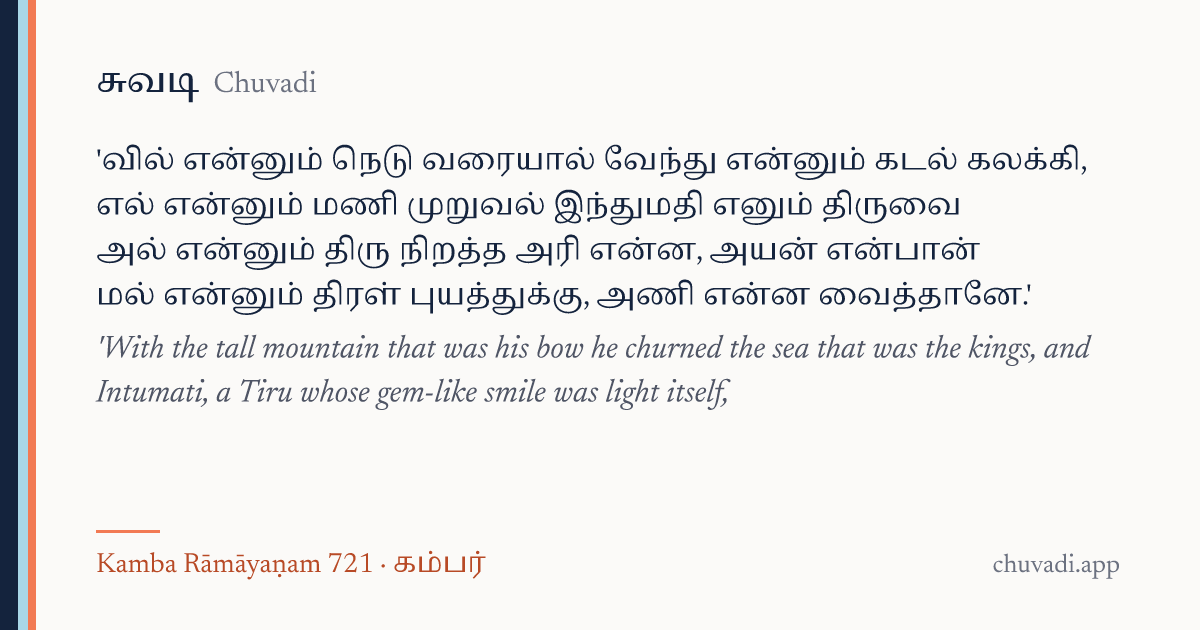
அயன் என்பான் - (இம் மைந்தர் குலத்தில் உதித்த) அசன் என்னும் மன்னன்; வில் என்னும் நெடுவரையால் - தனது வில் என்கின்ற பெரிய மந்தர மலையாகிய மத்தினால்; வேந்து என்னும் கடல் - பகையரசர்களாகிய பாற்கடலை; கலக்கி - கலங்கச் செய்து (கடைந்து); எல் என்னும் மணி முறுவல் - ஒளி வடிவமான முத்துப் போன்ற பற்களையுடைய; இந்துமதி என்னும் - இந்துமதி என்னும் பெயருடைய; திருவை - இலக்குமி போன்றவளை; அல் என்னும் - இருள் போல; திரு நிறத்த அரி என்ன - கரிய நிறமுடைய திருமால் போன்று; மல் என்னும் - மல் தொழிலின் வடிவம் என்று சொல்லத்தக்க; திரள் புயத்துக்கு - திரண்ட தன் தோள்களுக்கு; அணி என்ன வைத்தான் - ஓர் அணிகலனாக அணிந்தான்.
முன்பு திருமால் மந்தரமலையைக் கொண்டு பாற்கடலைக் கடைந்து அதில் தோன்றிய திருமகளைத் தன் மார்பில் வைத்துக்கொண்டது போல அயனும் வில்லாகிய மலையைக் கொண்டு பகைமன்னராகிய கடலைக் கடைந்து அதில் கிடைத்த இந்துமதி என்னும் திருமகளைத் தன் தோளில் வைத்துக் கொண்டான் என்பது கம்பரின் கவித்திறன். இந்துமதி சுயவரத்தில் மற்றையரசரை மதியாமல் அயனுக்கு உவந்து மாலை சூட்டினாள். அது கண்டு பொறாமை கொண்ட அரசர் போர் செய்ய அவர்களை அயன் வென்றான் என்பது அறியத்தக்கது. திருமகள் உவமை: பேரழகு உடைமையால், செல்வச் சிறப்பால் இந்துமதிக்குத் திருமகள் உவமை. உருவக அணி (உவமை அங்கமாக).
ஆங்கிலம் · English translationAI
Translation
- 'With the tall mountain that was his bow he churned the sea that was the kings,
- and Intumati, a Tiru whose gem-like smile was light itself,
- the one called Ayaṉ, like Hari whose lovely colour is the night,
- set as an ornament on his massive shoulders, which were wrestling made flesh.'
What the poem says
The sage now comes to Aja (Ayaṉ), Irāmaṉ's grandfather. At her svayaṁvara the princess Indumatī chose Aja over all the other kings, and when the jealous rivals attacked, he defeated them all.
The poet frames this as a second churning of the ocean. Just as dark Viṣṇu churned the milk sea with a mountain and took Lakṣmī, who rose from it, to his breast, Aja churned the sea of hostile kings with his bow and won Indumatī, lovely as Lakṣmī, to adorn his mighty shoulders.