



கம்பராமாயணம் 7360 · யுத்த 15.47
பாடல் · The poem
Tap a word to see its gloss in the commentary and where else it occurs.
பொருள் · Meaning in Tamil
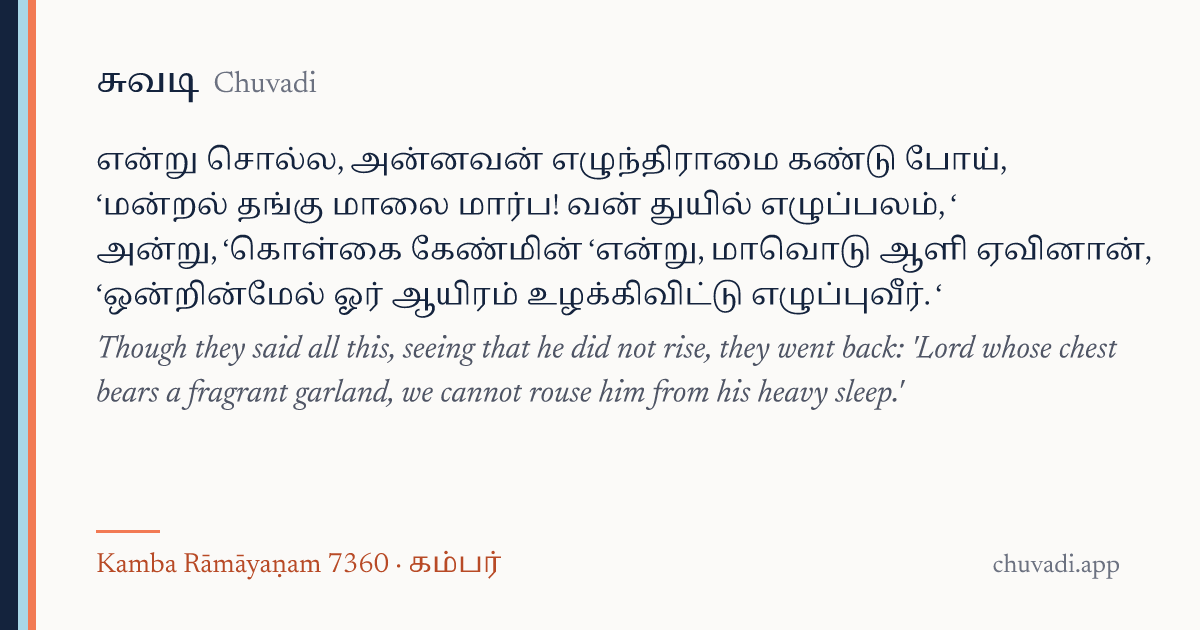
என்று சொல்ல - என்று பலவாறு சொல்லி எழுப்பவும்; அன்னவன் - அந்தக் கும்பகருணன்; எழுந்திராமை - உறக்கத்தில் இருந்து எழுந்திராமையைக்; கண்டு போய் - கண்டு இராவணனிடம் திரும்பிப் போய்; மன்றல் தங்கு மாலை மார்ப - மணம் நிறைந்த மாலை அணிந்த மார்பை உடையவனே; வன்துயில் எழுப்பலம் - கும்பகருணனை வலிய உறக்கத்தில் இருந்து எழுப்ப வல்லோம் அல்லோம்; என்று சொல்ல - என்று கூற; அன்று - அப்போது (இராவணன்); கொள்கை கேண்மின் என்று - செய்யத்தக்க செயலைக் கேண்மின் என்று கூறி; ஒன்றன் மேல் - ஒன்றன் மேல் ஒன்றாக; மாவொடு ஆளி ஓர் ஆயிரம் - ஒராயிரக்கணக்கான குதிரைகளையும் யாளிகளையும்; உழக்கி விட்டு எழுப்புவீர் - மிதிக்கச் செய்து எழுப்புவீர்; என்று ஏவினான் - என்று அவர்களுக்குக் கட்டளையிட்டான்.
ஆங்கிலம் · English translationAI
Translation
- Though they said all this, seeing that he did not rise, they went back:
- 'Lord whose chest bears a fragrant garland, we cannot rouse him from his heavy sleep.'
- Then he said, 'Hear what is to be done,' and ordered horses and yāḷis:
- 'Trample him with a thousand, one after another, and so wake him.'
What the poem says
The messengers give up and report to Irāvaṇaṉ that they cannot wake his brother. Irāvaṇaṉ orders a new method: a thousand horses and yāḷis, fabulous lion-like beasts, are to trample over Kumpakaruṇaṉ one after another until he wakes. The scene is one of the epic's touches of comedy.