



கம்பராமாயணம் 755 · பால 12.17
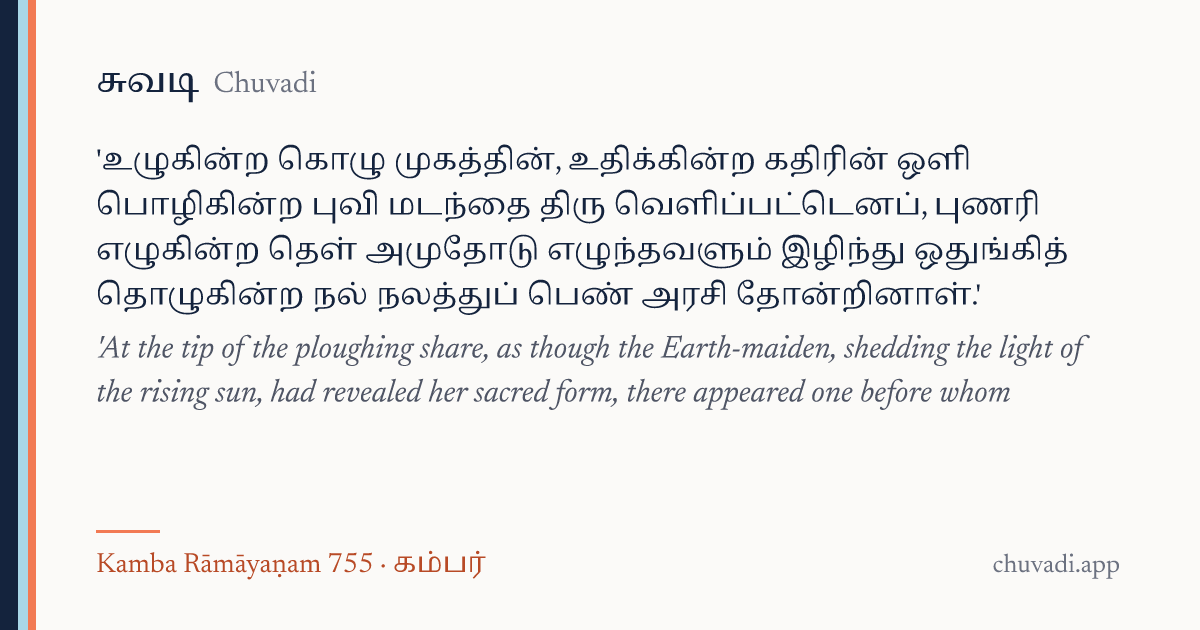
பாடல் · The poem
Tap a word to see its gloss in the commentary and where else it occurs.
பாட வேறுபாடு · Project Madurai reads
பொருள் · Meaning in Tamil
உழுகின்ற - (அவ்வாறு) உழுது வந்த; கொழு முகத்தின் - கொழுவின் முனையில், உதிக்கின்ற கதிரின் ஒளி - உதிக்கும் கதிரவனின் ஒளியை; பொழிகின்ற - வீசுகின்ற; புவி மடந்தை திரு - பூமி தேவியின் திருவுருவம்; வெளிப்பட்டென - வெளிப்பட்டாற் போல; புணரி எழுகின்ற - பாற்கடலில் தோன்றிய; தெள் அமுதோடு - தெள்ளிய அமுதுடன்; எழுந்தவளும் - பிறந்த இலக்குமியும்; இழிந்து - (தன்னழகு) தாழ்ந்து; ஒதுங்கி - ஒதுங்கி நின்று; தொழுகின்ற - (கை கூப்பி) வணங்குகின்ற, நன்னலத்து - மிக்க பேரழகு படைத்த; பெண் அரசி - பெண்களின் தலைவியான; தோன்றினாள் - இவள் (இந்தச் சீதை) தோன்றினாள்.
சீதை கொழுமுகத்தில் தோன்றினாள் என்றார். சீதையின் திருமேனி பொன்னிறமாதலால் “உதிக்கின்ற கதிரின் ஒளி பொழிகின்ற புவிமடந்தை” என்றார் - தன்மைத் தற்குறிப்பேற்ற அணி. சீதா - உழுபடை சால். இலக்குமியும் தாழ்ந்து வணங்கத்தக்க பேரழகு படைத்தவள் சீதை என்பது.
ஆங்கிலம் · English translationAI
Translation
- 'At the tip of the ploughing share, as though the Earth-maiden, shedding the light
- of the rising sun, had revealed her sacred form, there appeared one before whom
- even she who rose from the ocean with the clear nectar would step down, stand aside
- and bow: the queen among women, of perfect beauty.'
What the poem says
At the point of the ploughshare a girl appeared, glowing like the rising sun, as if the Earth goddess herself had come into view. Her golden complexion explains the image of sunlight.
So beautiful was she that even Ilakkumi, the goddess of fortune who rose from the ocean of milk along with the nectar, would feel outshone and bow to her. This is Cītai, named for the furrow in which she was found.