



கம்பராமாயணம் 754 · பால 12.16
பாடல் · The poem
Tap a word to see its gloss in the commentary and where else it occurs.
பொருள் · Meaning in Tamil
வேள்விக்கு - வேள்வி செய்யும் பொருட்டு; இரும்பு அனைய - இரும்பை ஒத்த (வலிய); கரு நெடு - பெரிய நீண்ட; இணைக் கோட்டு - இரு கொம்புகளையுடைய; ஏற்றின் - காளையின்; பணை ஏற்ற பெரும் பியலில் - பருத்த பெரும் பிடரியின் மேல், பளிக்கு நுகம் பிணைத்து - பளிங்கால் இழைத்த நுகத்தடியைப் பூட்டி; அதனோடு அணைத்து - அதனோடு சேர்க்கப்பட்டு; ஈர்க்கும் - இழுத்துக்கொண்டு போகப்படுகின்ற; வரம்பு இல் மணி - எண்ணற்ற இரத்தினங்கள் பதித்த; பொன் கலப்பை - பொன் கலப்பையில்; வயிரத்தின் கொழு - வயிரத்தால் ஆகிய கொழுவை; மடுத்திட்டு - சேர்த்து; உரம் பொருவு இல் - உரவளத்தில் ஒப்பு இல்லாத; நிலம் - பூமியை; அலகு இல் பல சால் - அளவற்ற பல சால்கள்; உழுதேம் - (பன்முறை) நாங்கள் உழலானோம்.
வேள்வி செய்வதற்காக நிலத்தை உழுத பாங்கு இதிற் சொல்லப்படுகிறது. சால்: வயலில் ஒரு முறை நீள உழுதல்.
ஆங்கிலம் · English translationAI
Translation
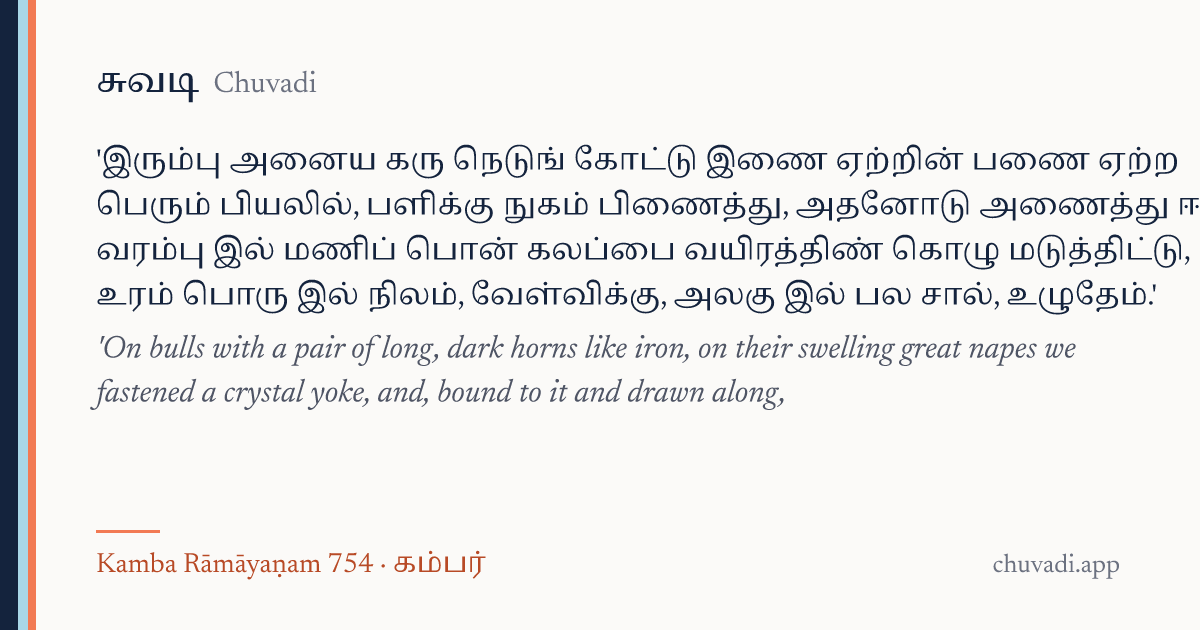
- 'On bulls with a pair of long, dark horns like iron, on their swelling
- great napes we fastened a crystal yoke, and, bound to it and drawn along,
- a golden plough set with countless gems, fitted with a hard diamond share;
- and land of matchless richness, for the sacrifice, we ploughed in furrows beyond count.'
What the poem says
Catāṉantaṉ now tells how Cītai was found. To prepare ground for a sacrifice, the king's people ploughed a rich field with royal splendour: great dark-horned bulls under a crystal yoke, drawing a golden, gem-studded plough with a diamond ploughshare.
They drove furrow after furrow across the field. The furrow matters, because the name Cītai itself means a ploughed furrow.