



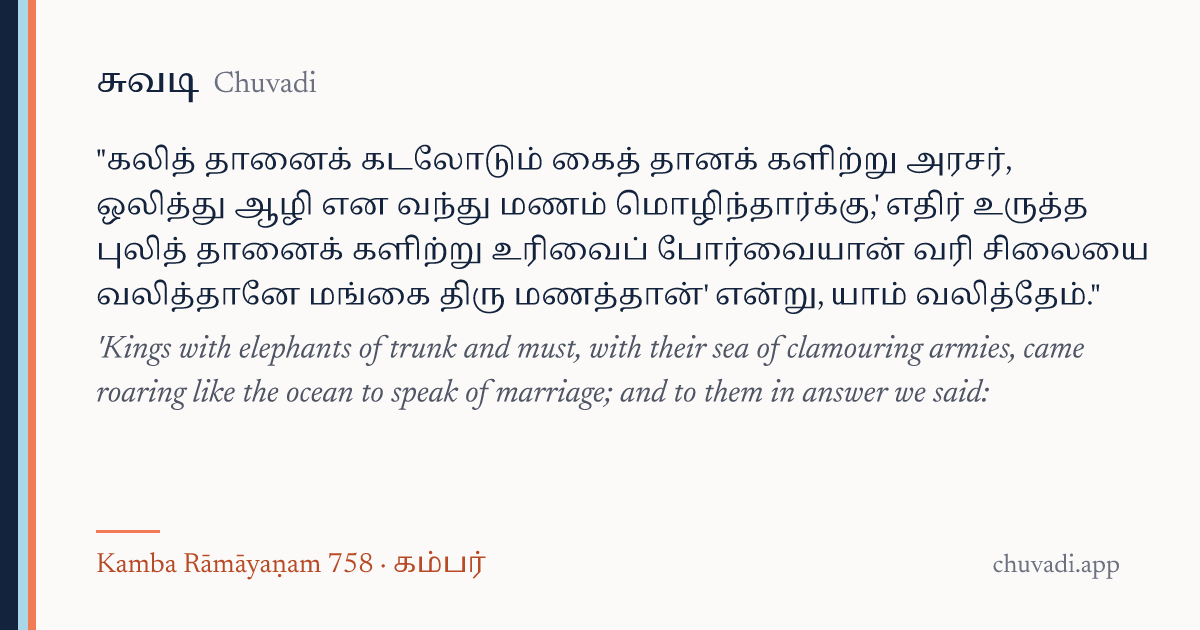
கம்பராமாயணம் 758 · பால 12.20
பாடல் · The poem
Tap a word to see its gloss in the commentary and where else it occurs.
பாட வேறுபாடு · Project Madurai reads
பொருள் · Meaning in Tamil
கை - துதிக்கையும், தானம் - மதநீரும் உடைய; களிறு அரசர் - யானைப்படை கொண்ட மன்னர்; கலித் தானைக் கடலோடும் - ஆரவாரமுடைய சேனையாகிய கடலோடு; ஆழி என ஒலித்து வந்து - கடல்போல முழக்கம் செய்து வந்து; மணம் மொழிந்தார்க்கு - மணத்தைக் குறித்து மகள் பேச அவர்களுக்கு; எதிர் - (எல்லாம்) எதிர்மொழியாக; உருத்த புலித்தானை - சினம் கொண்ட புலித்தோலை ஆடையாகவும்; களிறு உரிவைப் போர்வையான் - யானைத் தோலைப் போர்வையாகவும் கொண்டுள்ளவனாகிய சிவன்; வரிசிலையை - போரில் எடுத்த கட்டமைந்த வில்லை; வலித்தானே - தன் வலிமை கொண்டு வளைத்தவனே; மங்கை திருமணத்தான் - இந்தச் சீதையின் மணமகனாவதற்கு உரியவன்; என்று யாம் - என்று நாங்கள்; வலித்தேம் - உறுதியாகத் தெரிவித்தோம்.
முதல் வலித்தல்: வளைத்தல். இறுதியில் வரும் வலித்தல்: உறுதி கூறல்.
ஆங்கிலம் · English translationAI
Translation
- 'Kings with elephants of trunk and must, with their sea of clamouring armies,
- came roaring like the ocean to speak of marriage; and to them in answer we said:
- Whoever bends the banded bow of him who wears the angry tiger's skin and has the elephant's hide for a mantle,
- he alone shall be the maiden's bridegroom. This we firmly declared.'
What the poem says
Kings arrived with vast armies, thundering like the sea, to ask for Cītai's hand. Caṉakaṉ's court gave them one answer: only the man who could bend the bow of Civaṉ, the god clad in tiger skin with an elephant hide for his cloak, would marry her.
The verse plays on the verb valittal, used first for bending the bow and then for making a firm declaration.