



கம்பராமாயணம் 7686 · யுத்த 16.10
பாடல் · The poem
Tap a word to see its gloss in the commentary and where else it occurs.
பாட வேறுபாடு · Project Madurai reads
பொருள் · Meaning in Tamil
அமுதின் வந்தீர் - அமுதத்துடன் அவதரித்தவரே! வஞ்சனேன் - வஞ்சனைத் தன்மையுடைய; நானே எனக்கு - நான் எனக்காக; மாதரார் வடிவு கொண்ட - பெண்பாலார் உருவத்தைக் கொண்ட; நஞ்சு தோய் அமுதம் உண்பான் நச்சினேன் - நஞ்சு கலந்த அமுதத்தை உண்ண விரும்பினேன்; நாளும் தேய்ந்த நெஞ்சு நேரானது - நாளுக்கு நாள் தேய்ந்த (என்) நெஞ்சு நேர்மைப் பண்பைக் கொண்டு விட்டது உம்மை நினைப்பு விட்டு - உம்மை நினைப்பதை விட்டு; ஆவி நீக்க அஞ்சினேன் - உயிரை விடுவதற்கு (நான்) அஞ்சினேன்; அடியனேன் நும் அடைக்கலம் - அடியவனாகிய நான் நுமக்கு அடைக்கலப் பொருள்.
நஞ்சுதோய் அமுதம் - பிரிவில் நஞ்சாயும் சேர்வதில் அமுதாயும் உள்ள நிலை. உம்மை நினைப்பு விட்டு ஆவி போக்க அஞ்சினேன் - உம்மை நினைப்பதை விட்டு விட்டால் என்னுயிர் போய் விடும் என்பதை வேறு வகையாகச் சொல்லியது. அமுதின் வந்தீர் - அவதார உணர்வு இன்றி அழகுணர்வால் கூறியது. மாதர் என்பதில் அர் அசை ஆர் உயர்வுப் பன்மை விகுதி.
ஆங்கிலம் · English translationAI
Translation
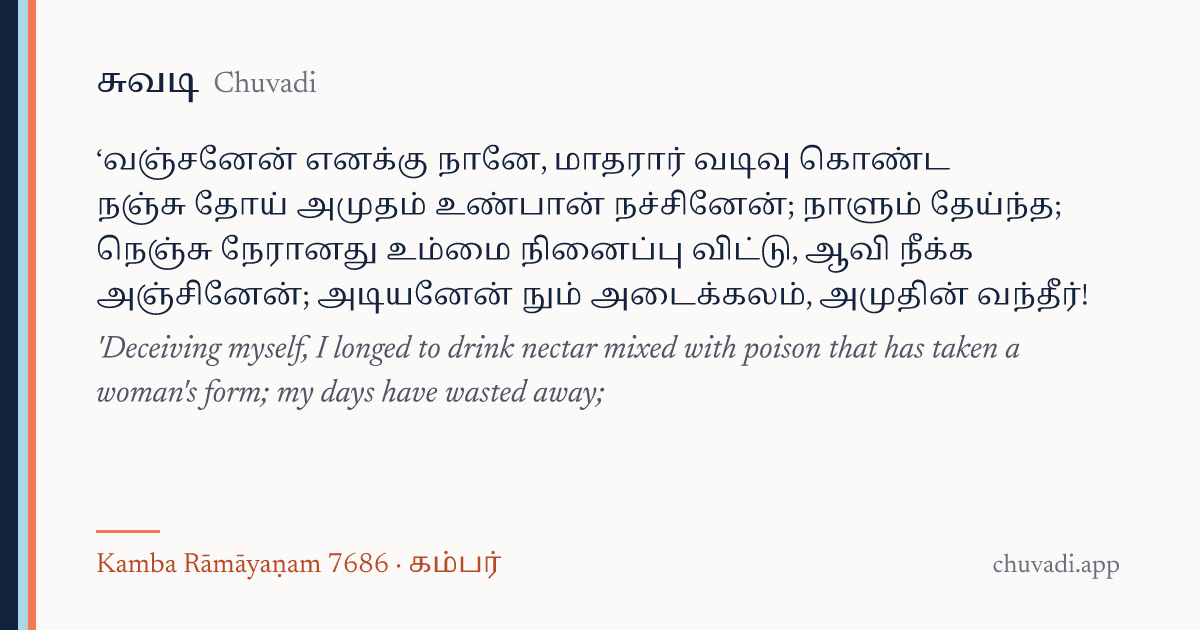
- 'Deceiving myself, I longed to drink nectar mixed with poison
- that has taken a woman's form; my days have wasted away;
- my heart has turned straight; to stop thinking of you and give up my life
- I fear; I am your slave, your refuge, you who came with the nectar!'
What the poem says
Irāvaṇaṉ calls his love for Cītai a nectar laced with poison: sweet if she yields, deadly in separation. He cannot stop thinking of her, for that would kill him, and so he throws himself on her mercy. 'You who came with the nectar' recalls Lakṣmī, born with the nectar from the churning of the ocean, though Irāvaṇaṉ means it only as praise of her beauty.