



கம்பராமாயணம் 77 · பால 2.57
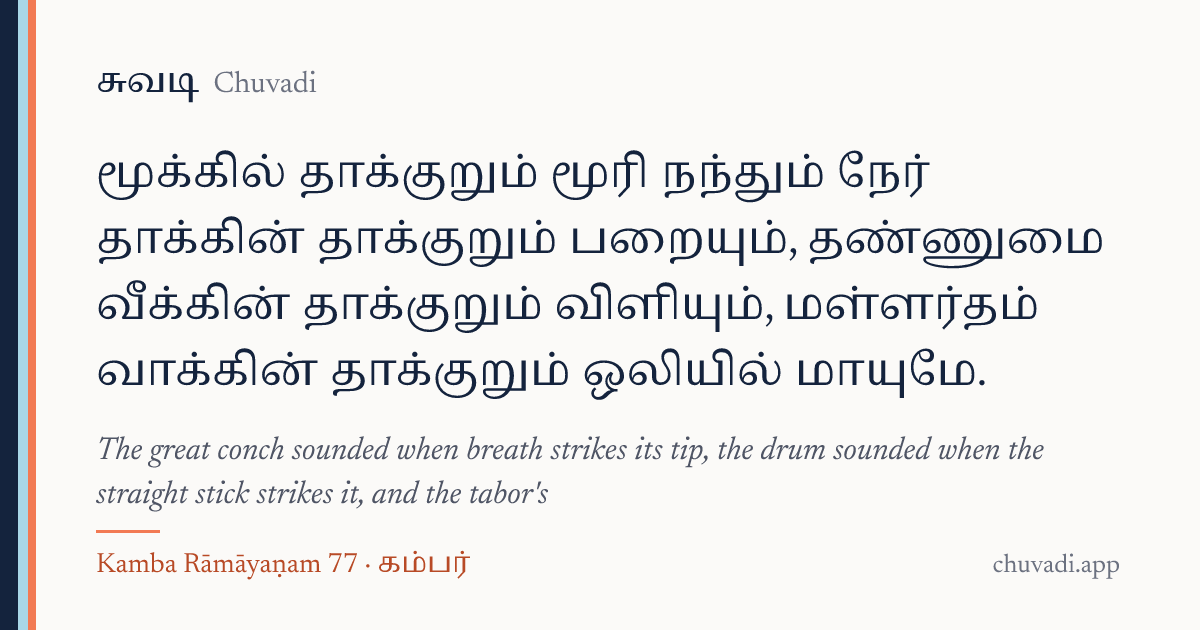
பாடல் · The poem
Tap a word to see its gloss in the commentary and where else it occurs.
பாட வேறுபாடு · Project Madurai reads
பொருள் · Meaning in Tamil
மூக்கில் தாக்குறும் மூரி நந்தும் - மூக்கில் வாய்வைத்து ஊதப்படும் வலிய சங்கு வாத்தியத்தின் ஒலியும்; நேர்தாக்கின் தாக்குறும் பறையும் - நேரான குறுந்தடியால் தாக்கப்படும் பறையினது ஓசையும், வீக்கில் தாக்குறும் தண்ணுமை விளியும் - வாரால் பிணிக்கப்பட்ட மத்தள முழக்கமும்; மள்ளர்தம் வாக்கில் தாக்குறும் ஒலியில் மாயும் - உழவர்கள் உழவு மாடுகளை அதட்டும் ஒலிக்குள்ளே அடங்கிவிடும்.
சங்கு, பறை, மத்தளம் இவைகளின் ஓசை உழவர்கள் ஆரவாரத்திலே அடங்கிவிடும் என்பதால் உழவர்களது ஆரவார ஒலியே ஓங்கி நிற்கும் என்பது கருத்து. மூக்கு என்றது சங்கின் கரிமுகத்து நுனியை. ஒன்றில் மற்றொன்று அடங்கும் என்பதால் இது மறைவணியாகும். 57 இரு பாடல்களிலும் விழாச் சிறப்பும், வேள்விச் சிறப்பும் கூறினார்.
ஆங்கிலம் · English translationAI
Translation
- The great conch sounded when breath strikes its tip, the drum
- sounded when the straight stick strikes it, and the tabor's
- voice struck from its tight-laced straps are all lost in the noise
- that strikes out from the farmhands' throats.
What the poem says
The festival music of Kōcalam is loud: great conches blown at their tips, drums beaten with sticks, and tabors with their leather straps pulled tight. Yet all of it is drowned out by the shouts of the farmhands driving their oxen. The farmers' cheerful din rises above everything, a sign of how busy and prosperous the fields are. The verse repeats one verb, "strike", for each sound. It closes the two verses on festivals and sacrifices.