



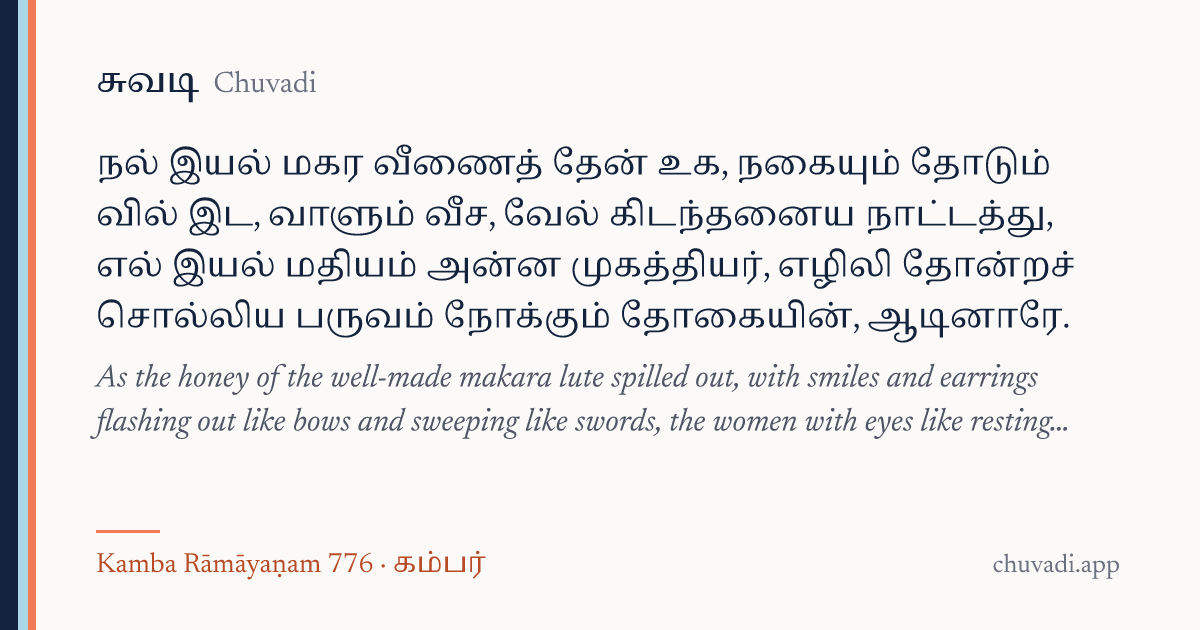
கம்பராமாயணம் 776 · பால 12.38
பாடல் · The poem
Tap a word to see its gloss in the commentary and where else it occurs.
பொருள் · Meaning in Tamil
வேல் கிடந்து அனைய - வேல் தங்கியது போன்ற; நாட்டத்து - கண்களையும்; எல்லியல் மதியம் அன்ன - இரவில் எழும் சந்திரன் போன்ற; முகத்தியர் - முகத்தையும் உடைய மங்கையர்கள்; சொல்லிய பருவம் - (மேகம் வரக்கூடிய) கார்ப் பருவத்தில்; எழிலி தோன்ற - (வானத்தில்) மேகங்கள் காணப்பட; தோகையின் - மயில்கள் ஆடுவதுபோல; நல் இயல் - நல்லிலக்கணம் அமைந்த; மகரவீணைத் தேன் உக - மகரயாழின் இசைத் தேன் சிந்தவும்; நகையும் தோடும் - புன்சிரிப்பும் காதணியும்; வில் இட வாள் வீச - முறையே ஒளியைப் பரப்பிவிடவும்; ஆடினர் - ஆடினார்கள்.
பற்களின் ஒளி விடாது தோன்றுவதால் 'வில்இட' என்றும், காதணிகள் விட்டுவிட்டு ஒளிவிடுவதால் 'வாள்வீச' என்றும் இவற்றால் வில்லையும் வாளையும் வீசிக்கொண்டு மகளிர் ஆடினர் என்பது நயம்.
ஆங்கிலம் · English translationAI
Translation
- As the honey of the well-made makara lute spilled out, with smiles and earrings
- flashing out like bows and sweeping like swords, the women with eyes like resting spears
- and faces like the moon that rises at night danced
- like peacocks that watch for the promised season when the clouds appear.
What the poem says
The women of the city dance for joy, like peacocks dancing when the rain clouds they have waited for finally arrive. Music pours from the lutes.
Kampaṉ plays on words: their smiles give off a steady light and their swinging earrings flash on and off, so that, in the Tamil, they seem to dance wielding bows and swords, fitting for a celebration of a feat of arms.