



கம்பராமாயணம் 780 · பால 12.42
பாடல் · The poem
Tap a word to see its gloss in the commentary and where else it occurs.
பாட வேறுபாடு · Project Madurai reads
பொருள் · Meaning in Tamil
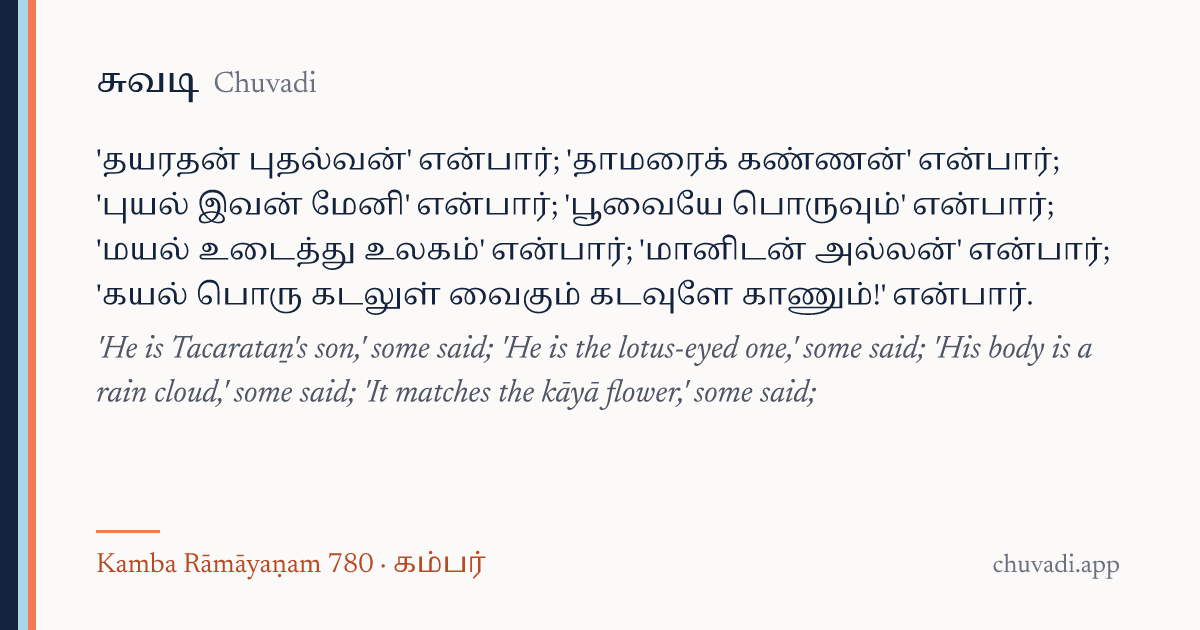
(அந்நகர மக்களில் சிலர்); தயரதன் புதல்வன் என்பார் - (இவன்) தயரதன் திருமகன் என்று கூறுவார்கள்; தாமரைக் கண்ணன் என்பார் - (சிலர் இவன்) செந்தாமரைக் கண்ணனான திருமாலே என்று சொல்வார்கள்; இவன் மேனி - (சிலர்) இவனது மேனியின் நிறம்; புயல் என்பார் - கருமேகம் என்பார்கள்; பூவையும் பொருவும் - (தவிர) காயாம் பூவையும் ஒத்துள்ளது; என்பார் - என்பார்கள் (சிலர்); மானிடன் அல்லன் - (எவ்வாறாயினும் இவன்) மானுடன் அல்லன்; என்பார் - என்று கூறுவார்கள் (சிலர்); கயல் பொரு கடலுள் - (பின்னை இவன் யாரென்றால்) கயல்மீன்களையுடைய பாற்கடலில், வைகும் கடவுளே - தங்கியுள்ள திருமாலே ஆவான்; என்பர் - என்று சொல்வார்கள்; மயல் உடைத்து உலகம் - இந்த உலகத்தின் இயல்பு மயக்கம் உடையது; என்பார் - என்று கூறுவார்கள் (சிலர்) (இவ்வாறு மக்கள் பலபடி கூறினர்).
பூவையும் - இறந்தது தழீஇய எச்ச உம்மை.
ஆங்கிலம் · English translationAI
Translation
- 'He is Tacarataṉ's son,' some said; 'He is the lotus-eyed one,' some said;
- 'His body is a rain cloud,' some said; 'It matches the kāyā flower,' some said;
- 'The world is lost in illusion,' some said; 'He is no mere man,' some said;
- 'See, he is the very god who dwells in the ocean where the carp leap!' some said.
What the poem says
The people of Mithilā talk about Irāmaṉ. Some know him simply as Tacarataṉ's son; others call him the lotus-eyed Tirumāl. His dark complexion reminds them of a rain cloud or the dark-blue kāyā blossom.
Some say he is no ordinary human but the god who lies on the ocean of milk, and some reflect that the world is deluded in not recognising him.