



கம்பராமாயணம் 808 · பால 13.4
பாடல் · The poem
Tap a word to see its gloss in the commentary and where else it occurs.
பாட வேறுபாடு · Project Madurai reads
பொருள் · Meaning in Tamil
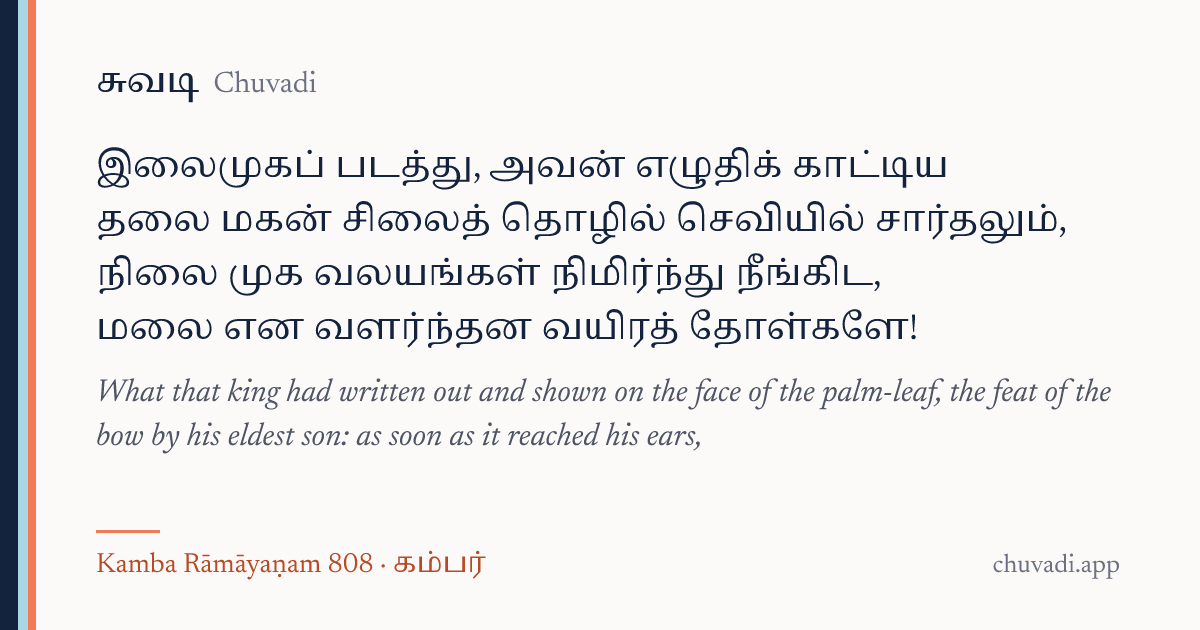
இலைமுகம் படத்து - பனையோலையின் முகப்பாகிய படத்தில்; அவன் எழுதிக் காட்டிய - அச் சனக மன்னன் எழுதிக் காண்பித்த; தலைமகன் சிலைத் தொழில் - (தன்) மூத்த மைந்தனாகிய இராமனது வில்லாற்றலானது; செவியில் சார்தலும் - (தன்) காதில் பட்டவுடனே; வயிரத் தோள்கள் - (தசரதனுடைய) வயிரம் போன்ற உறுதியான தோள்கள்; நிலைமுக வலையங்கள் - தம்மிடம் நிலை பெற்ற தோள்வளைகள்; நிமிர்ந்து நீங்கிட - வாய்விட்டுக் கழன்றுபோகும்படி; மலை என வளர்ந்தன - மலைபோலப் பூரித்தன.
தன் மூத்த மைந்தனான இராமனது வீரச் செயலை வேறொரு மன்னன் புகழ்ந்து எழுதியதைக் கேட்டுத் தசரதன் மகிழ்ச்சியடைந்து தோள் பூரித்தான் என்பது.
ஆங்கிலம் · English translationAI
Translation
- What that king had written out and shown on the face of the palm-leaf,
- the feat of the bow by his eldest son: as soon as it reached his ears,
- so that the armlets set firm on them burst open and fell away,
- his diamond-hard shoulders swelled like mountains!
What the poem says
As the letter is read, Tacarataṉ hears, in another king's own words, how his eldest son broke the bow.
His pride is so great that his shoulders swell like mountains and burst the armlets fixed on them. Swelling shoulders are a conventional sign of joy and pride in Tamil poetry, and the praise means more because it comes from a fellow king.